

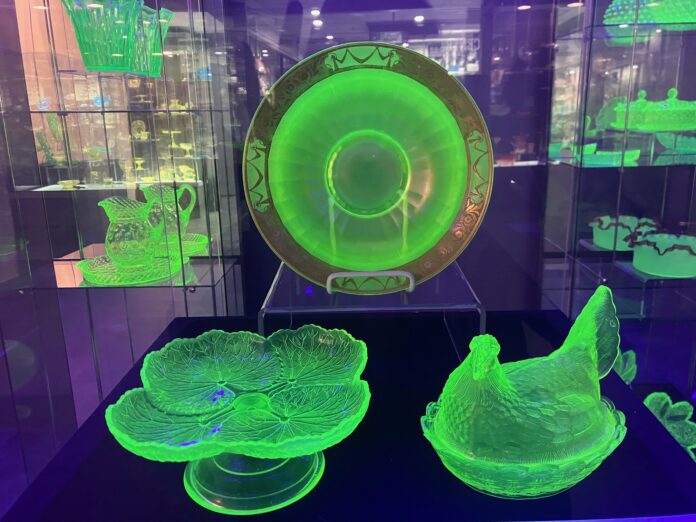

What do atomic bombs and collectible glass have in common? Would you believe uranium?
Yes, some antique glass includes the coloring agent of uranium, a radioactive chemical element, resulting in a luminous color when placed under black lighting.
“Wheeling’s glass factories have a rich heritage of making uranium glass, which was so popular in the Victorian era,” said Holly McCluskey, Oglebay Institute curator of glass. “With regular lighting, this type of glassware doesn’t stand out. It simply looks yellow, but black lights detect fluorescence and change that. Now that we have the Frey-Hires Gallery for changing exhibitions, our museum had the opportunity to replace the lighting so that visitors can see how uranium glass glows under blacklight.”
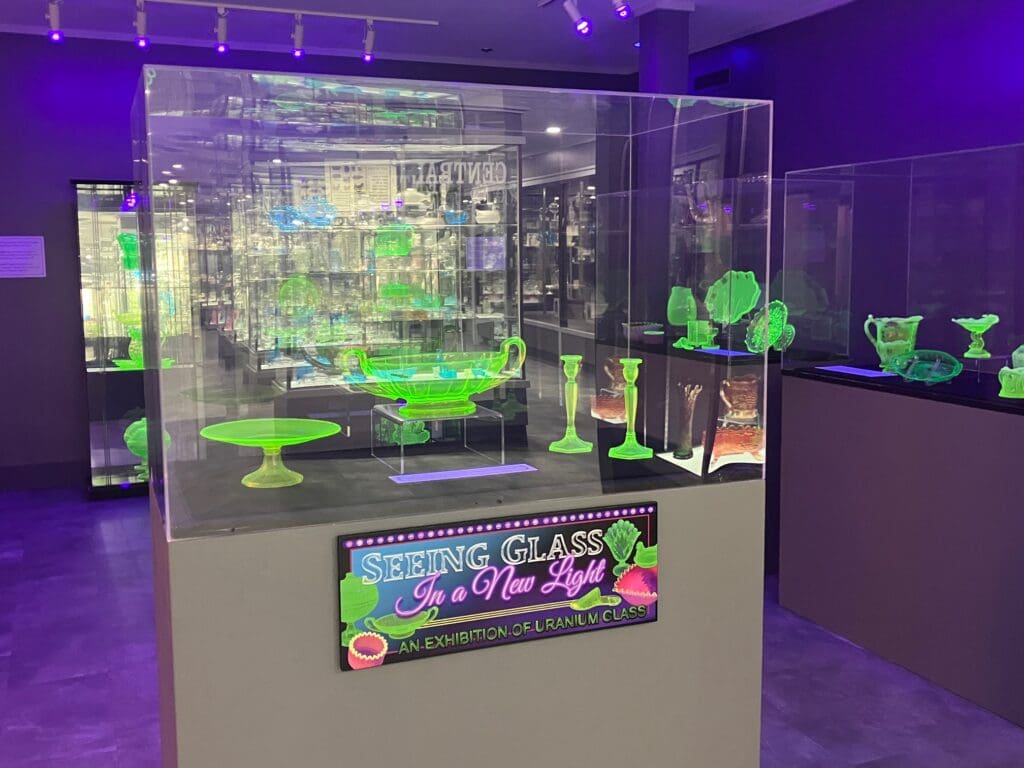
A luminous exhibit of this unusual glass is now on display at Oglebay Institute’s Glass Museum for the public to enjoy. Don’t miss it!
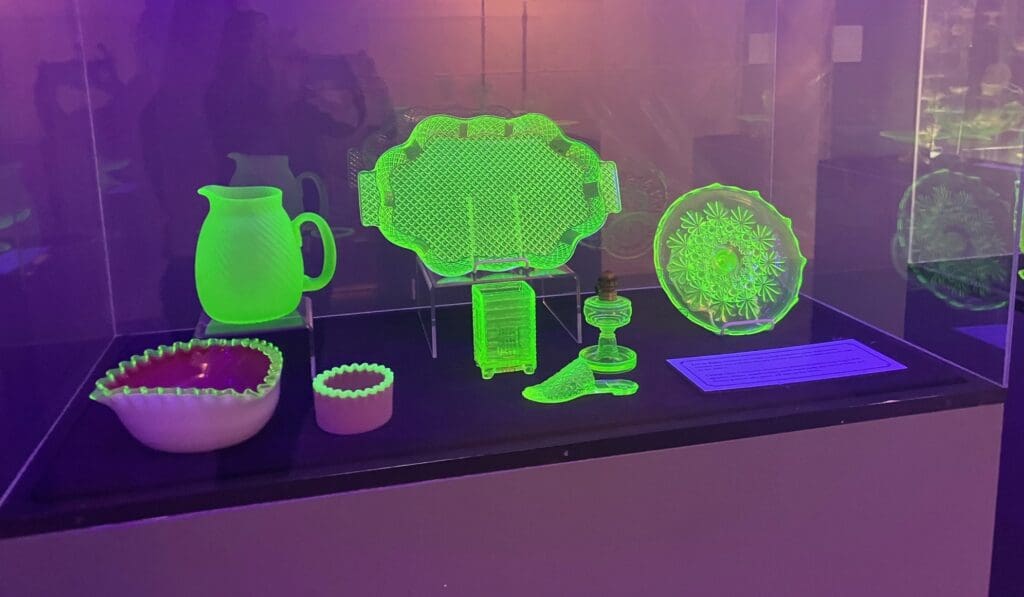
Learn about the distinctive properties of uranium glassware, its rich history, and special allure through select pieces from the museum’s world-class collection of Wheeling-made glass.
“Glass gets its colors – or is made clear – by adding different chemicals. The chemical recipe, or “batch,” can help identify glass, how it was made and even how old it is. Historically, manganese was used to clarify and remove impurities from the glass and make it appear colorless, while uranium was added to create yellow and green colors,” she said.
The unusual glass exhibit is perfect for fall and the Halloween season since it has an eerie kind of green glow and amazes the eye. There are dozens of different pieces on display, all made in Wheeling, in the late 1800s.
This is a time period when Wheeling glass was world-renowned and used daily in the wealthy Victorian home.
“Today, uranium glass is highly collectible and is an example of how Wheeling glass and the Glass Museum is relevant to popular culture today,” noted McCluskey.
Black lights are the tool of both scholars and collectors. While used to detect the presence of manganese and date pre-WWI glass, as well as to identify authentic uranium glass, it can detect the presence of other chemicals by producing a glowing light in a multitude of colors and levels of intensity.
According to glass history, uranium glass is a blanket term for any glass containing uranium. Most well-known is “Vaseline glass” that has a distinctive yellow color and was historically called “canary glass.”
The manufacture of uranium glass dropped dramatically in the 1940s during World War II when the US government confiscated uranium supplies for the Manhattan Project.
“The easiest way to detect manganese or uranium content is to look at the glass under UV or ‘black light’,” explained McCluskey. “Pre-WWI glass that contains manganese will glow a faint yellow. Uranium glass will glow bright green. The brightness of the color depends on the uranium content.”
If you’re wondering just how safe the glass is, according to a report published by the U.S. Nuclear Regulatory Commission in 2001, uranium glass is considered safer than household electronics, making it a desirable collectible to enjoy.
“Seeing Glass in a New Light: An Exhibition of Uranium Glass” is on display in the Frey-Hires Gallery of Oglebay Institute’s Glass Museum now through January 4, 2026. Also in the museum is the rare Sweeney Punch Bowl and countless pieces of valuable Wheeling glass.
Nearby in the glassmaker’s workshop, glass artisan Bob Allen makes glass during the hours of 10 a.m. – 3 p.m. Wednesdays – Saturdays, adding another fun dimension to a visit. Plus, there’s the Carriage House Glass gift shop located on the first floor of the same building to browse and enjoy.
Oglebay Institute’s Glass Museum, located on the lower level of Carriage House Glass in Oglebay Park Resort, is open 10 a.m.-5 p.m. daily.
For more information on the Museums of Oglebay Institute, please call 304-242-7272 or visit oionline.com.