



He grew up with rules. The laws on the books and the ones known as common courtesy. And he followed orders, too, so he’d stay out of trouble as a kid, as an adult, and as a professional in the work world.
That’s how Wheeling’s mayor, Denny Magruder, was raised in Center Wheeling, and he and his bride, Barbara, had rules, too, for their two daughters and son when they were kids in Woodsdale.
That’s what Magruder knows, and the same is true for his six council colleagues, the members of the city’s administration, and for the residents of the Friendly City. The law is the law, rules are the rules, and fully funded law enforcement agencies are in place throughout the Upper Ohio Valley to keep the peace.
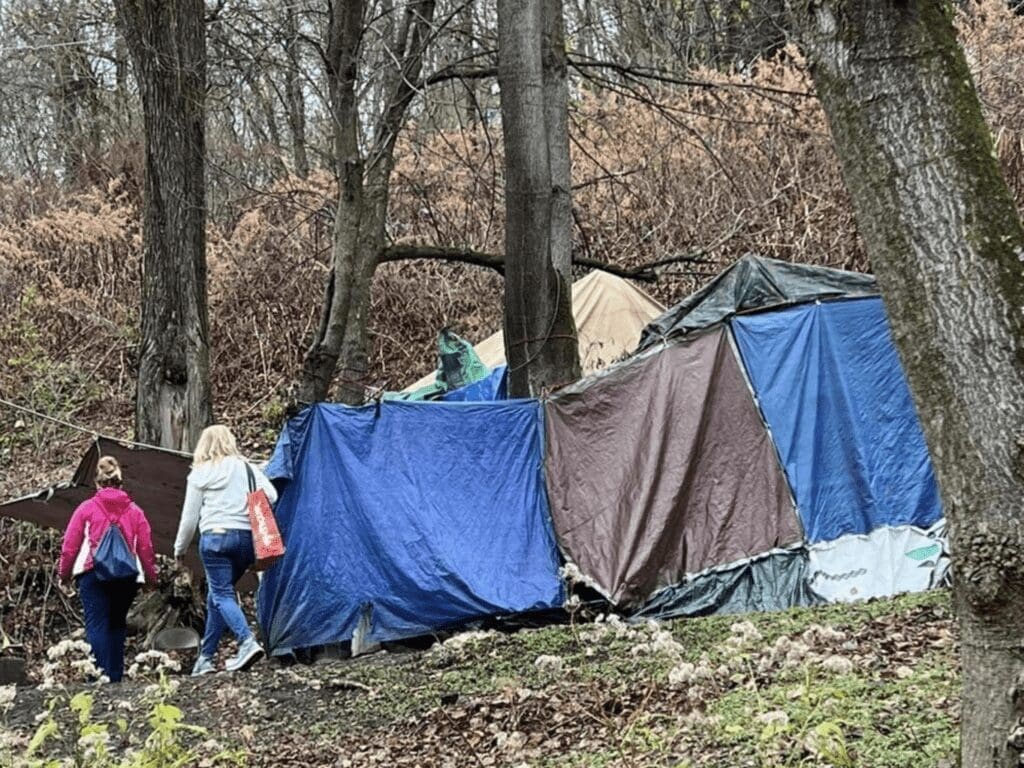
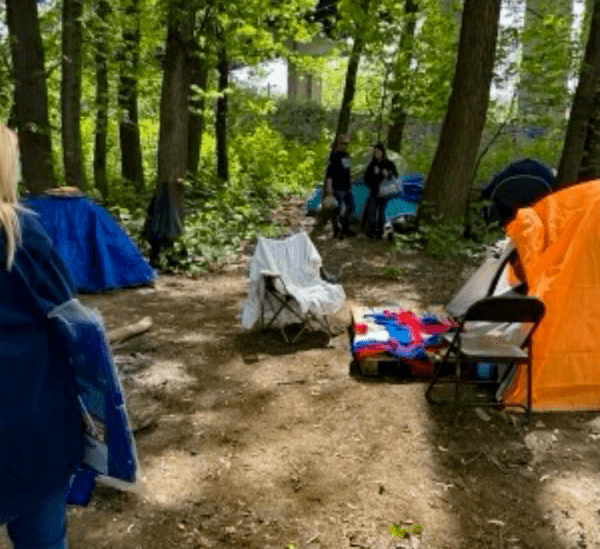
But too often, that peace has been disrupted and complaints have been registered, and those concerns represent the reasons why Magruder has labeled the exempted homeless camp in Wheeling a “failure.” The issues are also why five of six council members agreed with him to close the grounds to the unsheltered on December 1 and to continue enforcing the city’s ban on camping on public property.
Magruder sat down last Thursday as a guest on the “Novotney Now” radio program on River Talk 100.1 FM, and he discussed the 6-1 vote by Wheeling Council to close the city’s exempted homeless camp, and why he’s referred to the encampment as a “failure.” The interview was an hour in length, a number of topics were covered, and it was as public as public could be.
“Let me be very clear – our goal as a city is to help get these folks back on their feet and get them back into mainstream society, and we feel that has to be the same goal that our social services have while working with the homeless population,” the mayor said. “But we have to have rules, and the camp doesn’t have any rules and there are homeless individuals who won’t go to some shelters because they don’t want to obey the rules that are in place.
“The Salvation Army in Wheeling runs a terrific shelter (when it is open), and it’s considered a ‘high-barrier’ shelter because they have rules like no drugs or alcohol. And they often have empty beds because people don’t want to follow the rules,” he said. “During my entire life, we’ve had rules that everyone has had to follow in school, in church, in hospitals, everywhere. I understand there’s mental illness and addiction involved here, and that’s why we have to help these individuals so they can follow the rules so they can go inside and be safe this winter.”

The exact number of individuals that will be impacted by the exempted camp’s closure is unknown because of the anonymous nature of Wheeling’s homeless community. While overnight guests do register at the Life Hub WV Shelter on 16th Street in downtown Wheeling, no one signs in or out at the exempted camp. Business owners and residents, however, have not hesitated when identifying issues.
“We’ve heard a lot of complaints from the neighbors and businesses near the camp in the Fulton and East Wheeling area, and we’ve heard some real horror stories, too,” Magruder shared. “One resident told (East Wheeling) Councilor (Connie) Cain that she had to go out and buy heavy-duty padlocks to put on the gates to her yard because too many things kept disappearing.
“Damage has been happening. Thefts, too. People don’t feel safe in their homes,” he reported. “The same lady told Councilor Cain that she’s not sleeping much these days because she’s scared, and no one should be scared in their own home because of this issue. We have businesses telling us that they’re considering new locations, too. That’s just not fair to them.”

Plus, the mayor reported, some residents who have complained insist their concerns have fallen on deaf ears for years.
“And the vast majority of our residents have lived their lives being good citizens who have taken care of their properties and they’ve paid their taxes, and now those residents are looking at us because they’ve been waiting for the City to do more. Several residents have told me we’ve totally ignored them,” Magruder said. “Listen, there’s no reason for a business to have its dumpsters turned upside-down, and there’s no reason for copper to get stolen or a vehicle to get vandalized.
“It hasn’t all come from the camp, but there’s evidence that a lot of criminal activity can be tracked back to it,” he said. “Before we made this decision to close it down, we consulted the police department, and there has definitely been an increase in criminal activity in Fulton and East Wheeling between 2024 and 2025.”
Done Deal
Youth Services System operated a winter “low barrier” shelter for more than a decade, initially on the top floor of the organization’s headquarters in East Wheeling, and then, beginning in 2020, on the third floor of the former Hillcrest structure for two years and then for one winter in the ballroom of Catholic Charities administration building on Main Street in Center Wheeling. Beginning in 2023, the former First English Lutheran Church on 16th Street has been utilized as the “freeze” shelter after it was purchased and renovated by the Life Hub WV.
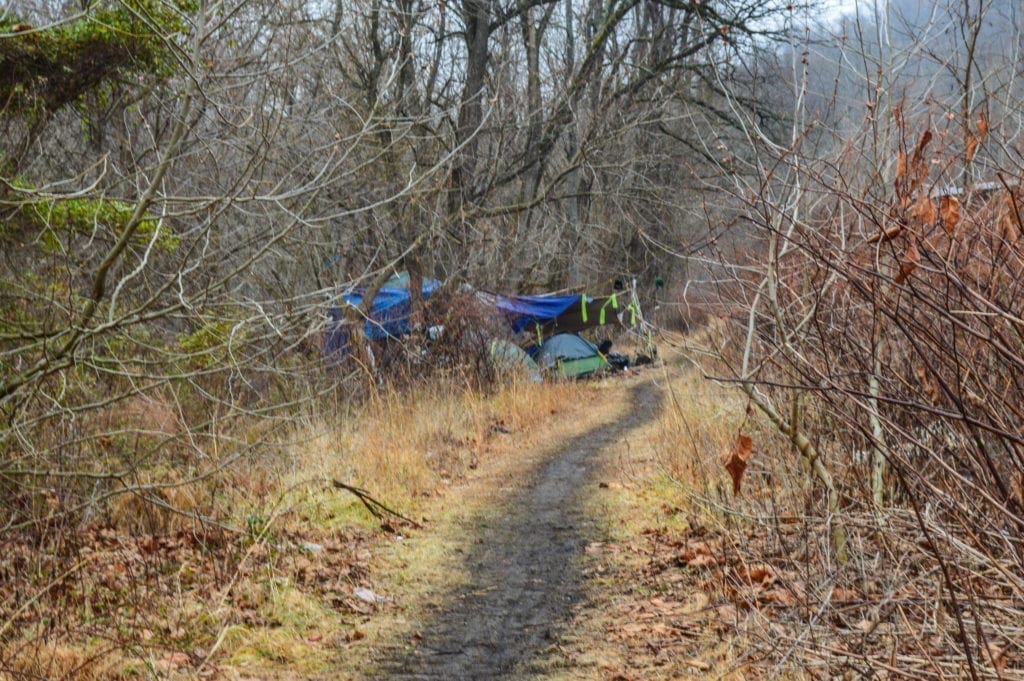
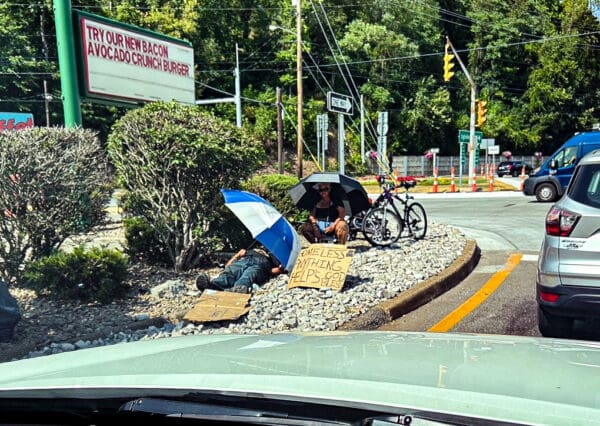
For several summers, homeless encampments formed at various locations along the city’s Heritage Trails, across Wheeling Creek from the Tunnel Green complex on the dirt “maintenance” trail utilized by City employees, and on the eastern hillside above East Wheeling’s Nelson Jordan Center and the nearby neighborhood. In reaction to a rash of complaints and a high number of criminal reports that tracked back to the camps, City Council approved a camping ban that went into effect in January 2024.
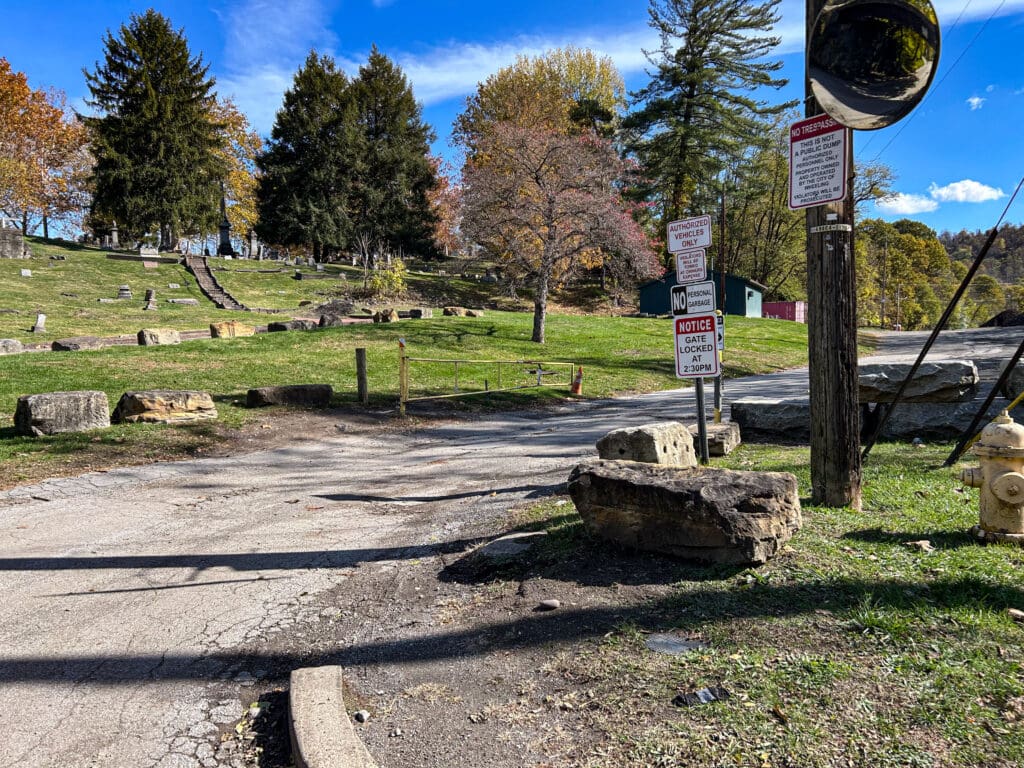
The same ordinance also allowed for an exempted homeless camp, and initially it was located along the “maintenance” trail before it was moved to the same area along Peninsula Street that will become off limits on December 1st. Only councilor Ty Thorngate, the representative for Ward 5 (parts of Woodsdale and Springdale, and all of Edgwood, Pleasanton, Dimmeydale, and the Oakmont neighborhoods) voted against closing the encampment.
“Going into this discussion, there were a number of reasons (for closing it), to be dead honest with you,” Magruder said. “My comment at the time was that the exempted camp has been a ‘failure’. It’s been in place for about two years, and I do think it’s been a failure because it hasn’t produced the results everyone hoped for.
“First, I want to go on the record saying that all our city councilors are very compassionate people, and that the members of our city administration are very compassionate,” he said. “We all saw what happened at the camp last winter in sub-zero temperatures. It was despicable. People suffered frostbite, people didn’t take care of the camp, and it became a health issue. We don’t want to see people live through that again.”
The mayor repeated often during the radio interview that, “We know that not all crimes that’s reported in Wheeling have been committed by people living in the exempted homeless camp,” but he readily admits he’s aware much of the reported activity is connected.
“And that’s because of the data that’s been compiled over the past few years. Plus, we have a lot of residents telling us that they won’t use our walking trails anymore because they don’t feel safe. That’s not OK.
“When you go to the library, there’s a distinct lack of younger kids, and you start to ask why, and parents say, ‘Oh, I don’t want to take my kids into that environment,’” he said. “Well, we have to do something about that.”
That’s why Mayor Magruder has come to believe that while Wheeling doesn’t have a homeless problem, there is a homeless problem in Wheeling.
“What would make it better for everyone is if everyone starts working together,” Magruder said. “Now, I don’t think we’re open to revoking the closing of the camp on December 1st. That’s done. We intend to do that, and we will make it clear to our residents that we have to make some changes here. The camp has not been a success.
“I know that questions have been asked about where people will go once the camp is closed. Last year, there were only about 15 individuals who insisted on staying in the camp, but now it’s been said there are 70 there now. That tells me we’re all failing and that there’s been a great influx of people coming here from outside the area,” he said. “And that’s because people are being invited here. We know that to be true.”
Do. Better.
The mayor believes mistakes have been made. A lot of them.
The opioid crisis was caused by manipulative marketing, overprescription, next-to-zero regulatory oversight, and a troublesome lack of options for those in need of pain relief, and, at the same time, government leaders on all levels have failed to recognize the epidemic’s impact on the nation’s collective mental health and on the nation’s sharp increase in homelessness over the past 10 years.
The biggest blunder, though, could have been made more than 60 years ago when the federal government passed the Community Health Act in 1963. That’s the legislation that ultimately led to the deinstitutionalization of mentally ill patients by redirecting funding away from the states’ hospitals and to community services.
“Many years ago, the decision was made to close our mental health institutions and treatment centers because we wanted to mainstream everyone with a belief that it would help,” he recalled. “But it hasn’t. We sent them out on the streets, and it was the wrong move to make. That’s why we have to try something different. We just have to step up and figure out as a community so we can help the people who want help while also taking care of our residents and businesses.
“Do we have all the answers. No, we don’t, and we readily admit that, but what we’ve been doing has not worked and it’s time for everyone to admit it,” Magruder said. “That’s why we have reached out to our social services and said, ‘Let’s figure this out.’”
Although Ward 2 Council member Ben Seidler had mentioned the possible closure during a couple of radio interviews over the summer, the vote to shutter the exempted homeless camp took place without much warning.
But, in 28 days, the encampment will close.

“It’s just time that we speak up. Number one, we’ve announced we’re closing the camp. Number two, we’ve got to be aggressive in how we manage our downtown and what we allow to happen as a community,” the mayor explained. “I ask the citizens, when you see something that you know is wrong, when you see somebody that you believe is up to no good, please, call the police department, give a location, and a description.
“We have to remove the criminal element first, and that doesn’t mean that everyone who is homeless is a criminal. Let’s not confuse that. I’m not suggesting that at all,” Magruder added. “But there is an element that is criminal, and that’s not the kind of reputation Wheeling wants. That’s not the way we rebuild our city, so it’s important to address it while working with everyone to do better.
“We have to come together on this.”