

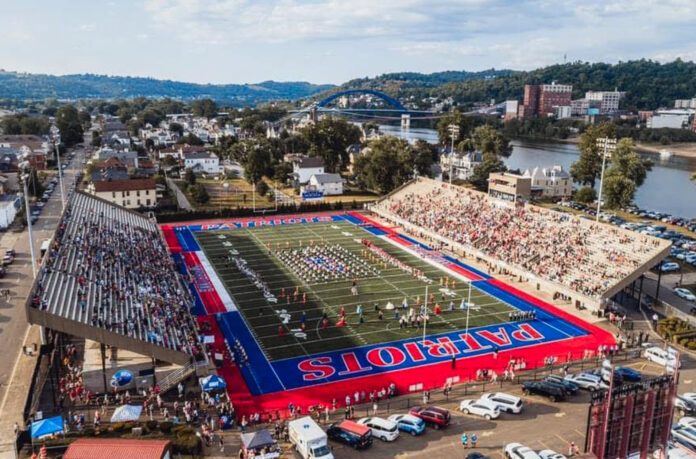

A total of 10 basketball champions were crowned by the Ohio Valley Athletic Conference in February, and each title was decided face-to-face and on the hardwood at the ECO Center in Belmont County.
That’s how championships should be determined, according to OVAC Executive Director Dirk DeCoy, and that’s how the best teams in baseball, softball, and track and field will claim titles this spring and how cross country, volleyball, wrestling, soccer, and every other first-place finish will be decided in the biggest high school athletic conference in the country.
Except one, that is. Football. But that doesn’t mean OVAC officials haven’t examined how to change that fact.
“When we look at making some changes, we always have to first look at what (the Ohio High School Athletic Association) and the West Virginia (Secondary Schools Athletic Commission) mandates for their schools in the OVAC,” DeCoy explained. “That’s always first because, while we may think we have a pretty good idea, the rules in their states might not allow those changes to take place.
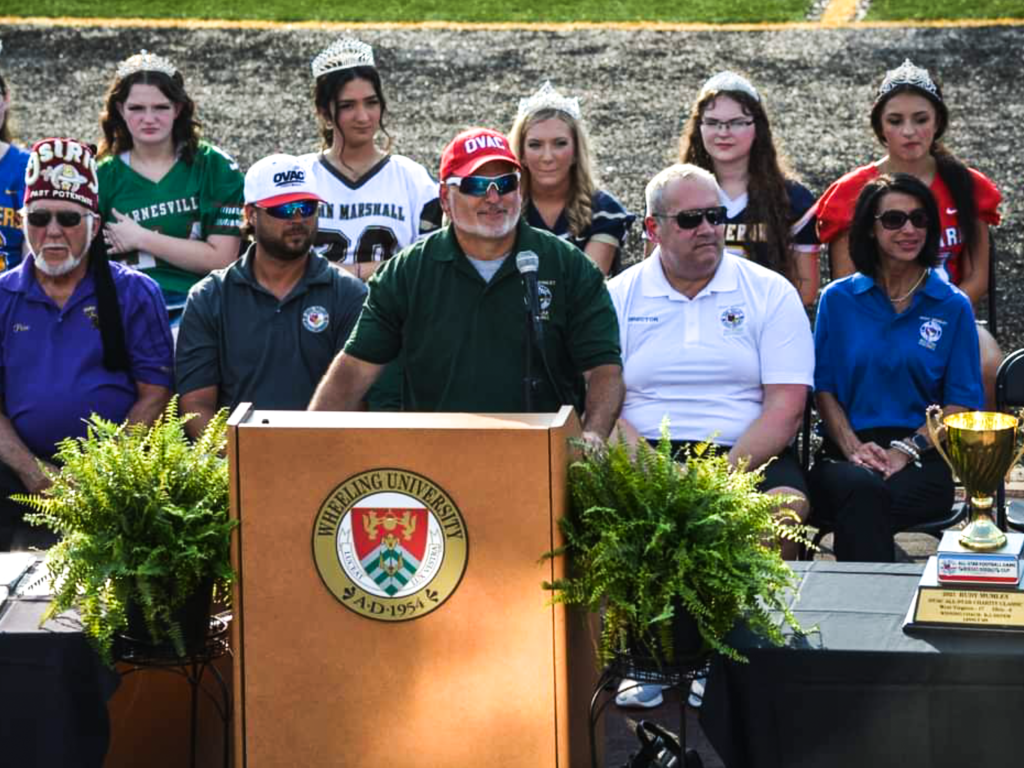
“Those associations have rules pertaining to how many schools have to play each other, and in the OVAC, we only require our teams to play three games against teams in their divisions, so there are differences there that need to be considered when we’re discussing playing championship football games,” he said. “And another issue has to do with the rivalries that take place near the end of the season, like Bellaire and Martins Ferry.
“How do we have two weeks of playoffs for the OVAC titles when those two teams play Week 9? It’s those kinds of obstacles that we keep running into.”
In both states, qualifying for the postseason tournaments is calculated by intricate point systems that potentially could be impacted by a local playoff system, DeCoy reported.
“Another issue is that two teams that played each other earlier in the season might qualify for the OVAC playoffs and have to play each other again. If that were to happen, though, only the first game would count for points,” the executive director explained. “I’m not sure how we could get around that fact.
“I know I’m not alone when it comes to trying to figure out how our football teams can win OVAC championships on the field like we do with every other sport,” he said. “That’s why the OVAC created the basketball championship a number of years ago, but with football, I’m not sure how we get there.”
Paper Champ
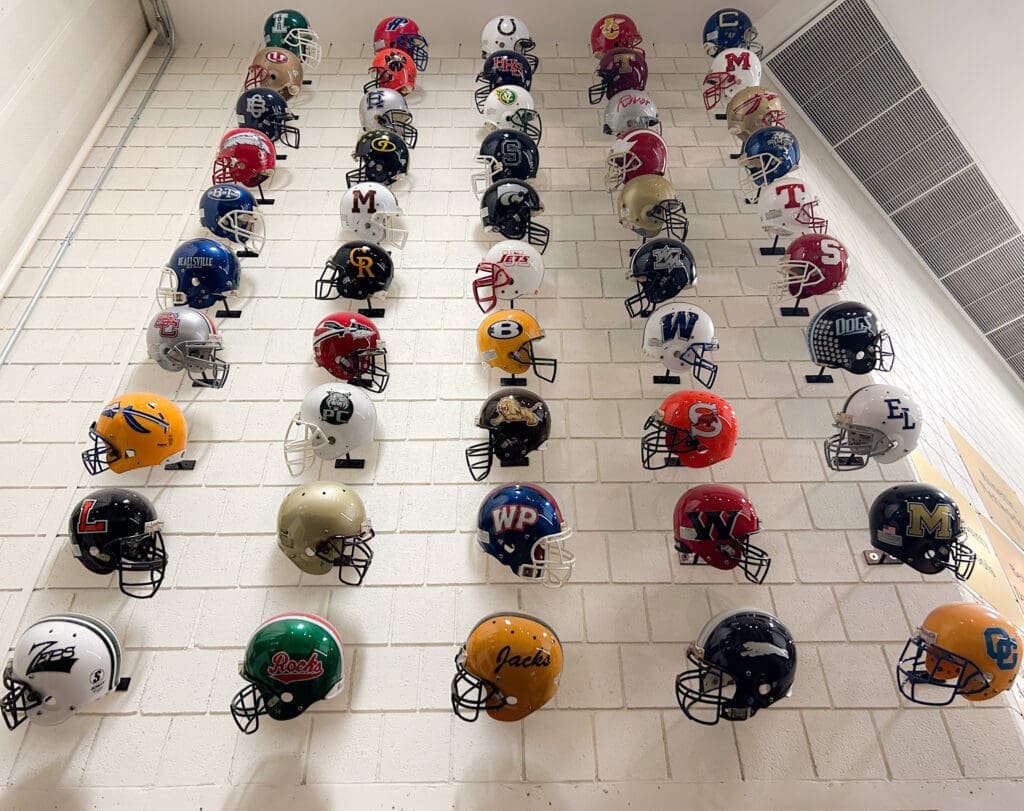
The 2025 OVAC football champions were Morgantown (5A), Indian Creek (4A), Barnesville (3A), Toronto (2A), and Cameron (1A), and each one was determined by the number of points collected during respective seasons.
According to DeCoy, OVAC football points are determined by a mathematical rating system based on school classification (5A to 1A), with points awarded for wins. Total accumulated points are divided by the number of games played, with five bonus points added for wins against other OVAC opponents.
“You have to add the accumulated points, then add the bonus points,” he said, “and then divide by the number of games played.”
THE LINK: https://ovac.org/Content/ViewPDF/football_r.pdf
“As we’ve examined the scenarios, there’s a lot to consider. Trust me, I would love to have a four-team playoff, or maybe even a two-team playoff after Week 8,” DeCoy said. “But how do we get there without having an impact on the playoff points, on schedules, and on several other aspects as far as what the states do.
“Every time we’ve thought we were getting close, there’s been something that’s thrown a wrench into things,” he said. “There are scenarios that could work in Ohio, but not in West Virginia, and vice versa, and if you look around, the championships in football are all state-sanctioned and everything else – conferences and such – are all on paper. It’s all about points.”

While DeCoy and his committees have tweaked and changed many aspects of a number of OVAC-sanctioned athletic competitions, football appears to be the anomaly he cannot appropriately alter.
“So, all of our research has come down to there being too many moving parts to a conference championship,” he said. “I don’t see it happening. I really don’t, at least not under my tenure as the executive director of the OVAC. We’ve taken a very hard look at it, too.
“It was one of my goals as the person in this position, so after my first year, we started studying it and I thought we could figure it out,” DeCoy explained. “We’ve had some pretty elaborate proposals that were offered by some of our folks, but nothing I could sell to our athletic directors. So, no, it doesn’t look good for that change to take place.”