

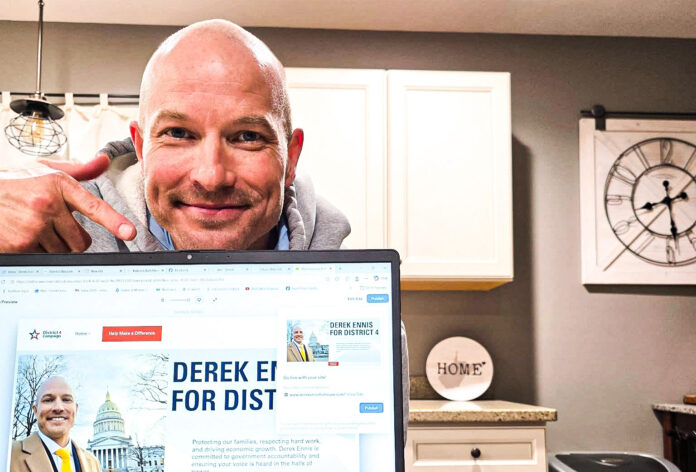

Derek Ennis is a motivated man.
With his job, his business, his children, and with his goals.
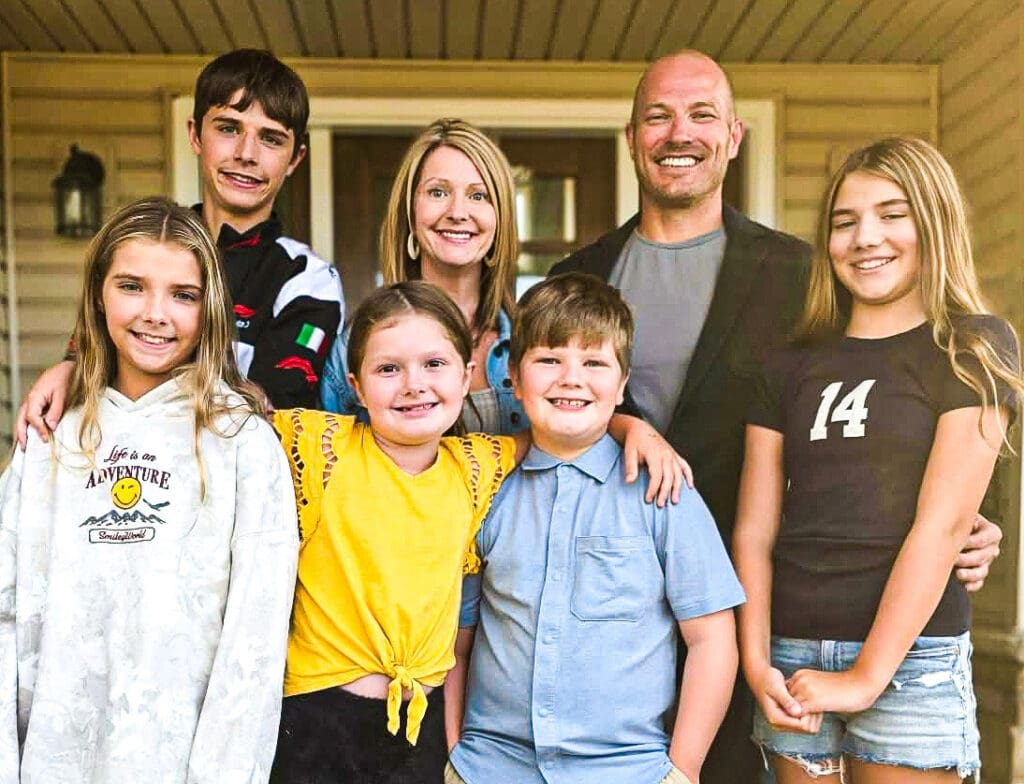
And now, with his campaign. The Valley Grove resident is a Republican running to represent the citizens in the 4th House of Delegates District, and it’s a race with a primary and general election challengers but there’s no incumbent included.
That’s because Del. Bill Flanigan opted to enter the race for the Division 2 race for the state Supreme Court of Appeals instead of running for re-election.
While it’s the first time he’s campaigning to become a state lawmaker, Ennis served as the student body president at West Liberty University for the 1999-2000 and 2000-01 school years before he was graduated in June 2001 with a degree in business management. He then earned his Master’s in Safety Management at Marshall, founded Ennis Properties LLC in 2007, built a career in coal mine safety, and these days he’s a father, a professional, and a business owner.
And Ennis is now a House candidate, too, and that’s because he’s found flaws in the state’s social services system and wants to help fix them, and because he believes West Virginians still believe in West Virginia.
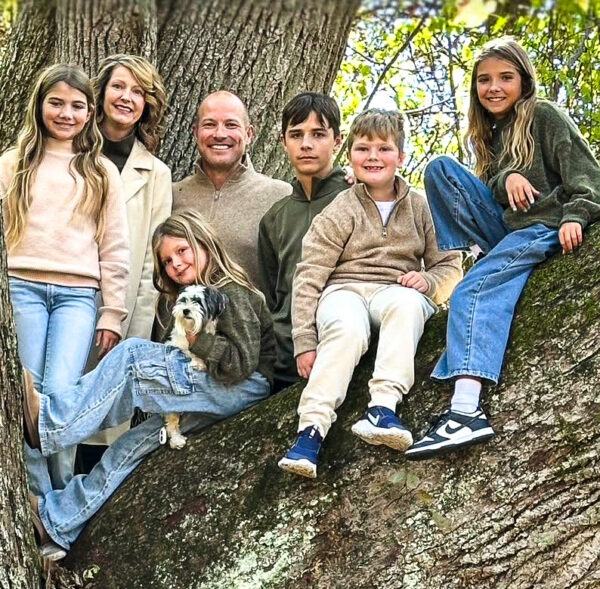
If you could make one legislative change to one West Virginia law right now, what would it be and why would you make that change first?
I would strengthen due process protections and transparency in Family Court and child welfare cases.
Last year, a federal audit of West Virginia’s Child Protective Services system found that 91 percent of reviewed child abuse and neglect reports were not in full compliance with required procedures for intake, screening, assessment, and investigation. That statistic alone should concern every West Virginian because it signals systemic problems that affect both children and families across the state.
Protecting children must always be the top priority. But when government systems have that level of failure, it also means parents and families may not be receiving consistent due process, transparency, or accountability in life-changing decisions.
That is why I believe the Legislature should focus on strengthening oversight, evidence standards, and procedural safeguards within our child welfare and family court systems. When decisions involve removing children from homes or determining the future of a family, those decisions must be based on clear evidence, consistent procedures, and transparent review.
My motivation for addressing this issue goes far beyond any one case or personal situation. The audit shows this is a statewide issue that demands attention.
If we want people to trust government, we have to make sure our systems are fair, accountable, and working as intended. Strengthening due process and oversight in these systems would be an important first step.
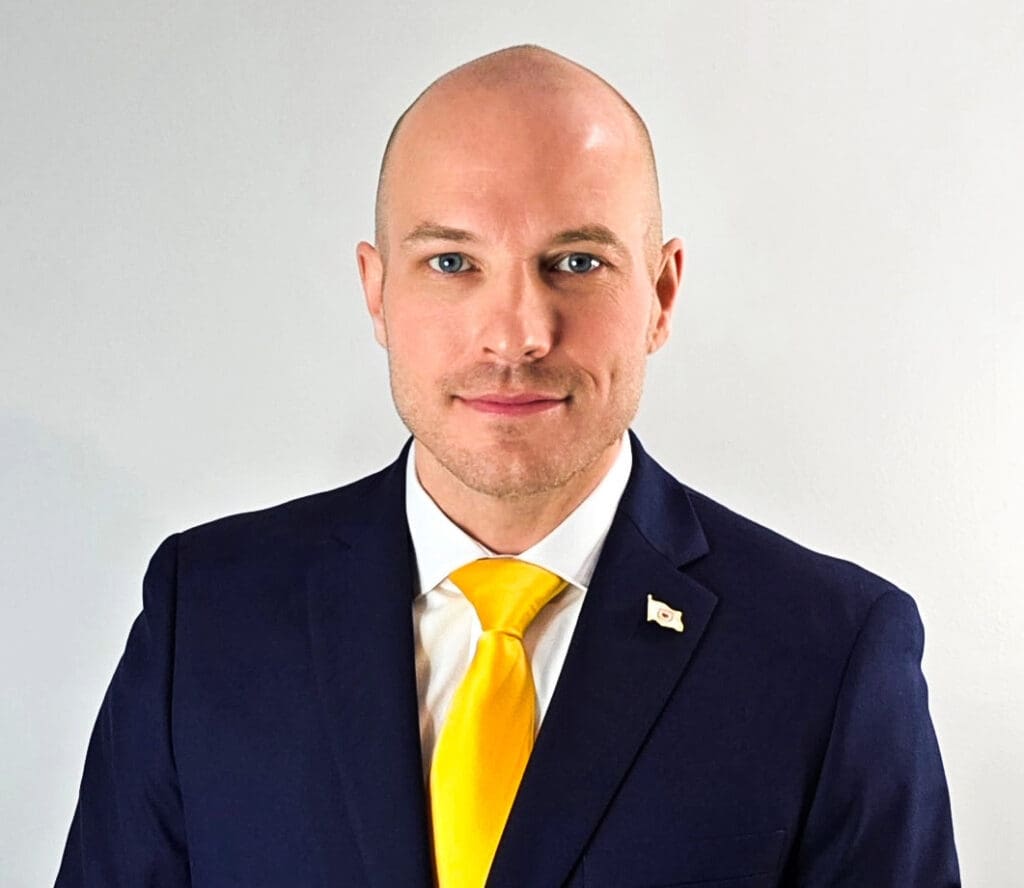
How have you defended West Virginia when the state has been criticized by anyone from a national media member to a friend or stranger during a casual conversation?
When people criticize West Virginia, I usually tell them they’re missing the most important part of the story: the people.
Yes, our state faces challenges like population loss, economic transition, and infrastructure gaps. But the national narrative often ignores the resilience, work ethic, and creativity of West Virginians.
I’ve met entrepreneurs launching new businesses and spoken with leaders of long-established companies that have been pillars of their communities for decades. I’ve also met many young professionals who want to stay in West Virginia and build their future here, but they want to see more opportunity and investment in our region.
West Virginia also has something many places are trying to recreate—strong communities. Neighbors still help neighbors here. Families are close. Local pride is real.
When someone criticizes our state, I don’t deny our challenges. Instead, I remind them that West Virginia is in the middle of a transformation. We’re diversifying our economy, investing in education, and building opportunities for the next generation.
What outsiders often see as limitations, I see as opportunity. With our natural resources, strategic location, and hardworking people, West Virginia is positioned to grow in ways that many people haven’t noticed yet.
The future of West Virginia is stronger than the stereotypes.
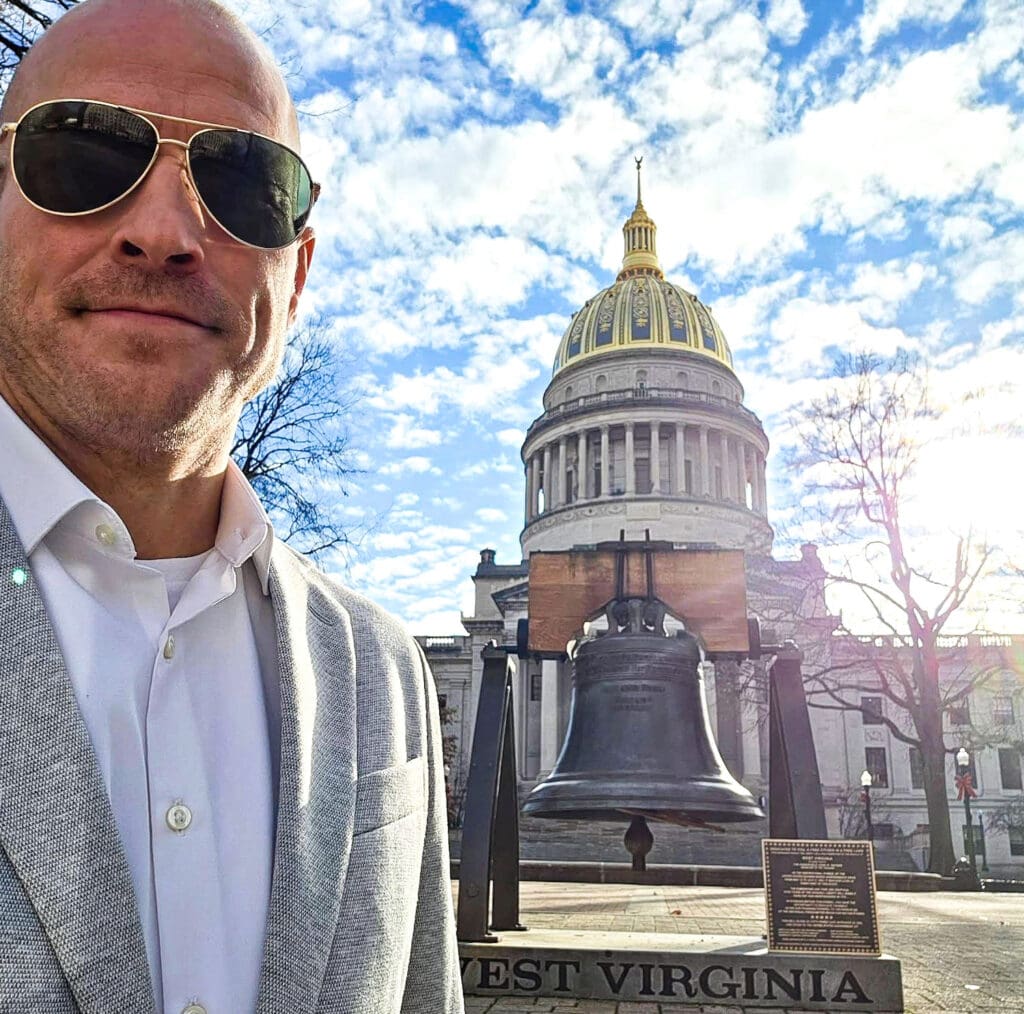
Who is your all-time favorite WVU athlete and why?
My favorite WVU athlete must be Zach Abraham, and it comes down to one unforgettable moment — his 60-yard catch in the Backyard Brawl to help beat Pitt.
That play captured everything that makes WVU football special. The Backyard Brawl isn’t just another game. For Mountaineer fans, it’s personal. The rivalry with Pitt runs deep across generations of West Virginians, and moments like that become part of our shared story.
When Zach made that catch, it wasn’t just a big play — it was one of those moments where the whole state seemed to erupt at once. Every Mountaineer fan watching knew exactly what it meant. And of course, it’s always a little sweeter when it happens against Pitt.
What makes it even more meaningful for our community is that Zach now serves locally as a Ohio County Commissioner. It’s a great reminder that the people who represent our state on the field often continue serving our communities long after the game ends.
For WVU fans, the Backyard Brawl will always bring out the competitive spirit — and let’s just say the phrase “Eat Sh*t Pitt” still echoes pretty loudly when those two teams meet.
That moment from Zach Abraham is one that Mountaineer fans around here will never forget.
Since you announced your candidacy in February, what have people told you about District 4 that you didn’t know?
One of the most surprising things I’ve learned since announcing my candidacy is how strongly people in District 4 want their voices heard in Charleston.
I expected people to talk about taxes, roads, or economic issues, and those topics do come up. But what I’ve heard most often is a desire for better communication and transparency from state government.
Many residents feel decisions are made far away from their communities without enough input from the people who actually live here. They want leaders who listen first and who take the time to explain how policies affect everyday life.
Another thing that stands out is how much pride people have in this region. District 4 has incredible assets—from small businesses and manufacturers to farms, schools, and community organizations. People here care deeply about their towns and want to see them grow.
The message I hear most often is simple: people want leadership that stays connected to the community and focuses on practical solutions that improve everyday life.
That’s exactly the kind of leadership I want to provide.
What is a new business you would like to see open and operate in District 4? Why?
One type of business I would love to see grow in District 4 is a technology and entrepreneurship hub that helps young people launch companies locally.
Northern West Virginia is in a unique position geographically. We are close to Pittsburgh and other growing economic centers, but we also have a lower cost of living and strong community roots. That combination creates a real opportunity to attract young entrepreneurs and remote workers.
Imagine a place where startup founders, small tech companies, and skilled professionals could work, collaborate, and build businesses right here in our region. Add housing, restaurants, and recreational spaces nearby, and you create a community that encourages innovation while maintaining our local character.
This kind of environment could help retain young talent who might otherwise leave the state for opportunities elsewhere. It would also attract people from outside West Virginia who are looking for affordable places to build businesses and raise families.
Economic development today isn’t just about recruiting large corporations. It’s also about creating ecosystems where small businesses and startups can thrive.
District 4 has the potential to become that kind of place.
(Paid for by the candidate)