

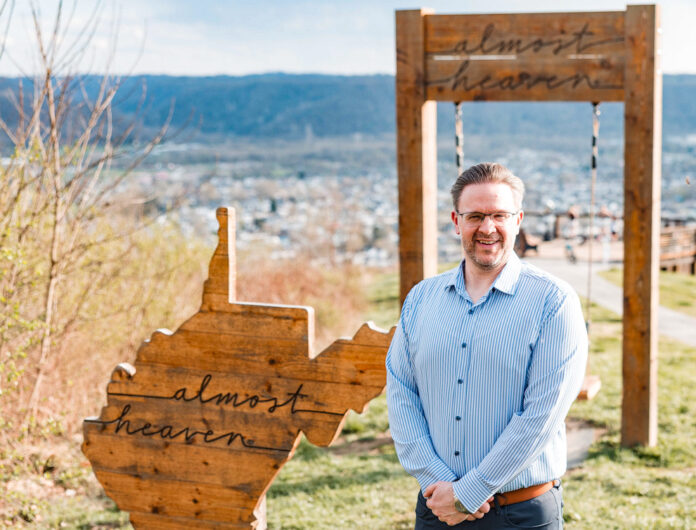

Delegate Stephens is the incumbent running for re-election in the Republican Primary for the 6th District of the House of Delegates, and he’s listed his “Top Issues” as Workforce participation, PEIA, Foster Care, the Hope Scholarship, and Mental Health and Substance Abuse
Below, Delegate Stephens answers specific questions concerning each of those issues.
WORKFORCE PARTICIPATION: What do you believe are the biggest factors involved with the state’s dismal workforce participation rate, and what would you propose for implementation to help that percentage to increase in the future?
The two biggest issues I see in our lack of workforce participation are childcare and the health of our citizens. I’ve just started digging into our childcare system and the improvements that we can make. As it stands today, most families are two-income families, which makes childcare a must. I’m glad to be a part of legislation that phases out subsidies as people get raises, goes back to enrollment-based reimbursement (which helps our daycare centers immensely), and extends tax credits to employers who help subsidize daycare.
In the future, I’d like to work on a three-tiered system that would have the employer, employee, and state all pay a portion.
It’s not a secret that we rank last or close to last in rates of obesity, diabetes, etc., with all the bad health outcomes. This directly affects our workforce participation as our people are not healthy enough to work. Prospective businesses and industries look at this and may turn away from West Virginia.
We have an opportunity in our schools to change this through our health and physical education classes. I will work to make health and physical education requirements in schools. I know we have a lot more options for classes now than ever before, but if our kids are not healthy enough to go on to have a career in these fields, then why are we offering them? Having a healthier society will lead to more workforce participation, lower insurance costs, and make us more attractive to future businesses and industries.
PEIA: As an educator in Marshall County, you are in the perfect position to understand the issues surrounding the state’s Public Employee Insurance program … so, what are your ideas to bring PEIA to the point where it’s fully funded into the future?
To fully fund PEIA is like trying to score a touchdown with a goal line that keeps moving further down the field. We have rising costs of healthcare, and that includes prescription medicines. We have to look into our PBM (pharmacy benefit managers) and how much money they are actually saving us in our prescription drug prices. And what changes can be made to help control the cost of prescription medicines for our taxpayers and the public employees on PEIA.
Another topic we can cover is different types of coverage for the variety of people that are on PEIA (such as adding the Gold Plan this year). Plans with lower premiums with much higher co-pays can also be looked into. This may not be ideal for everyone, but for younger, healthier employees, this could save money for both them and the taxpayers.
We also need to look into speciality drug plans – there is a planned 12 percent increase on prescription drug claim costs in 2026 vs just over 5 percent for other medical expenses.
I think we’ll always be behind the 8 Ball in health insurance costs due to the continued rise in cost of care and prescriptions. I think a totally different approach to the increasing cost of PEIA would be pay raises for public employees. This is one way that we can keep up with surrounding states, while also offering a competitive health insurance plan.
FOSTER CARE: Although the state’s Foster Care program has been an important topic for a number of years, Gov. Morrisey vetoed three child welfare-focused measures and another Republican bill aimed at funding for helping children in abuse and neglect cases. What’s next?
The next thing to do is bring back probably the most important of these issues and that’s children who are aging out of the foster care system and need help in directing their lives. We need to assist these individuals with finding a job, a place to live, and how to become an adult.
Most of these young adults lack these skills and just need some help. Unfortunately, there is a high risk of these young adults becoming homeless, addicted to drugs, and/or incarcerated. So, a little help now could save them from these awful situations in the future.
In no way am I saying we should be just handing these young adults a free place to stay, free food, etc., but assistance with these life skills will be great for them and great for society.
HOPE SCHOLARSHIP: Now that the Hope Scholarship Program has expanded to all children in West Virginia, what are your primary concerns with the program, and how would you address those issues?
I’m not sure if I have one major primary concern or a few major concerns. We need to look at the expenditures and where our taxpayer money is going.
I think we can look at Minnesota and see what happens when taxpayer dollars are used without much oversight. There are areas of the program that could be open for fraud and no one wants to be involved with fraud and our taxpayer dollars. So, one issue that I feel we can tighten up is the expenditures and list of approved vendors that are accepting the scholarship. Another concern would be the cost of the program and creating the state’s annual budget.
The program could cost $20 million to $400 million or more, which makes it very difficult to create a balanced budget.
There are always estimates based on previous usage, but those can be off. Something we can do is cap the total amount in the program, based on previous numbers. Take that amount, divide it by the number of people who sign up by a certain date, and then distribute the money. The total amount divided by the number signed up would be the amount each student receives. If there is any leftover, anyone who applies after the given date could be given a portion of that leftover money. These two things would help stabilize the program and make it viable in the future.
MENTAL HEALTH and SUBSTANCE ABUSE: What ideas do you support when it comes to addressing the mental health and substance abuse crises in West Virginia?
We need to upgrade and add facilities to assist with mental health and substance abuse. Substance abuse has been an issue in West Virginia for too long. Now that we have received $980 million over the next 18 years in opioid settlements, I’m sure we can put some money into long-term care facilities for the very people it was meant for or the substance abuse that these companies that we settled with caused. We did have some funding set aside for a grant program to research ibogaine, which can be used to combat drug addiction and PTSD.
The governor vetoed that bill, but thankfully, President Trump signed an executive order to accelerate the research into ibogaine and its potential to help addiction and PTSD.
Mental health is very complicated and I feel we need to set up facilities across the state to treat individuals with mental illness. There is no one-size-fits-all approach, some may need assistance for months, some may need help the rest of their lives. Having more specialized facilities would help people suffering from mental illness; they could receive the help that they need and deserve. Mental health disorders can lead to drug addiction, homelessness, and other issues that are out of those individuals’ control.
When we address the underlying cause, we can also assist with these other issues.