

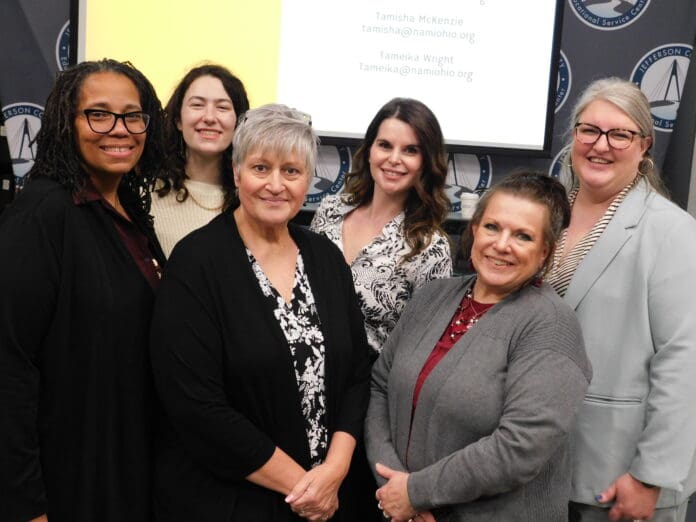

STEUBENVILLE – Peer support matches a youth, adult or caregiver going through a difficult time with a friend and guide who has been through the same, and the Jefferson County Educational Service Center OhioRISE program is helping spread word of new opportunities for agencies to incorporate peer support to help their clients.
On April 11, OhioRISE hosted a workshop for the National Alliance on Mental Illness (NAMI) and Aetna at JCESC’s R. Larry George training annex. Agencies from Jefferson and nearby counties were represented.
JCESC OhioRISE is a Medicaid managed care program for children and youth with complex behavioral health and multisystem needs in Jefferson, Belmont, Carroll, Columbiana, Harrison, Monroe, Stark and Tuscarawas Counties. OhioRISE was formed to coordinate resources and put families in touch with what is available.
A peer support provider is someone who can bring the insight of lived experience to help those who are working through behavioral or mental health challenges. In September, the Ohio Department of Medicaid expanded the mental health benefit to include adult, family and youth peer support.
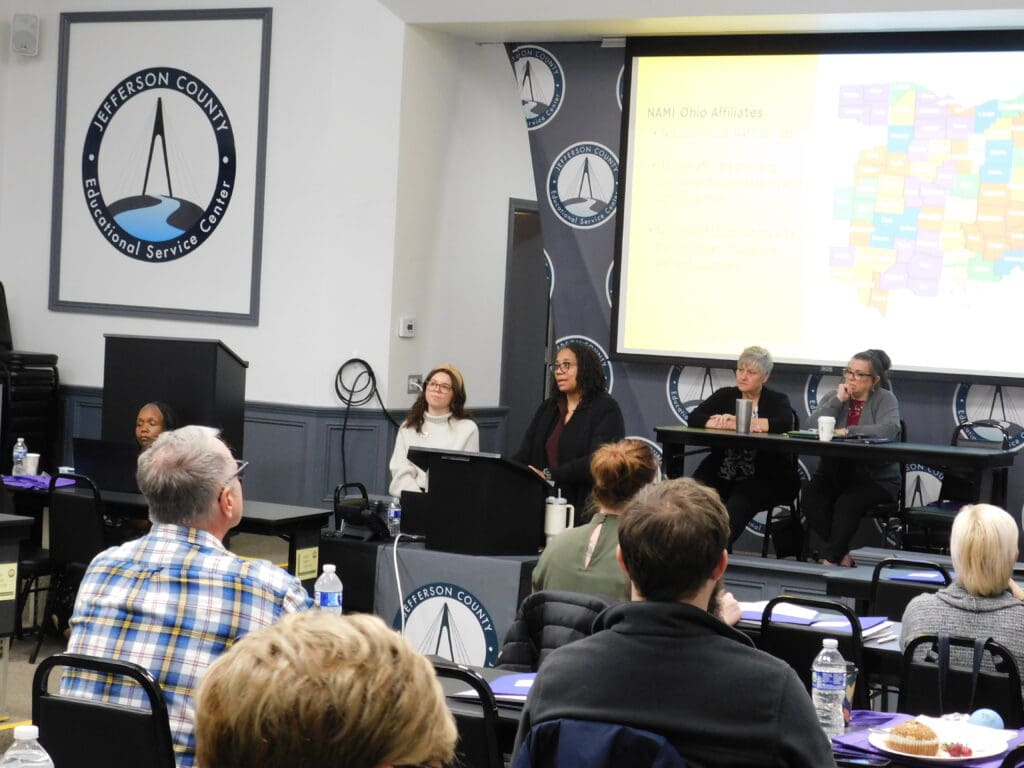
OhioRISE Director Linday Brandon was happy with the strong turnout, noting a wide variety of representatives from groups like the Ohio Department of Mental Health and Addiction Services (OMHAS), as well as local mental health providers, Family and Children First Councils and others. She said peer support is a useful tool for OhioRISE.
“The benefit for peer support for the OhioRISE kiddos is that it will give them some of that extra support that otherwise they might not have had, and so we partner with our local organizations. All of these folks being here learning about it will give us additional places that we can refer our kiddos.”
Representatives from NAMI led the panel. They delved into situations where peer support would be useful, explained how peer support providers can be recruited and certified, and how an agency can prepare its workplace culture.
A peer support provider can offer that crucial perspective important to meeting clients where they are. These clients, including family and caregivers, may be feeling stress and social isolation.
Interesting insights came from experienced peer support providers. Marjorie Cook, manager of the PEERS parent advocacy program at Greenleaf Family Center in Summit County and Stephanie Lehner, a Brown County NAMI-affiliate coordinator, shared their stories. Both have faced trauma and raised children who had unique needs.
Lehner said a peer support provider’s ability to bond and build a relationship with clients can often help get to the root of their problems.
They outlined the challenges of peer support, the pitfalls and how to avoid them by adhering to strict confidentiality and setting clear boundaries. Peer support providers must always put the family’s needs first, with the awareness that different families have different needs. Peer support occurs in the context of the family’s own plans and goals.
Cook explained their role.
“We tell our families: ‘We’re going to walk beside you. I’m not going to walk in front of you and drag you along, I’m not going to walk behind you and push you, I’m going to walk beside you, and if we get to spot in the road that’s not clear, I’m going to help clear that path for you. If we get to a fork in the road and you don’t know which way to go, I’m going to help you know if you go to the left, this is what you’re going to experience. If you go to the right, this is what you’re going to experience.’”
Cook said clients can find a source of hope from someone who has been where they are and who has come out the other side.
Afterward, Cook was impressed by the local interest and engagement, with guests inquiring about how to find the right person for the job.
“I’m excited to see what they do with this,” she said. She commended JCESC OhioRISE’s investment in the area in hosting a convenient site. “OhioRISE has been such an important thing for Ohio and I’m so glad that the governor’s initiative to start something to provide help to our families of kids with behavioral health needs. It was so important and so needed, and I’m excited that OhioRISE wants to be at the ground floor of everything that’s happening to build a program to meet the needs of our families.”
Cook said OhioRISE has been a crucial partner in her work.
“I probably get 5-10 referrals from them a week,” she said.
Lehner spoke about the need for peer supporters to know the agencies’ procedures.Afterward, Lehner thanked them for a warm welcome.
“We couldn’t have been embraced any better for what we do, and the acceptance of how that can be incorporated into each agency and how valuable it is,” she said. Lehner also appreciated what OhioRISE can offer. “This is just even more foundation for us to look towards them to help us out in the field.”
Guests included Columbiana County FCFC Director Steve Ullom, who attended with providers from Columbiana County to learn about the new Medicaid funding structure. He said they have long seen the value in peer support but were faced with questions of how to fund the service.
Jefferson County Prevention and Recovery Board Associate Director Dan Obertance was interested in learning more about the youth options for peer support and how to recruit and hire peer supporters. He said it was fortunate OhioRISE hosted the panel.
Community Liaison Danielle Kiraly of Belmont Pines Hospital said incorporating a program like peer support is essential. She hopes to see more informative events.
“People are more likely to listen to somebody who has had a similar experience, because that also gives them personal hope,” she said. “Hearing that the services are expanding is a very exciting prospect.”
To learn more about OhioRISE, call 740-792-4011, email ohiorise.info@jcesc.org or visit OhioRISE online at https://www.jcesc.k12.oh.us/CareManagementEntity.aspx.