

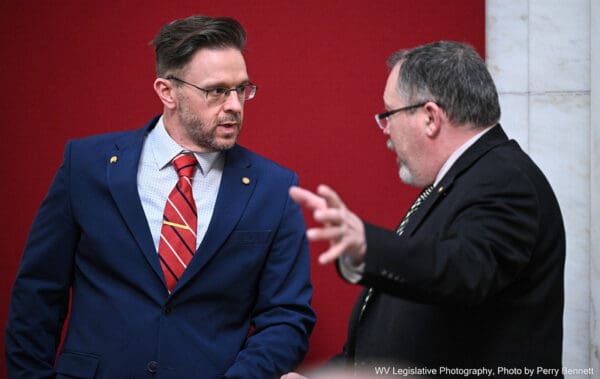
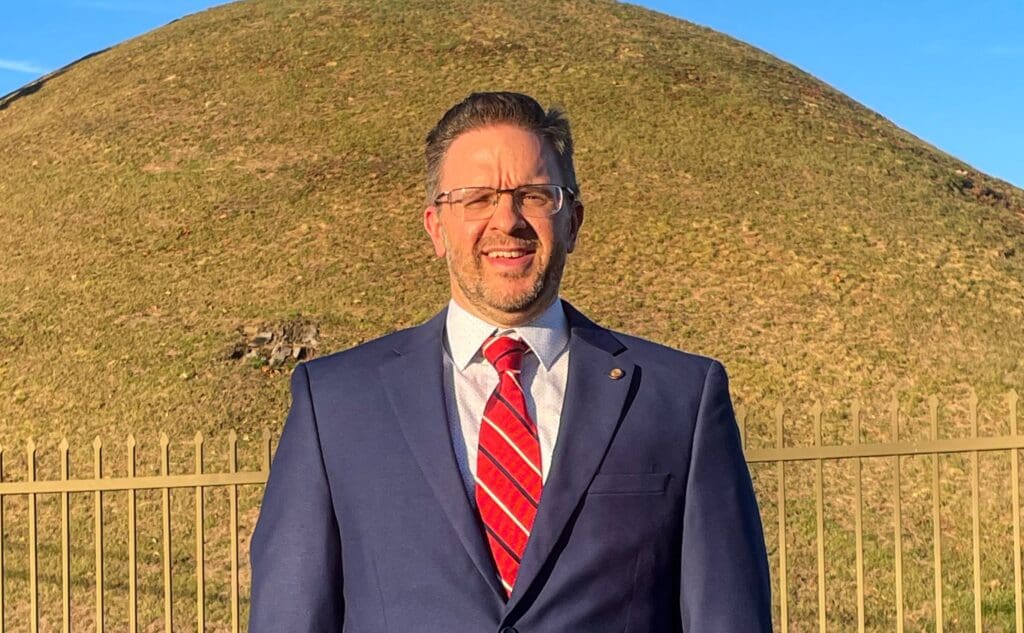
Not only is W.Va. Del. Jeff Stephens (R-6) a state lawmaker but he’s a teacher, too, so his perspective of the state’s Hope Scholarship program is from inside the public school system.
The Hope Scholarship Program, according to the initiative’s web site, “is an education savings account (ESA) program that will allow parents and families to utilize the state portion of their education funding to tailor an individualized learning experience that works best for them.”
In other words, the Hope Scholarship distributes property tax funds to West Virginia families to help fund educational options other than the public school system that’s available in each of the Mountain State’s 55 counties. The website explains that the “amount will vary annually depending on the amount of state aid funding per pupil provided to county boards of education for public school students.”
The scholarship amount is expected to be $5,267.38 for the 2025-2026 school year. The Hope Scholarship program was approved by state lawmakers in 2021, and it was designed to allot state funding to students enrolled in public school for private schools, homeschooling, and other approved educational expenses.
The Legislature approved $97 million for Hope Scholarships in April – a jump from $58 million the year before – and the line item is expected to increase to as much as $300 million when all students become eligible in 2027, according to Stephens.
“That’s why there is an ongoing conversation about what to do about the financial parts of the Hope Scholarship in the future because a lot of people in Charleston wish there could be a consistent figure on how much it’s going to cost the taxpayer,” the District 6 lawmaker explained. “So, how can we do that?
“Do we put a limit into the law? Do we cap it at a certain amount and limit the amounts based on how many people apply? There are a lot of questions,” he said. “I don’t know what the right answer is, but I know, as a fiscal conservative, that I don’t like it when there’s a blackhole in the budget and neither does a lot of in the Legislature.”
Stephens is not the only state lawmaker expressing concerns. In a report published in April by West Virginia Watch, Amelia Ferrell Knisely reports that several delegates have communicated their worries about the program’s future expansion. Stephens, though, hopes for financial consistency sooner than later.
“To be able to develop something of an average, it’s going to take time for the cycle to take place over the next four to eight years,” Stephens explained. “Some believe it will be longer, and if it is, so be it as long as the math tells us what needs to happen so that budget can at least be estimated when putting together the state’s annual budget.
“That’s where the discussions have started, and I believe we should also discuss reining in the number of providers by creating more limitations,” he said. “But there’s almost no discussion about limiting providers, and it’s not been mentioned to be as a member of the House’s Education Committee. If there were enough people who had a problem with it, I think I would have heard about it by now.”
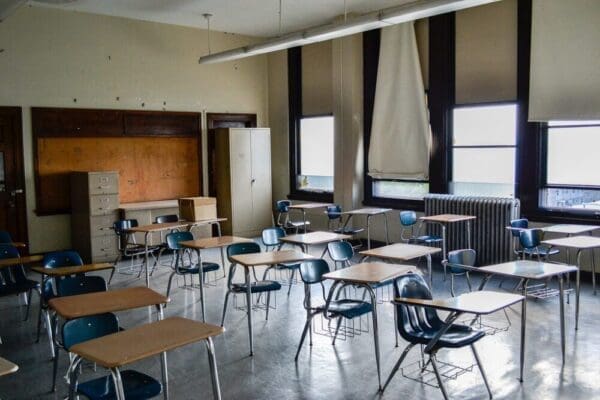
Examination & Diagnosis
The article published by West Virginia Watch included comments from two Republican lawmakers who expressed concerns about the budgetary uncertainty and equal access.
House Minority Leader Sean Hornbuckle (D-Cabell” told in April Watch, “The program doesn’t do enough in reaching our children who need it the most,” and Del. Bill Anderson (R-Wood) warned that this is an “ever-increasing budget item.”
Stephens calls it the “black hole” in the state’s annual budget.
“That’s why I believe the Hope Scholarship program needs to be looked at so we can make sure we’re headed in the right direction. We need to make sure the original intent of the Hope Scholarship remains the top priority,” Stephens said. “It’s about education and the options that are available, but there are bad actors out there and they will find ways to manipulate the system.
“You have bad actors with everything, it seems, so I think the more we look at it, and the more we rein it back and tighten it up, we can make it better,” he said. “We have to make it work the best way possible so there’s access to options that make the most sense for the child.”
What standards are in place for the approval of the available options, Stephens believes, need reviewed as well, but he highly doubts such an examination takes place.
“While I do believe there will be a review of the Hope program, I think it will be about the expense of the program and not about the vendors. That topic doesn’t advance very far when it’s mentioned, so I doubt it does any time soon,” the District 6 delegate said. “There is a form that needs completed by those wishing to become vendors, and there is a committee who reviews those applications.
“But that black hole in our budget is a concern and it should be,” Stephens continued. “So, hopefully we can find a solution that makes no one happy because usually when that’s the case, you’ve found the right answer to the problem.”
The eighth-grade educator also feels more oversight needs implemented to ensure standards for both curriculum and safety. According to West Virginia Watch, the House of Delegates approved transferring oversight from county school districts to state officials. There are more than 30,000 children are homeschooled in West Virginia.
“I know people love teaching their kids at home, and I know people who home school and they are very confident that they are educating their children, but there are nefarious things that happen, too, and that’s the very worst part,” Stephens said. “I know bad things happen in public and private schools, too, but there’s always accountability in those schools.
“It’s about the kids,” he said, “so, it should be about the child’s safety, too.”