


The total research and development budget for the planet Earth is about $22 trillion dollars.
That’s more than two-thirds of the total economic output of the United States. It’s a huge number. I contend that number is unfathomable by most people, me included.
With the exception of certain industries, R&D’s output has held a steady pace for the past few hundred years, fueled by energy, transportation and communications. We have also become much better about managing for the human element. Better year after year on a steady improving pace. But no real spikes. No giant leaps. But there are exceptions.
One of the segments that has consistently exceeded the pace is electronics. From the discrete vacuum tube in 1904 (commercialized in 1915) to semiconductors in 1947 (commercialized 1951), electronics was part of that steady pace.
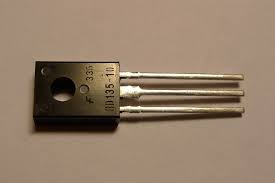
Initially, the transistor was a direct replacement for the vacuum tube. Smaller, more energy efficient, cooler running and capable of higher output.
But the transistor was every bit the revolution you’ve been told it was. Twice as good as its predecessor. A very big deal.
It was the product of basic R&D at Bell Laboratories.
Then, in 1959, Robert Noyce at Fairchild Semiconductor constructed a “monolithic integrated circuit” and all the rules changed.
Discrete was out, and integrated circuits were breaking all the rules. A scant six years later, in 1965, Gordon Moore, co-founder of Fairchild and Intel observed that the number of transistors on an integrated circuit doubled about every two years (some report it as 18 months). It’s known today as Moore’s Law.
Doubled. As in twice as many. Today, after 61 years, that doubling continues.
For six decades, every time integrated circuit technology appears to hit a wall, breakthroughs are made and the number of transistors on a piece of silicon double. Predictably.
A table radio in the 1960’s had five or six tubes, and seven or eight transistors. Your iPhone has billions of transistors. Billions of transistors. It’s why you have an audio recorder, a television studio, a high-quality camera, and a computer in your pocket.
With memory and the screen (each of the screen elements has a transistor behind it, precisely printed on a substrate) being the big numbers in the transistor count that, like the tube count, is something we still obsess over.
How many? It’s real, and it something we think we understand. From discrete to integrated. From a handful of elements to billions.
If Moore’s Law applied to the automotive industry, we would have cars that would do zero to 60 in one second and get 200 miles per gallon. Oh, and at a cost of just a few thousand dollars.
It does not, and unfortunately, we don’t have these miracle automobiles.
The computer technology that improved much faster than about anything else has touched everything, and I mean everything. You can’t make popsicles today without a slew of microprocessors.
But it was always a simple robot doing what it was told and nothing more. It recorded information. It stored things. Better. Faster. Cheaper. If this, then that – basic coded logic. Programmed. Much of the technology we use on a daily basis was adopted by universities first, and now it’s accelerating the basic R&D that has improved so much around us.
Artificial intelligence is capable of learning and applying that knowledge. Yes, artificial intelligence, powered by Moore’s Law and copious amounts of electrical energy, are about to supercharge R&D in other industries.
It’s a building process where computing power has finally caught up and allowed the models of physical things to be used, not just at a single point, but for all possible permutations. Not a single solution, but millions – or for that matter billions.
If you have an idea, you won’t need to curry the favor of big science or the department head of a large university, you can run the models on your own, opening up R&D to people who were excluded in the past. You don’t need to track down and test 700 different types of filament materials for a light bulb as Edison did. You can have your AI assistant run those for you, and it will do so tirelessly, 24 hours per day.
Don’t get me wrong, the big R&D shops are not going away, but they are going to be even better at what they do, as long as they stay on the path of delivering something positive for humanity.
This will all be powered by AI, and all the models of physical things that they have been cranking out for the last century.
Better, faster and cheaper.
Step and repeat. It discovers what works, and pushes aside what does not – but what does not might make sense somewhere else. AI will make those connections, and do so in a way that would have required many people.
The most successful scientists, the Nobel Prize candidates and winners, will be those who not only know their subject, but are the best at manipulating the AI. So, the $22 trillion spent on R&D is about to start acting like $44 trillion. Or $66 trillion. Or $88 trillion.
It will have more real output than it’s had in the past, but I’m not about to predict how much.
I do know for certain that if we allow the politicians to stifle it, we will miss the opportunity, and we can plod along like our ancestors in the old country who regulate everything into irrelevance. Heck, they even go as far as telling the phone companies what charging jack to put on the bottom of their phone – and you know when the next greatest thing comes out it will take years or decades for them to change their mind, while the rest of the world passes them by.
We don’t need guardrails around AI, especially if those rails are written by people with no background beyond shuffling paper at the courthouse. Look what they did regulating the steel industry, all in the name of saving jobs.
State and federal legislatures and politicians murdered it in the most brutal way.
Today, steel is being done in places that had the sense to provide their basic industries with inexpensive capital and fewer regulations. It’s always needed, but its a fungible commodity.
We consistently get the opposite of what we legislate, and we don’t seem to learn from our previous mistakes. This is an impassioned plea for our politicians and regulators to leave AI alone. They will most certainly screw it up.
Will there be missteps? You bet. People will have to change jobs, it’s that simple. Just like they did when horses needed fewer shoes and demand for buggy whips waned.
People were killed by cars. That was true 125 years ago, in every year in between and it’s true today. It will be true tomorrow, and it will be true of self driving cars – which promise to free up some of your time for creative thought, or for doom scrolling Tik-Tok.
The stage is set.
What lies ahead can be the most incredibly productive time for the human race. Or stagnation, lead by over-regulation and “guard rails”.
We have a front row seat to the future, and I’m hoping for the most success.
How about $220 trillion from R&D. Let’s go for it.