

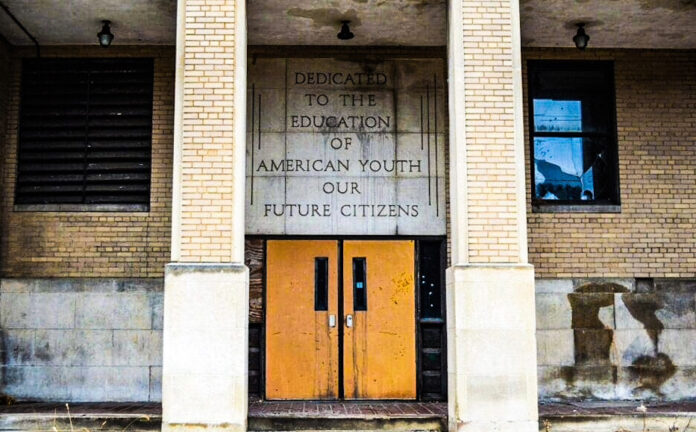

Written by Patty Ciripompa
To a tiny five-year-old girl walking up the Fifteenth Street hill from McColloch Street, right hand firmly gripped by her mother, heading toward school for the first time in her life felt like an adventure. Cigarette smoke curling all around them through the crisp September morning air, she must have entertained at least a smidgen of a wish that they were headed downtown for that experience instead of walking toward the great unknown. Undoubtedly, the butterflies she felt began to flitter more chaotically in her stomach as the massive yellow-white building came into sight.
Bathed in early morning sunlight, the sprawling three-story giant must have seemed like one of those New York City skyscrapers she’d seen on TV. Her five-year-old thoughts most likely did not make note that this glorious creature of a building would play such a pivotal role in shaping the woman she would become.
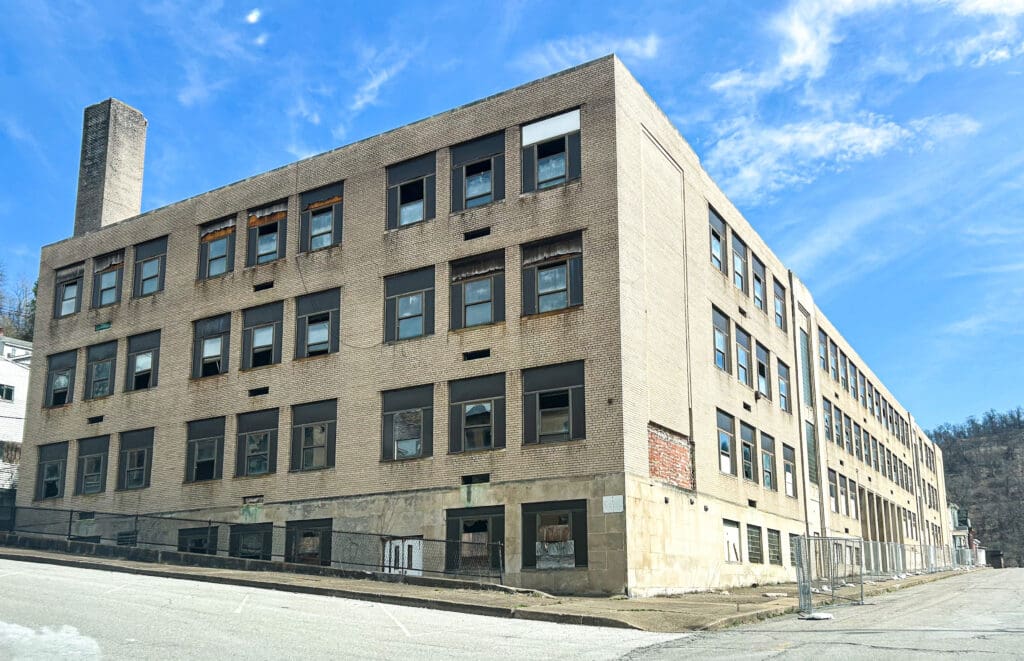
Clay School, the sunlit building that welcomed her on that first day, was conceived in a time of disorder and scarcity and born when a war was raging, and boys from the neighborhood were heading overseas in droves. For over fifty years, the Grande Dame of Fifteenth Street, with her sprawling girth that took up a city block, unpretentiously assumed the role of matriarch of East Wheeling. Her checkerboard-tile floors of burgundy and black welcomed the pounding of small feet from the moment her doors swung open and throughout her reign as a hub where hundreds of children from working-class families could come to learn and grow. Until her final bell rang, and her doors were opened for the last time, Clay School served as a loving steward for East Wheeling students.
Like ample arms spread wide, her honey-yellow block walls held wooden lockers that didn’t look like wood, their contents always a mishmash of forgotten lunches, crumpled papers, and hand-me-down books scrawled with every name who had held them throughout the years. Absorbing every voice over the decade, these same walls held secrets that may have been whispered or wished, making her a keeper of the sacred passage of youth.
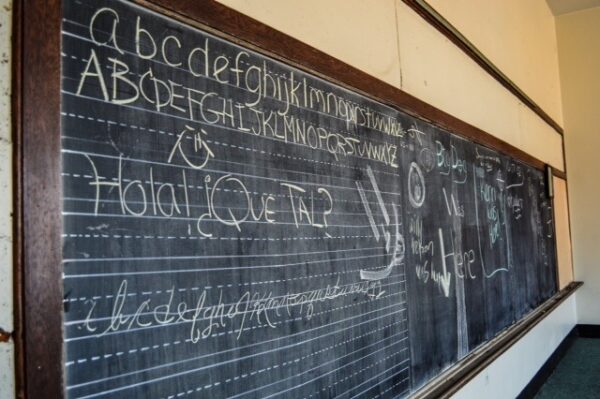
Her students were the children of her former students, who were often the children of students who came even before them. And her teachers stayed for years and became either worshiped or vilified, depending on who was asked. In the early 1950’s, when the nation began to open minds and hearts to integration, she welcomed students of all races from all ethnic backgrounds. It was during those years that young students were introduced to and became fast friends with other children whose skin color was different than their own. As five- and six-year-olds, they were blissfully unaware of any differences, enjoying instead the camaraderie of learning and playing together. In hindsight, those friendships that lasted beyond grade school shaped many students’ views of the world, instilling within them the capacity to accept, embrace, and learn about others who may appear, but aren’t, any different.
Clay School’s playground was Fifteenth Street, the entire block barricaded with wooden horses at either end. Students enjoyed an entire city street where they could play without worrying about getting run over. Every day, when the lunch bell rang, students headed to the spacious cafeteria, the cold-lunch room or, for some in junior high, down the street to Joe’s, where French Fries eaten directly from a greasy brown paper bag tasted like heaven. The cold-lunch room, located at the bottom of the first set of stairs off the entrance to the elementary grades smelled like bologna. Directly across from this room was the teachers’ lounge, so that when both doors were opened at the same time, the stairwell and hall smelled oddly like bologna smoking a cigarette. Despite the expected complaints and whines of children who rolled their eyes at what was served in the cafeteria on any given day, the hot lunches eaten there may have been the only warm meal of the day for some of the students. No child was turned away from eating in the cafeteria. Free and paid lunches were the same and no one knew the difference.

Most teachers who were attracted to jobs at Clay came with an authenticity and sincere desire to mentor and make a difference in the lives of the children they taught. Students may not remember all the math, or science, or geography, but they have fond memories of many teachers, and how they made everyone feel seen, appreciated, capable, brave, valued and hopeful. These are the gifts students took into high school and beyond.
More than a building, Clay School served as the protector of East Wheeling, a sentinel watching over the neighborhood for over half a century. Her strong bones held the essence of all the students who graced her halls, and her bricks bore the invisible imprints of all the hands that touched them. For some, she was a welcome respite from chaos and for others, inspiration and opportunity for connection. More than a school, she served as teacher, friend, loving parent, and confidante.