



Pat, a 75-year-old widow from Belmont County, enjoys playing games on Facebook, but she became the pawn of criminals who contacted her through the social media app and conned her out of thousands of dollars.
They told her she needed to buy gift cards and wire money to them to avoid legal issues.
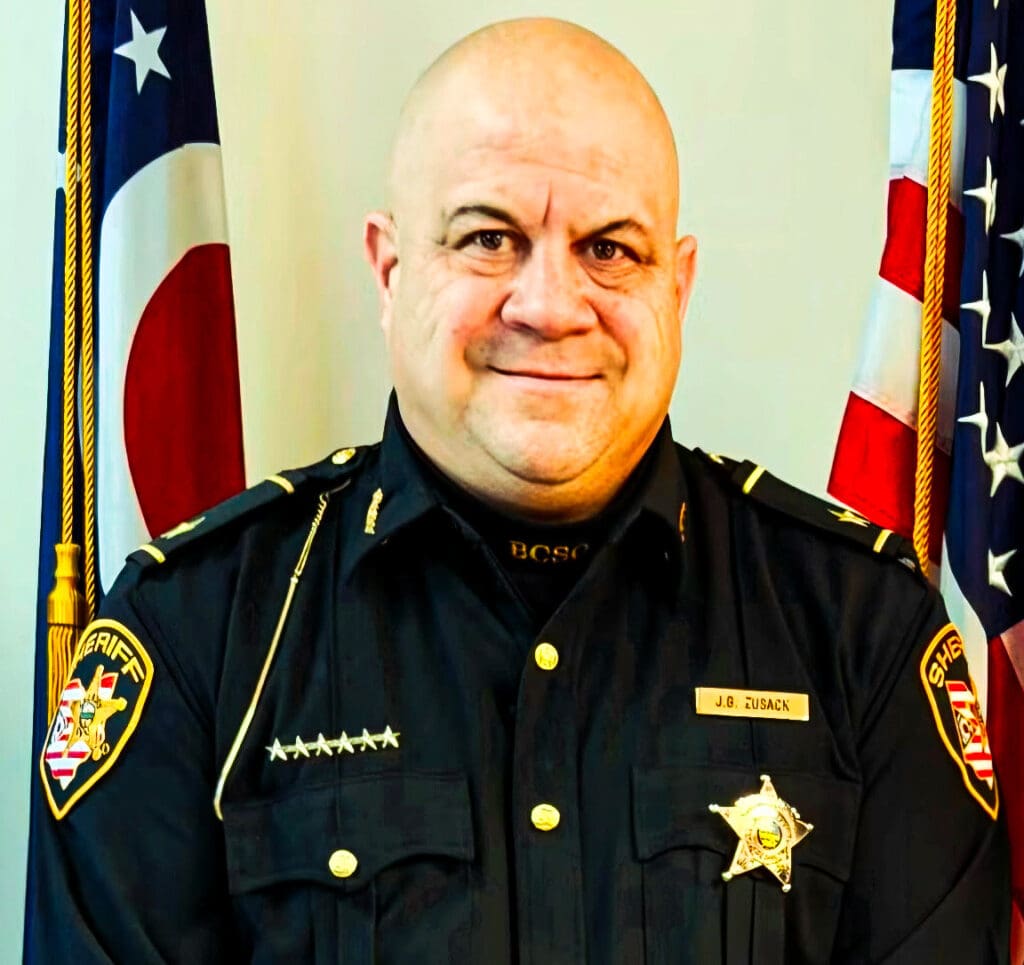
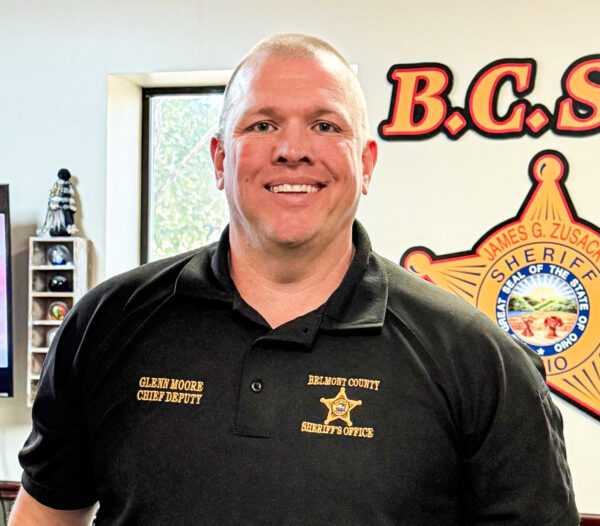
Belmont County Sheriff James Zusack says people of all ages can become victims of scams that appear as legitimate texts, emails or calls. He and Belmont County Chief Deputy Glenn Moore urge the public to never provide any information online or by phone to people you do not know.
“Please never give your information online or on the phone to anyone you don’t know. Or even if you’re questioning who it is,” Moore stressed.
Moore said no legitimate organizations or businesses such as law enforcement agencies, the IRS, banks or the department of motor vehicles, will ever contact you to ask for your social security number, birth date or account numbers. He said to immediately stop communicating with anyone you do not know who asks you for personal information.
“It’s not rude to hang up a phone. Just hit end or delete if it’s online. Or if it’s in the mail, throw it in the trash can,” Moore said.
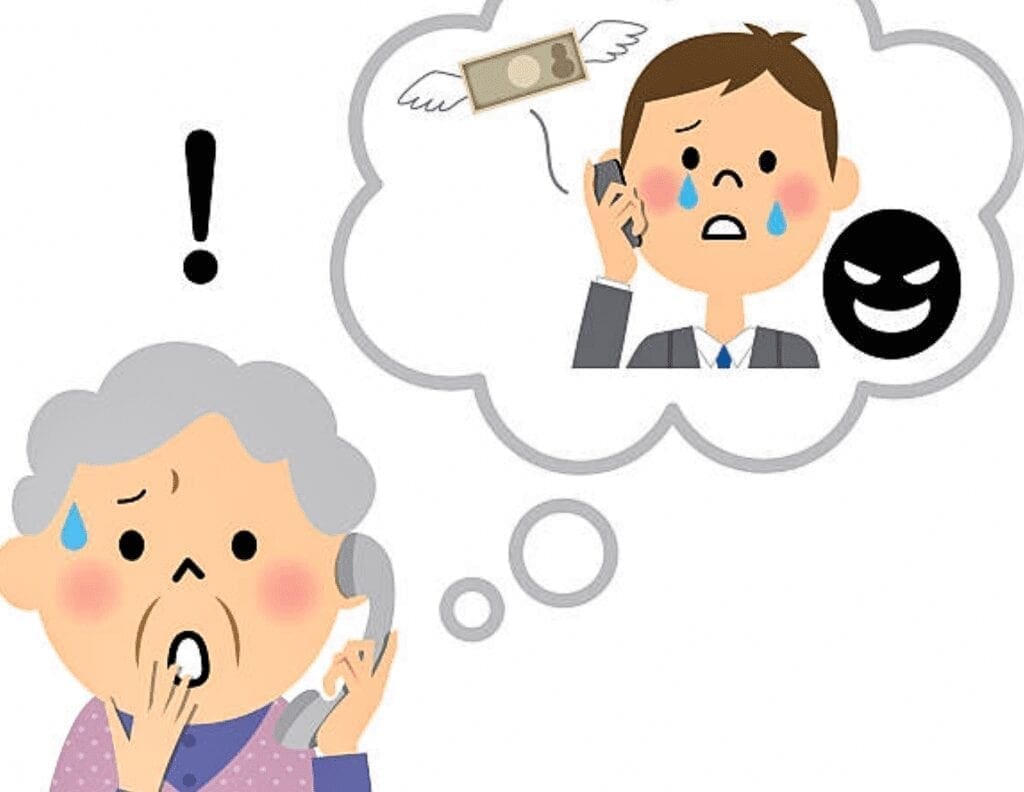
Moore said if a law enforcement official needs to contact you, they will do it in person, not by phone, e-mail or text.
Zusack says the scammers use a variety of stories to trick people into paying them money.
“We’ve had, ‘Hey your grandson’s in jail and needs to be bonded out,’ or ‘Hey, you missed jury duty and there’s a warrant for your arrest.’ These are things that we’re never going to call people on a phone and deal with,” Zusack said.
Moore said some elderly people are not accustomed to electronics or technology and may be more likely to believe what they read or see in a phone call or message. He said if a senior is being repeatedly targeted by scammers, family members may consider speaking to a legal advisor about obtaining power of attorney for financial matters. He said it is not just the elderly who are victims.
“It happens to everybody right now. It’s not just the elderly we don’t want people looking at. It is everyone,” Moore emphasized.
He said people can be fooled by links that seem to come from their bank.
“They say it’s a banking institution contacting them. They say your account has been hacked. Please log in and go to this. You click it because it looks similar to what your banking institution is and it’s a spam off and once you put your info in there they have all your stuff now,” Moore said.
He added that social media scams are also common.
“It’s not just banking institutions. It’s social media. We have people whose Facebook, Snapchat, everything else, is hijacked because they are running spam and spoofing and clicking a link off of, ‘Hey, I thought this was my account.’ And then their total account’s gone,” Moore explained.
Those Bank Scams
Zusack believes banks should caution customers about the scam risks connected to the industry.
“If they see someone taking out large amounts of money, especially more than once, it should be questioned by the bank and hopefully brought to our attention,” he said.
Zusack recalled stopping a woman at a bank from withdrawing a large amount of money for scammers who had told her she needed to pay fees for prize money they said she’d won.
“I was standing in line and a lady that I knew came in and she was trying to take a large amount of money out. They alerted me. I was in uniform. I looked at her and I said, ‘What are you doing?’ She said I won some money and I got to get money out to get it. I said, ‘No, don’t get it out.’ And I talked her out of it, thank goodness.
“But she had already made a previous transaction and the bank had tried to talk her out of that and failed, but she saw me and knew me, and I said, ‘Don’t do that, you’re getting scammed’ and she finally came to her senses.”

Moore added that retailers should question when an individual buys a large amount of gift or money cards.
“So, the large retailers really need to pay attention too when you’re coming in to get so many money cards when it’s not the holiday season like when you have 10 grandkids and you’re going to get 10 cards. When you see something in March and this doesn’t make sense for an individual who doesn’t have any family members and they’re getting 10 cards valued at $500 to $1,000 each; we’ve got an issue here,” Moore said.
Moore says the lure of easy money drives scammers.
“They make money, so they keep doing it,” Moore said.
He said he’s seen people lose hundreds of thousands of dollars, their entire savings, retirement funds and even their houses to scammers.
Moore says to be cautious and trust your sense of doubt.
“There’s no money tree out there. If somebody is contacting you to get money and you even have a doubt of it, it’s probably a scam. Moore said.

Anonymous Criminals
Zusack says finding scammers is “almost impossible” since they could be anywhere in the world, but they manipulate victims into withdrawing cash and buying money cards.
“So, if you do the online or answering the phone they’re going to ask you to go to the bank to get certain transactions or they’re going to ask you to go to a large retailer and get bank cards in certain amounts and either mail or drop them at a place or scratch off a code or do a money loan,” Zusack explained.
Moore said the scammers even use couriers to pick up money from victims’ homes. He said the scammers are bold and do not back down even when officers warn them they will be arrested if they show up at the home to pick up money.
The scammers just call the victim back to say the courier will arrive after the deputy leaves.
“They will send couriers to come pick up the money and some people believe this to be true,” Moore explained. “We will go sit at their house with them waiting for couriers. And we answer the phone and tell them that we are law enforcement.
“This is what we’re dealing with,” he said. “If you come here, we will arrest you and still they will call the individuals back and say after they (officers) leave, we will come and do this (money transfer).”
Zusack said they did arrest one courier at a victim’s home.
Zusack said Ohio Attorney General Andy Wilson is taking the initiative to stop scams and educate people on how to avoid them. You can learn more about the Ohio AG’s scam stopping initiative on the agency website.
Moore said identity theft monitoring services like LifeLock can be useful tools to avoid scam and financial crimes.
He said many social media apps, businesses and online retailers sell personal information that includes phone numbers and addresses and that is the gateway scammers use to contact us.
Moore advises people to be more aware of how and where their phones and computers are connecting, especially if auto joining through Bluetooth and to learn tech features.
“We need to adapt to the times of technology,” Moore said.
Zusack said people are often embarrassed to report scams, but he encourages the public to talk to his office. Moore said the Belmont County Sheriff’s Office is there to help and the sooner a scam victim comes forward the better.
The sheriff’s office can work with financial institutions to help to freeze transactions. They will do what they can to make the person financially “whole” again, but people need to ask for help. Zusack said his office also benefits when people report scams since he learns the latest frauds criminals are attempting.
Moore added that there are new scams emerging around Bitcoin, for instance.
“Let us know. Come see us. It makes us aware of what’s happening,” Zusack said.
Zusack and Moore said the bottom line is to protect your personal information and do not disclose anything to people you don’t know.
Plus, be skeptical.
“Don’t give any information on the phone period,” Zusack said. “If it’s too good to be true, it is.”
For more information or to report a scam or other crime, call the Belmont County Sheriff’s Office at 740-695-7933.