


The Team Is Helping Grow Women’s Hockey in the Ohio Valley
Women’s hockey is experiencing a remarkable period of growth across the United States and Canada with more girls are picking up sticks and finding opportunities to continue playing the sport they love.
It’s a new generation that’s growing to see hockey belongs to them, too, and in the Upper Ohio Valley, that growth has a name – the Wheeling Lightningbirds.
What began as an idea to recreate the hockey experience that a group of local women enjoyed growing up has developed into a championship-winning team, a nonprofit mission and, perhaps most importantly, a sisterhood determined to make sure the next generation has even more opportunities.
The story began in 2022, with founder Rachel Walters Adams, who grew up playing hockey in the Ohio Valley before continuing her career collegiately. As Adams began raising children of her own, she wanted them to have an opportunity to experience the same game and community that had meant so much to her. For not only Adams, but several members of the Lightningbirds, that meant remembering their days with the Wheeling Amateur Hockey Association, also known as WAHA.
At the time, girls’ hockey in the area looked much different. There were approximately four girls’ and women’s teams competing against one another, with rosters featuring players of dramatically different ages. High school players could find themselves on the first line, middle school players on the second and some of the youngest girls on the third.
It was unconventional, but it created something special.
Older players became examples and mentors for younger teammates. Younger girls learned the game alongside players they could look up to. Friendships were formed across age groups, and some of those relationships have lasted for decades. Adams wanted to bring that experience back to the Ohio Valley. The response showed just how much interest was waiting to be tapped. More than 32 women attended the first women’s practice. The group included women who had grown up playing hockey, former collegiate players, mothers and daughters and women who had never played the game before but simply wanted an opportunity to try.
Initially, it was about practicing, scrimmaging and enjoying hockey together. Then came a moment that changed everything.
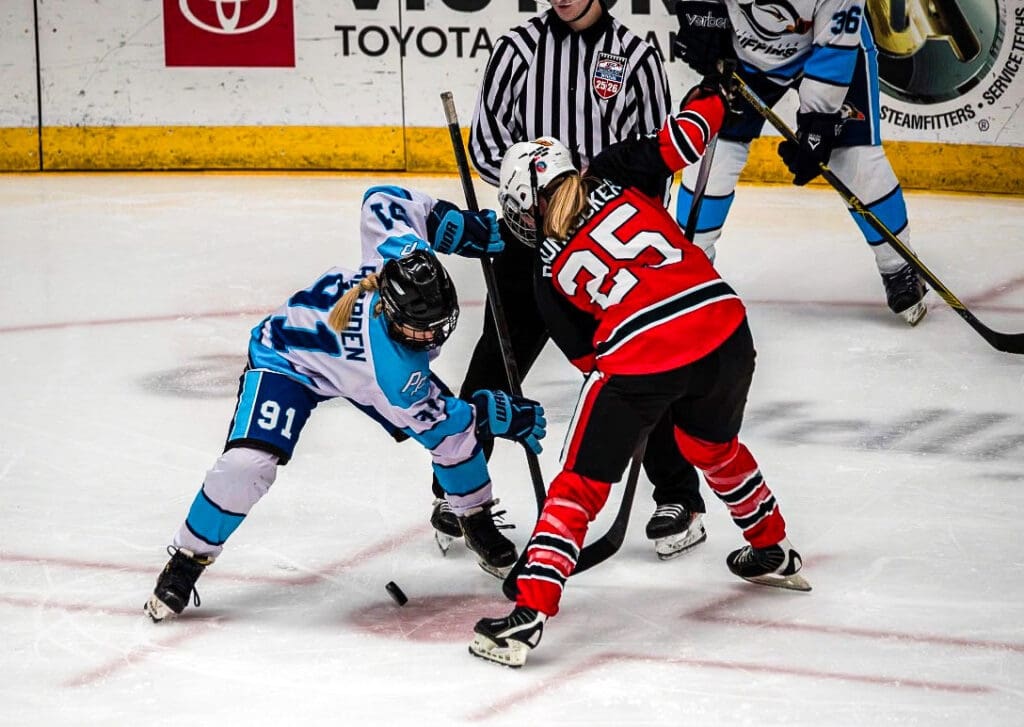
The Pittsburgh Puffins, an established team in the East Coast Women’s Hockey League, reached out about playing a scrimmage against the Wheeling group. The Puffins may have expected an easy matchup against a newly assembled collection of players, but they didn’t get one.
Wheeling battled the Puffins to a tie. Soon afterward, the group was invited to join the ECWHL. The Wheeling Lightningbirds were officially born and they wasted little time proving they belonged.
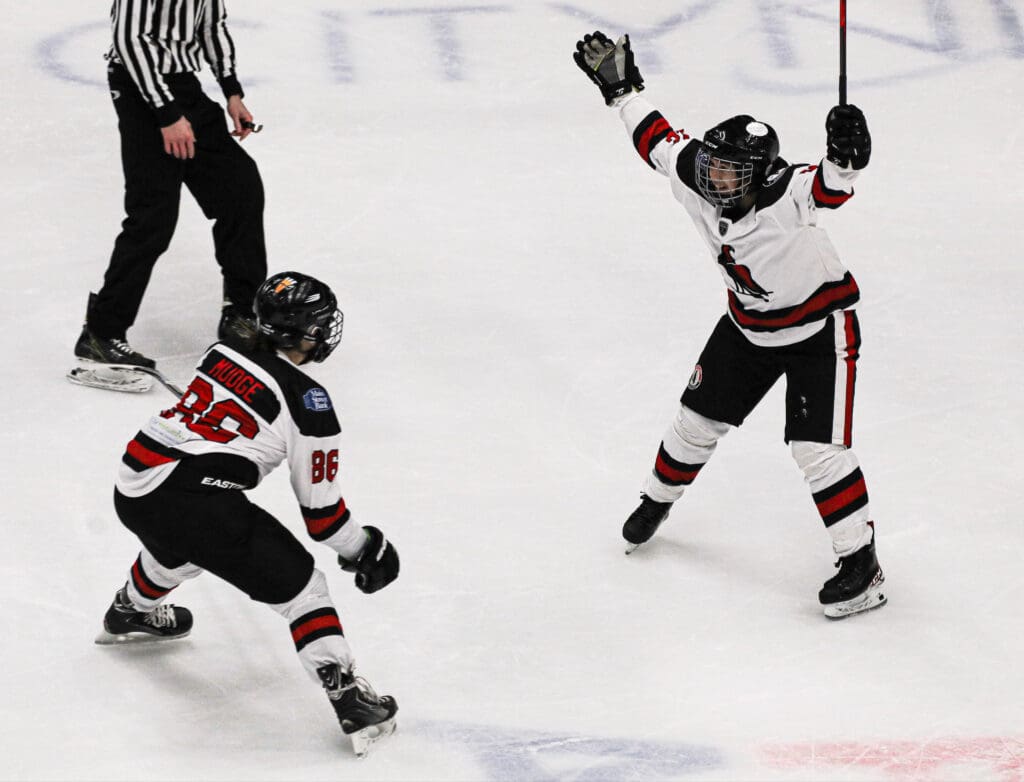
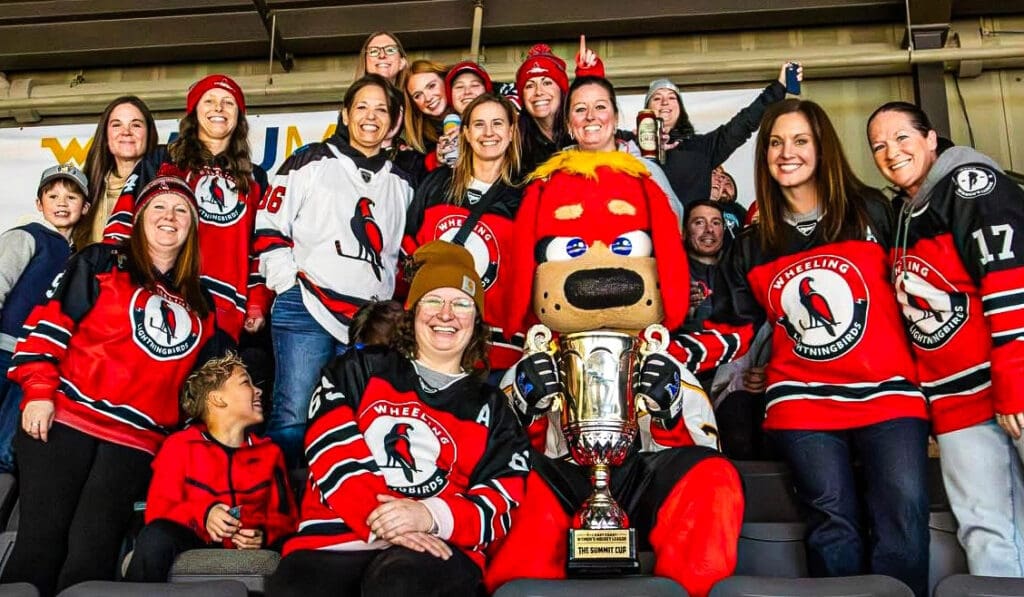
The Lightningbirds went undefeated during their inaugural season and captured the league championship. Since then, winning has become familiar territory with Wheeling capturing the Summit Cup three times in four years. But the Lightningbirds story is about much more than championships.
Even the team’s identity connects Wheeling hockey’s past with its future.
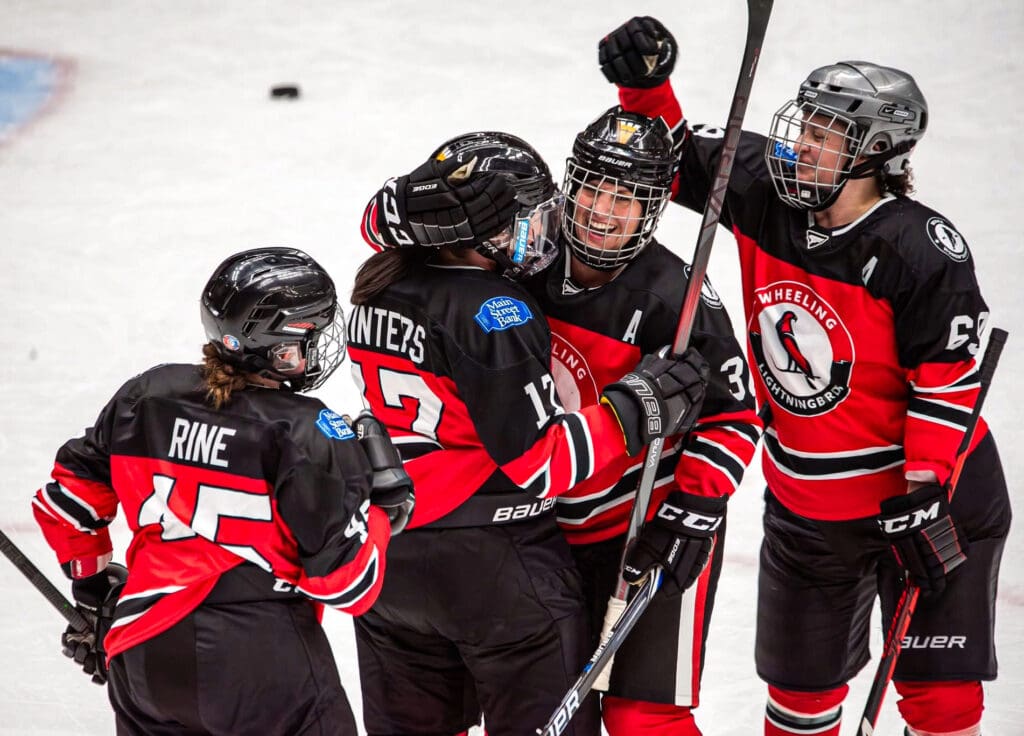
Several founding members grew up watching the former Wheeling Thunderbirds of the ECHL, so when conversations began about a name, they wanted something that honored that history while creating an identity of their own. Through a group chat among founding members, the Lightningbirds emerged. The team retained the old-school red and black colors associated with Wheeling hockey while creating a sleek bird logo. There is even some mythology behind the name.
A Lightningbird is described in folklore as a mythical creature with an appetite for blood, an admittedly fitting, and entertaining identity for a hockey team.
While the Lightningbirds represent Wheeling on the ice, their impact stretches far beyond the rink. Players regularly participate in community events including the Mountaineer Brewfest, Operation Toy Lift, YWCA events, celebrity server nights and a celebrity scooper event at Kirke’s Ice Cream benefiting the United Way. That community involvement is particularly important because the Lightningbirds understand one of hockey’s greatest barriers – and that’s cost.
“Equipment, ice time, tournament fees and travel expenses can quickly make hockey an expensive sport for families,” Lightningbirds Captain Jamie Mudge explained. “Through sponsorships, fundraising and community support, the Lightningbirds are able to help offset some of those costs, including providing scholarships for girls who want to play but otherwise might not have the financial opportunity.
“The organization can also assist youth girls’ teams with expenses such as tournament travel and ice time,” she said. “Sometimes those contributions might seem small, but the girl or woman receiving the opportunity, they can mean everything.
“Support, support, support!” is the message from the Lightningbirds when asked what the residents of the Upper Ohio Valley can do to continue growing women’s hockey. Local restaurants, bars, law firms, real estate agencies and other businesses have stepped forward as sponsors, and fans can support those businesses, attend Lightningbirds fundraisers, or simply come watch the team play.
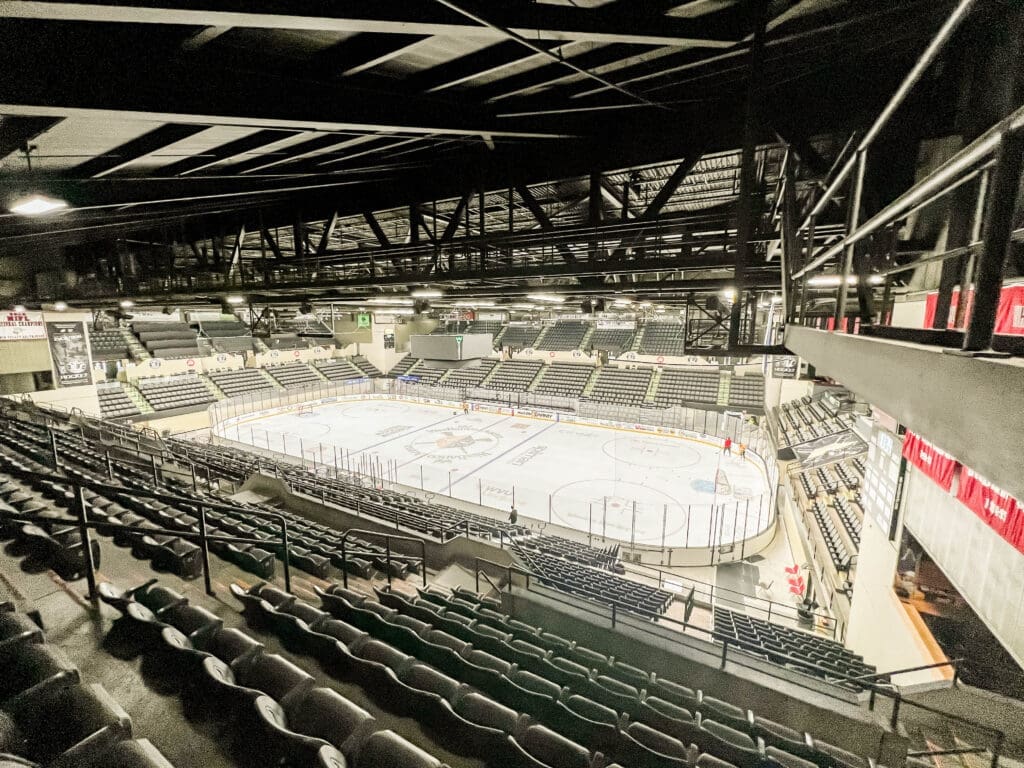
Lightningbirds home games are generally played on Saturdays and Sundays at WesBanco Arena and are free to the public, giving families an opportunity to experience women’s hockey without another expense.
Perhaps the most powerful part of the Lightningbirds story has little to do with wins and losses. These are not professional athletes. They are approximately 20 women from different walks of life who happen to share a love for hockey. Their careers include teachers, police officers, accountants, doctors and business owners, and several are mothers.
They work all day, take care of families and handle the responsibilities of everyday life before gathering for late-night practices or spending weekends traveling to games.
And through it all, they show up for one another.
Members of the team have experienced divorce, job loss, deaths in their families and financial hardships, and their teammates have been there. They have also celebrated promotions, new careers, growing families and achievements on the ice together. That is where teammates become something closer to family, and while there may be frustration over a bad pass or someone being out of position, when someone needs them, they are there.
“We play for each other,” Mudge said. “We give it our all for the woman sitting next to us on the bench.”
Maybe that helps explain those three Summit Cups or maybe it is the laughter inside the locker room, late-night card games during road trips, community events, or simply the unspoken respect created by teammates continually showing up for one another.
Whatever it is, the bond is real.
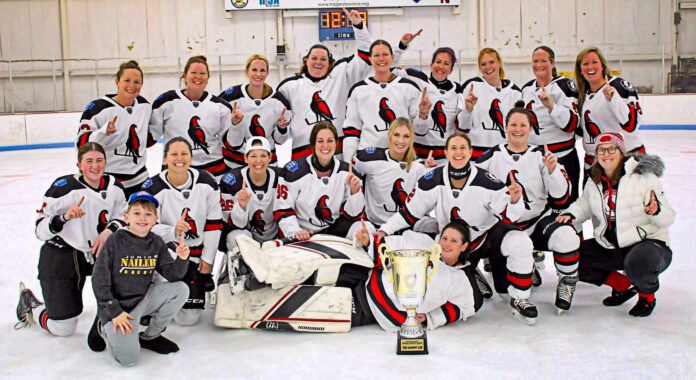
Of all the accomplishments the Lightningbirds have enjoyed, one of the most meaningful sights comes from looking into the stands. There, children watch their mothers play hockey; they see her athleticism, determination and toughness. They see the commitment required to belong to a team, and after the Lightningbirds captured the Summit Cup this past season, several mothers took photographs on the ice with their children and the championship trophy.
For Mudge, those became some of her favorite pictures from the entire season.
The team captain explained” “There’s something more being represented in those photographs.”
Across the country, women’s hockey continues creating opportunities that previous generations could only imagine.
In Wheeling, the Lightningbirds are making sure the region is part of that movement.
They are competing. They are winning. They are volunteering.
They are helping young girls afford the sport, and they are showing women that it is never too late to try hockey for the first time and they are giving children sitting inside WesBanco Arena something incredibly important to see.
These women belong on the ice with the next generation is watching and, thanks to the Wheeling Lightningbirds, the young ladies are likely dreaming about the day when it is their turn to lace up the skates.