


The Policing, Emotion and Responsibility Behind One of Hockey’s Most Debated Traditions
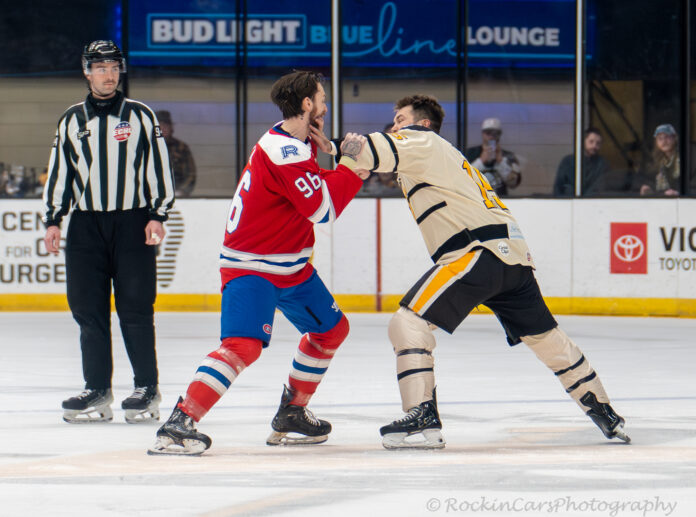
Few moments in hockey can change the atmosphere inside an arena as quickly as a fight.
The gloves hit the ice. The crowd rises to its feet. Teammates stand along the bench, tapping their sticks against the boards. For a few seconds, nearly everything else happening in the game becomes secondary.
To someone watching from outside the sport, fighting can seem like little more than violence interrupting a hockey game. But for generations of players, coaches and fans, dropping the gloves has represented something much more complicated.
It can be about protecting a teammate, or about responding to a dangerous hit. Sometimes it is about changing momentum, and, in certain situations, it is simply about accountability.
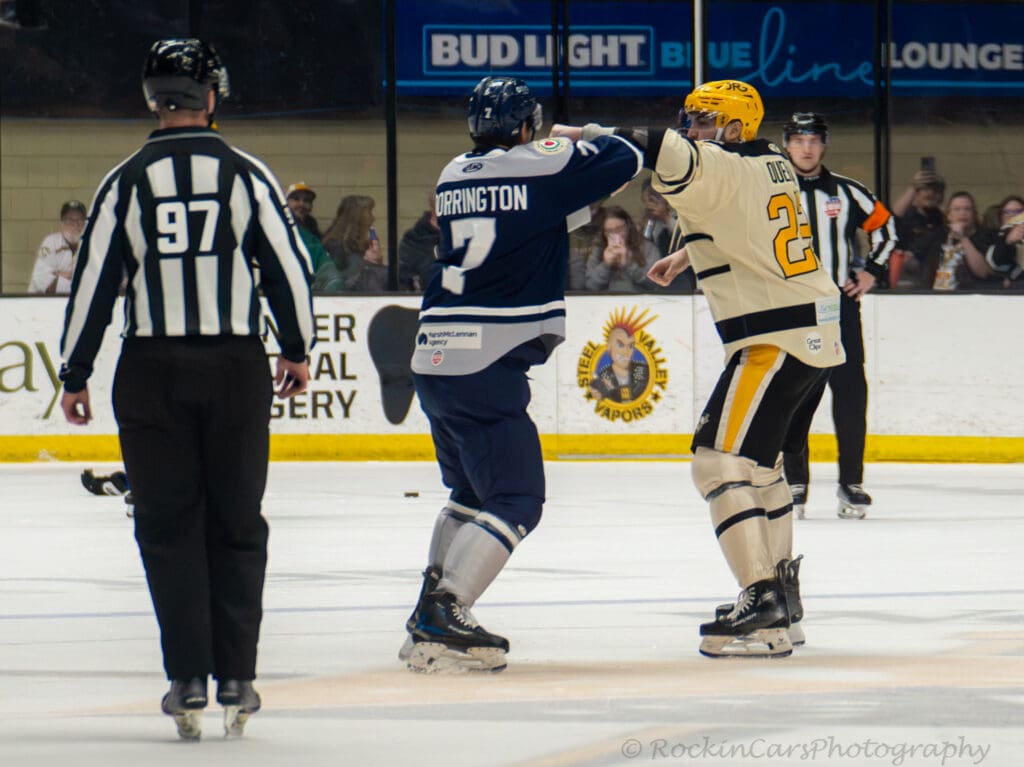
Former Wheeling Nailers captain and current Chicago Wolves forward Matthew Quercia believes that accountability remains an important part of the game.
“I think fighting is important to the game for multiple reasons,” Quercia insisted. “One, policing the game. If there are no repercussions for inappropriate actions during a hockey game, then those actions will continue.”
That concept of players policing the game has long been part of hockey culture. The sport is played at tremendous speed, and even with officials watching the action, players understand that not every questionable hit, slash, or cheap shot will be caught. Even when a penalty is called, there are times when teammates believe something more needs to be said – or felt.
In hockey, that message has traditionally been delivered by someone willing to stand up and answer for what happened.
“If someone has to stand up for doing something dumb, then the dumb actions will not be taken as much,” Quercia said.
That is where the argument surrounding fighting becomes more complicated than whether someone simply enjoys watching two players throw hands. For those who believe fighting belongs in hockey, its importance is often less about the fight itself and more about the possibility of one.
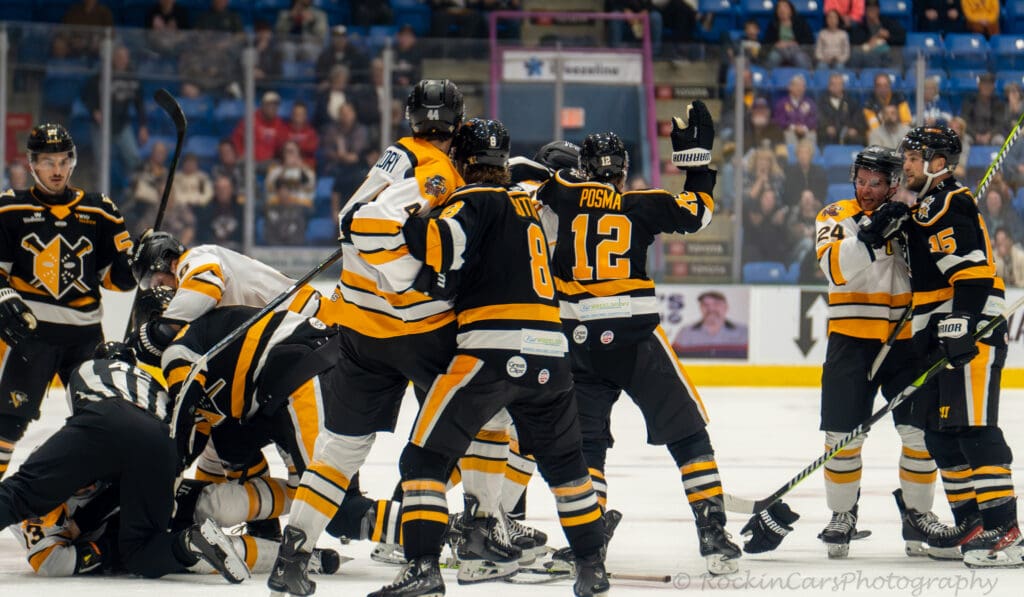
Knowing there could be an immediate response can make a player think twice before taking a dangerous run at an opponent or targeting a skilled player. The idea is not necessarily to create more fights, but to establish an unwritten layer of accountability between the players themselves.
Fighting has also created a role for a particular kind of player throughout hockey history. “Enforcers” and “heavyweights” have often been remembered for their penalty-minute totals and memorable fights, but their value inside a locker room can extend well beyond what happens after the gloves come off.
“I also think it gives certain players a job and a role,” Quercia said. “Lots of heavyweight guys and enforcers are locker room guys. They are guys you want to have around.”
That role has changed as hockey has become faster and increasingly focused on skill. Today, even players willing to fight are generally expected to contribute in other areas of the game.
But toughness remains valuable. And toughness does not always mean throwing punches.
It can mean blocking a shot, battling in the corner, playing through pain, or being the teammate willing to step forward when someone else needs support.
“If fighting goes away, you lose not only toughness but a great guy to have around in the room,” Quercia said.
Cause and Effect
There is a misconception that every hockey fight is planned before the game.
FALSE.
Now, sometimes, two players know exactly what is coming. Other times, emotions boil over in an instant.
“A fight can sometimes be predetermined, but, for the most part, they happen naturally,” Quercia said.
One hit can change everything, too.
A player sees a teammate go down. Words are exchanged. A shove follows a whistle. Within seconds, two players have dropped their gloves.
GO TIME!
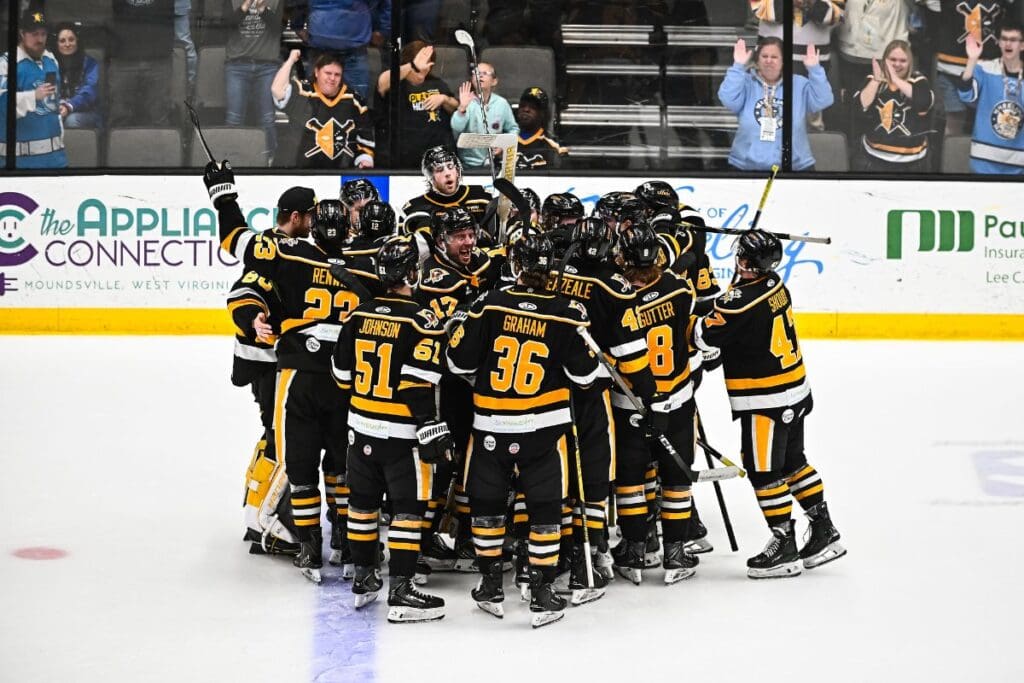
There are, however, occasions when both sides know a fight is coming.
“Staged fights happen a lot between two heavyweights or between a fighter and someone who needs to ‘answer the bell’ or answer for a dirty play,” Quercia said. “Warmups sometimes decide that, but those are usually just known by everyone that it’s gonna happen.”
The phrase “answer the bell” is deeply rooted in hockey’s unwritten code. Let’s say something happened earlier in the game. Maybe it happened the last time the teams played. Whatever the circumstance, the players involved understand there is unfinished business.
That culture is exactly why fighting remains one of hockey’s most polarizing topics.
Those who want less of it can point to legitimate concerns about player safety and the long-term consequences associated with repeated blows to the head. Hockey has evolved significantly in its understanding of concussions and head injuries, and leagues at every level continue trying to find the proper balance between physicality and player protection.
But eliminating fighting completely would also mean changing something that players such as Quercia believe serves a purpose beyond entertainment. It could lead to more injuries, more dirty hits, or dangerous plays because, other than a penalty, what other repercussions will players face?
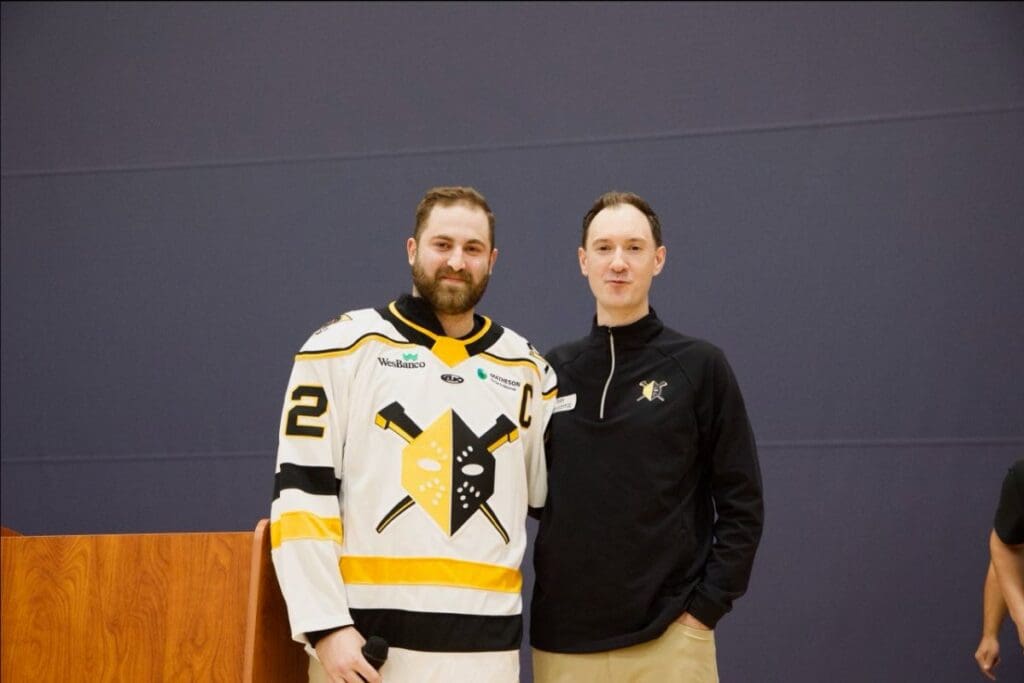
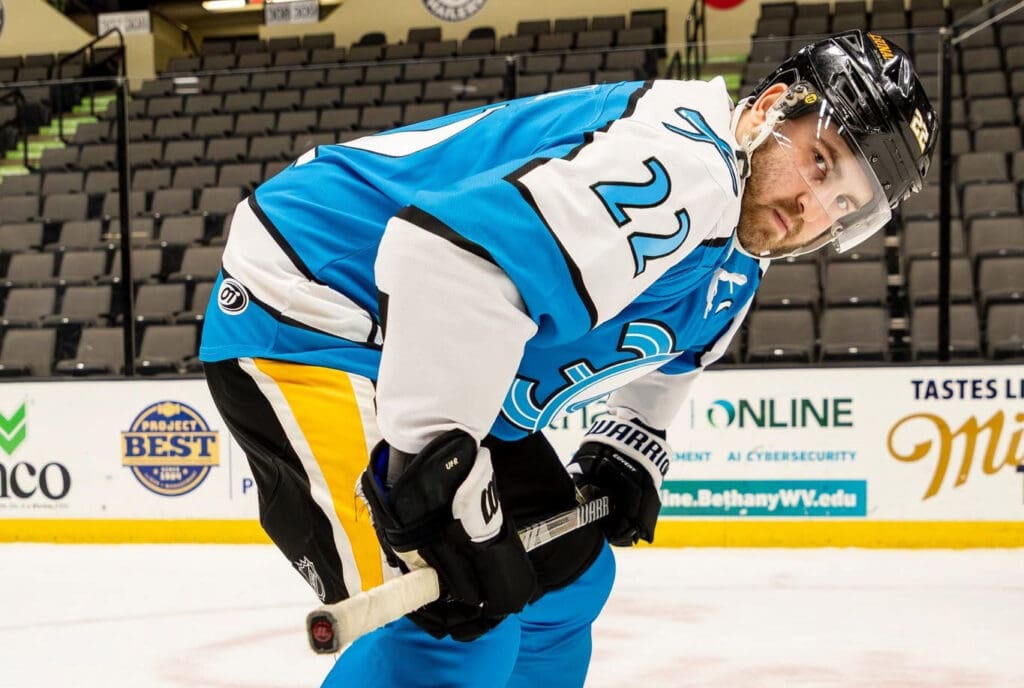
For Quercia, toughness has become only one part of the player and person he has worked to become.
During his time in Wheeling, his willingness to compete, protect teammates, and embrace responsibility helped make him a leader. But Quercia is quick to point out that becoming that type of player did not happen by accident or by himself.
“I’ve worked hard to become that type of player,” Quercia said.
Those lessons have followed him beyond the rink.
Hockey can teach players how to respond when things become difficult, how to stand beside teammates and how to understand their responsibility within something bigger than themselves.
For Quercia, those qualities were developed through years of support from the people surrounding him.
“Those tools have paid off not only on the ice but off,” Quercia said. “It means a lot to have a community at my back and a locker room as well.”
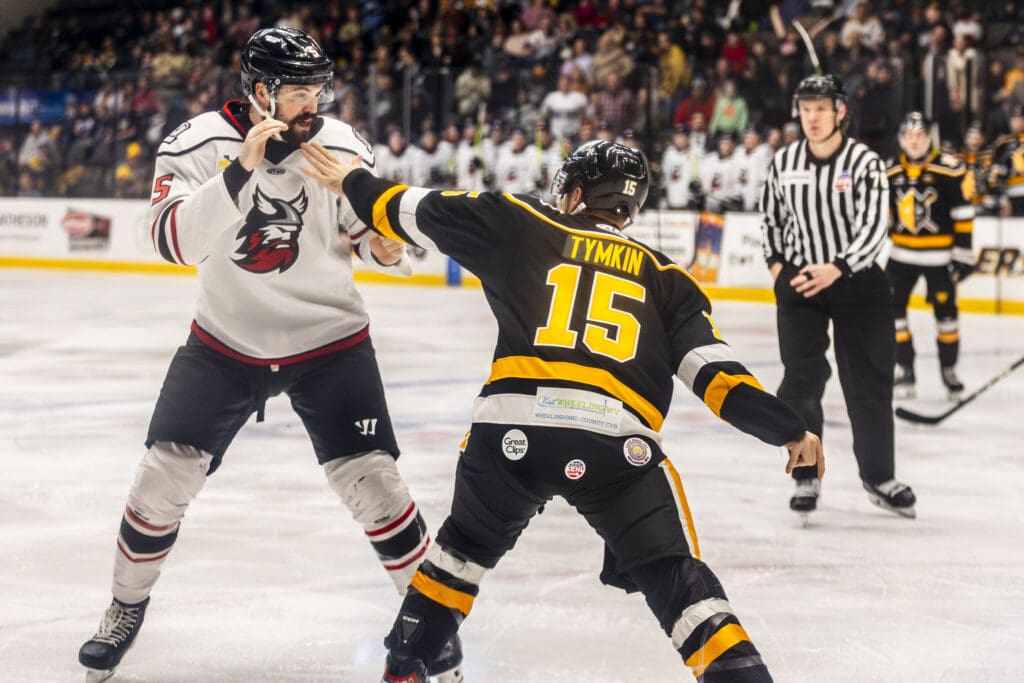
Perhaps that is the part of fighting in hockey that can be difficult to understand without experiencing the sport from inside a locker room. A fight is an individual act, but the motivation behind it is often anything but individual.
Sometimes a player drops the gloves because of what happened to the teammate sitting beside him.
Sometimes he does it because his team needs energy. Sometimes he knows standing up at that moment is simply part of his responsibility and those relationships can shape a player long after the final horn sounds.
“I’ve grown not only from learning these things about myself, but from the support staff I’ve had my entire life,” Quercia said. “Whether it’s family, friends, teammates, coaches or fans, they have all shaped who I am as a person and a player.”
Hockey continues to evolve, and the debate over fighting is unlikely to disappear anytime soon.
But for players who have lived that part of the game, the discussion cannot be reduced to punches and penalty minutes. It is about accountability. It is about toughness and, perhaps most importantly, it is about being willing to stand up for the people wearing the same sweater.