


It wasn’t much of a surprise to West Virginia residents when CNBC released an article this week with the headline, “These 10 states have the worst infrastructure in America in 2025”.
That’s because the vast majority of the 1.7 million citizens who remain today in the Mountain State most often travel on subpar roadways and interstates, drink and bathe using unhealthy water supplies, and depend on limited broadband access in rural areas of each county. The website ranks West Virginia as eighth in the U.S., stating:
According to the non-profit First Street Foundation, the Mountain State has the second highest flood risk of any state, after Louisiana. Already this year, West Virginians have endured multiple flash floods. Perhaps more critically, according to property data firm Cotality, West Virginia has done little to protect itself from that risk. The state ranks 47th for resilience, according to data Cotality compiled for CNBC.
The statistical information compiled by CNBC includes: 2025 Infrastructure score: 164 out of 405 points (Top States Grade: D); U.S. Population within 500 miles: 139,907,862; Roads in unacceptable condition: 13.3%; Bridges in poor condition: 18.6%; Power outages per year: 12.52 hours; Affordable broadband access: 62.6%; and Data Centers: 6.
“This past session (of the W.Va. Legislature), there was more focus on social issues than there was on our roads and our broadband,” said Del. Bill Flanagan, a representative (4th District) of the GOP’s supermajority in the House of Delegates. “To fix the problems we have here in West Virginia, we have to talk about them and focus on them, and some delegates did that but there wasn’t much traction. Those issues weren’t the priority and they should have been, in my opinion.
“Anyone who travels the roads in Ohio County, in the Northern Panhandle, or in most areas of the state will tell you all of our roads need attention right now,” he said. “Even though our residents tell us all the time that they roads need fixed, it’s not the top priority in Charleston.”
“It’s the first thing I hear about,” said Marshall County Del. Jeff Stephens of the Sixth District in Marshall County. “And it’s always the first thing I hear when I ask the people in my district. It’s roads, and then roads, and roads again. That’s what I hear over and over.
“I know there was a lot of attention on the roads in Marshall County when Jim Justice was the governor, and there were some projects that took place that repaired some big slips, put up some guardrails, and did some paving, but the secondary roads are rough,” he said. “I know I’ll keep pushing the issue because it’s long overdue here in the Northern Panhandle.”
Clean, Shiny & Expensive
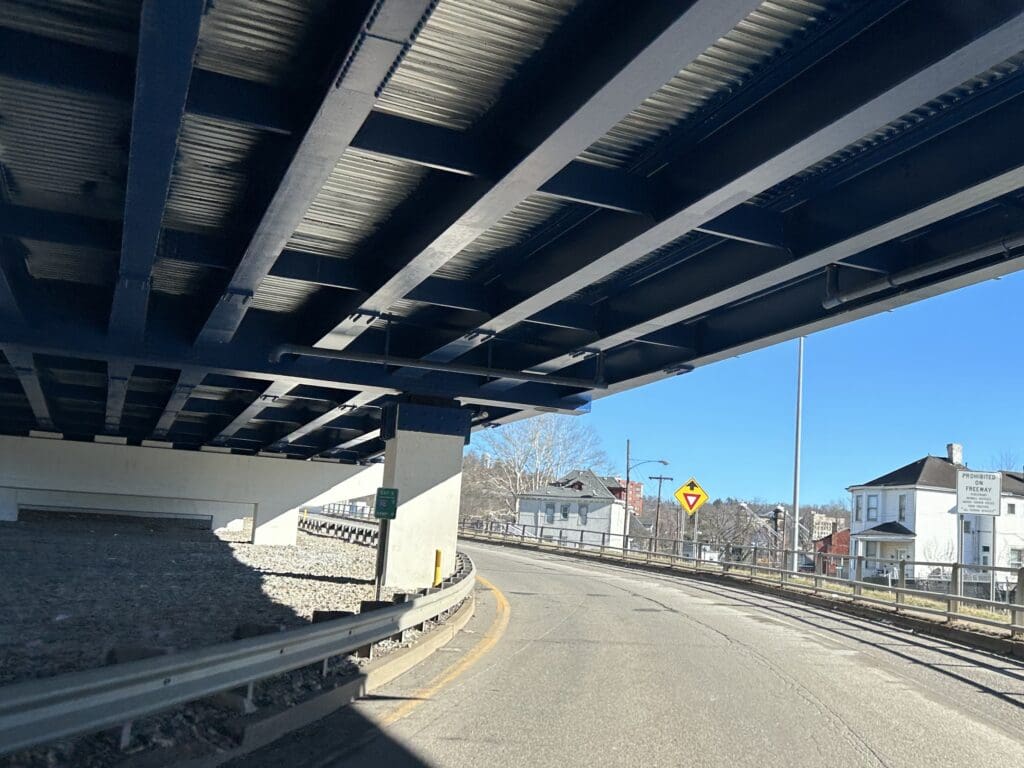
Nearly $320 million in infrastructure upgrades and repairs have been performed in Ohio County since late 2019 when the “Roads to Prosperity” projects along Interstate 70 began, and that includes the freeway’s 26 bridges and ramps ($264 million), and the beautification and renovation of the historic Wheeling Suspension Bridge ($20 million), and the $37 million streetscape the in the Friendly City’s downtown district.
But what about all of those “country roads” that remain the state’s responsibility?
“Our secondary roads are not in great shape, and the flash flooding we had in June caused much more,” Flanigan said. “Some emergency repairs had to be performed by the state after the flooding, but there’s so much more that most people don’t see because they’re not in those areas often, if at all, and even the main roads like (W.Va. Route) need work in a lot of different areas.”
While the federal tax has remained 18.4 cents per gallon since 1993, the state’ s gas tax currently is 35.7 cents per gallon and extra fees have been added to the cost of registering hybrid and electric vehicles. A hybrid, or a vehicle that self-charges an electric motor as one of two sources for propulsion, costs an extra $100 to register annually, and an EV is $200 more.
“I’m not sure if we’ve seen a difference in the quality of the roads since those increases were put in, but I am sure it’s helped offset the losses that have been caused by those kinds of vehicles,” Stephens said. “Repairing our roads is expensive, it gets more expensive every year, so I hope we can figure out something soon.
“It’s really what I hear the most – roads, roads, roads,” the state lawmaker said. “We have to do something about it and I’m praying it’s sooner than later.”