

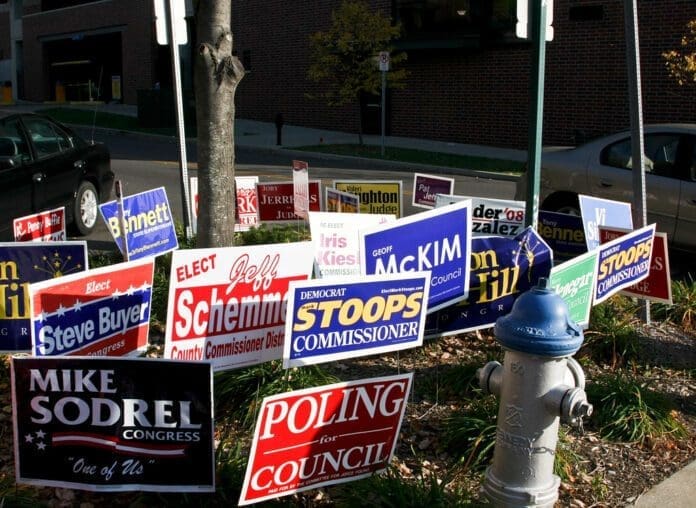

Don’t worry, kids. Your summer vacation is safe. Heck across the Upper Ohio Valley, summer vacation has not even started yet for some students. However, for those paying attention to this election cycle, I predict a “Where did our summer even go?”
For as long as I have been involved in politics, there has been an unwritten rule for the campaign season. The primary election would come and go in May, candidates would take a breath, voters would tune out for a while, and the political world would enter a quieter period through the summer months.
Campaigns would still raise money. Candidates still attend community events and prepare for the fall, but the intensity of the election season generally subsides until Labor Day. Then the sprint to November officially began. Granted, those trying to improve their name recognition would normally be out knocking on doors.
Having participated in several campaigns as a candidate and elected official, that has been my experience. Traditionally, there was a noticeable slowdown between the primary and the general election. It was a time when elected officials could focus more on governing, community events, constituent services, and policy matters without the constant backdrop of campaign activity, but this year feels different.
In fact, it feels a lot different. Just a few weeks after the May primary, many incumbents across West Virginia appear to be operating as though the general election is right around the corner. Social media activity has increased. Public appearances are being highlighted more aggressively. Messaging is sharper. Political organizations are working on messaging. Rather than simply maintaining visibility, many elected officials appear to be actively campaigning.
The question is, why?
One possible explanation is the growing nationalization of politics. Voters are increasingly engaged year-round, and the 24-hour news cycle gives little political downtime. Social media platforms reward constant engagement and visibility. Politicians who disappear from public view for several months risk losing the attention of constituents accustomed to frequent updates, but if there is another factor at play here in West Virginia.
For a number of cycles, Republicans have benefited from a political environment in which many races were effectively decided in the primary. In heavily Republican districts, the Republican primary winner often became the overwhelming favorite in November. In some cases, there wasn’t even a Democratic challenger on the ballot. That reality may be changing.
One of the more notable developments from this year’s filing period was the effort by the West Virginia Democratic Party to recruit candidates and fill ballot positions across the state. While Republicans continue to enjoy significant advantages in voter registration and statewide performance, Democrats appear to have made a concerted effort to fill the ballot, and many of them have been filled with good, credible candidates.
Whether those candidates are ultimately competitive remains to be seen. However, simply having an opponent can change the dynamic. Undeniably, though, this primary, the democrats turned out to vote.
Many incumbents who were successful in the primary now face campaigns that will continue through November. Even if they are favored to win, they cannot afford to completely disengage. They must work to maintain their campaign infrastructure and keep it active. Fundraising must continue. Voter outreach cannot stop.
Perhaps that explains why so many elected officials seem to be maintaining campaign mode rather than shifting fully into governing mode.
There is also a psychological component. Political pundits often say that campaigns are won through organization, and organization requires time. If Democratic candidates are appearing on more ballots, Republican incumbents may be responding by ensuring their own organizations remain energized and visible throughout the summer.
I am not trying to indicate that it is a time to panic or that it should be interpreted as panic. Republicans remain dominant in West Virginia politics, holding virtually every statewide office and commanding large majorities in both legislative chambers. The state’s political path over the last decade has been unmistakable.
The best campaigns often act as though they are ten points behind, even when polling suggests otherwise. Only the arrogant claim a premature victory, often without seeing it. I always believed you either run unopposed or scared. Even though I led the ticket in every multi-member race, I always ran scared. It was something too important to me to take for granted. It was my honor to serve the people.
Another consideration is whether the flood of outside money that played such a prominent role during the primary will carry over to the general election. West Virginians witnessed unprecedented spending by political action committees, independent expenditures, and organizations based outside of our state’s borders during this primary. In several races, the amount spent by outside interests far exceeded what candidates spent on their own. TV ads, digital campaigns, mail pieces, and targeted voter outreach became increasingly common, even in legislative races that traditionally attracted little attention beyond their districts.
The impact of that spending is still being debated. Some of the candidates who benefited from substantial outside support were successful, while others were not. However, the presence of that money undoubtedly changed the nature of many campaigns and demonstrated that national organizations are paying closer attention to West Virginia than they have in years past.
The larger question is whether those same groups will remain engaged through November. If they do, incumbents and challengers alike may have good reason to remain in campaign mode throughout the summer. Outside spending can arrive quickly, reshape a race overnight, and force candidates to respond. No elected official wants to be caught flat-footed if a flood of television ads or direct mail suddenly appears in the final weeks before Election Day.
If the primary was any indication, some with limited or no interest in West Virginia appear willing to invest resources here. Some question why. Regardless, it will be interesting to see if that investment continues through the general election. Its potential influence is certainly another reason why this year’s campaign season feels different from those of the past.
Of course, in each cycle, many first-time candidates have to get their names out to the community they hope to serve, and they do so in different ways. Many attend various community events, though I have always thought that starting only when you are campaigning looks disingenuous. Others knock on doors at a slower, more relaxed pace.
As someone who has experienced several campaigns, I can say with confidence that this year’s atmosphere feels different from what has traditionally followed a primary election. However, the usual pause appears to be missing. The customary summer lull has largely failed to materialize.
While we are currently not being bombarded with TV, radio, and texts, the political messaging continues. Social media plays a role in this. Candidates are traveling, attending events, and communicating with voters at a pace (and posting all about it on their social media) that seems a lot more like October than June. Is this the new normal during election years?
If so, voters should take note. A longer campaign season means more opportunities to engage with candidates, ask questions, and evaluate records. It also means elected officials are likely to spend more time communicating their accomplishments and defending their positions.
For political observers, the months ahead will provide an interesting test. Is this simply a temporary response to a more organized Democratic effort in 2026? Or does it reflect a permanent shift in how campaigns are conducted in the modern era?
We will have that answer in November.
What is clear today is that the traditional resting period between the primary and the general election appears to have disappeared. After participating in several campaigns, I have grown used to a quieter summer. This year, though, the campaign season doesn’t appear to be stopping, and that may tell us more about the future of West Virginia politics than any election ever could.