

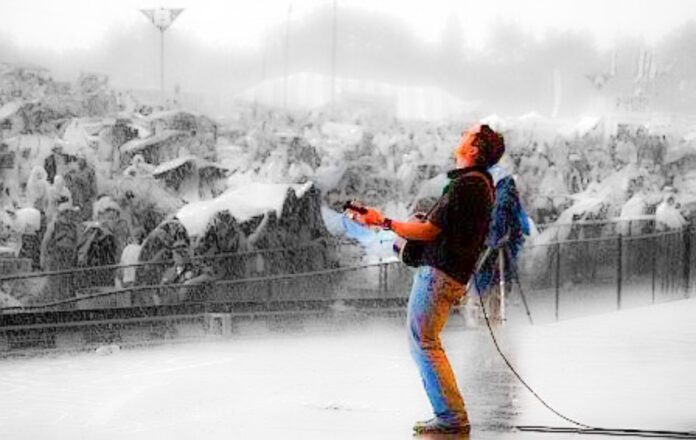

The lyrics were simple. He wrote what he saw with his own two eyes.
“Here we are, all redneck and proud.
With our cowboy hats and bikini tops and the country
music playing loud. We take it easy and party hard.
Do our cooking on the grill.
Looks to me like we got ourselves another Jamboree in the Hills.”
He then put it to music and, of course, titled the tune, “Jamboree in the Hills”.
“I never thought of the song I wrote as the new Jamboree song or as the replacement song. I saw it as another Jamboree song to listen to along with the original one that Mayf Nutter did, and I didn’t expect it to take off like it did when it was released. I just kind of wrote it for fun and nothing like what happened after it was released was calculated,” Zelek recalled. “It’s simply based on my experience out there with my group of friends, and it was an idea that came to mind.
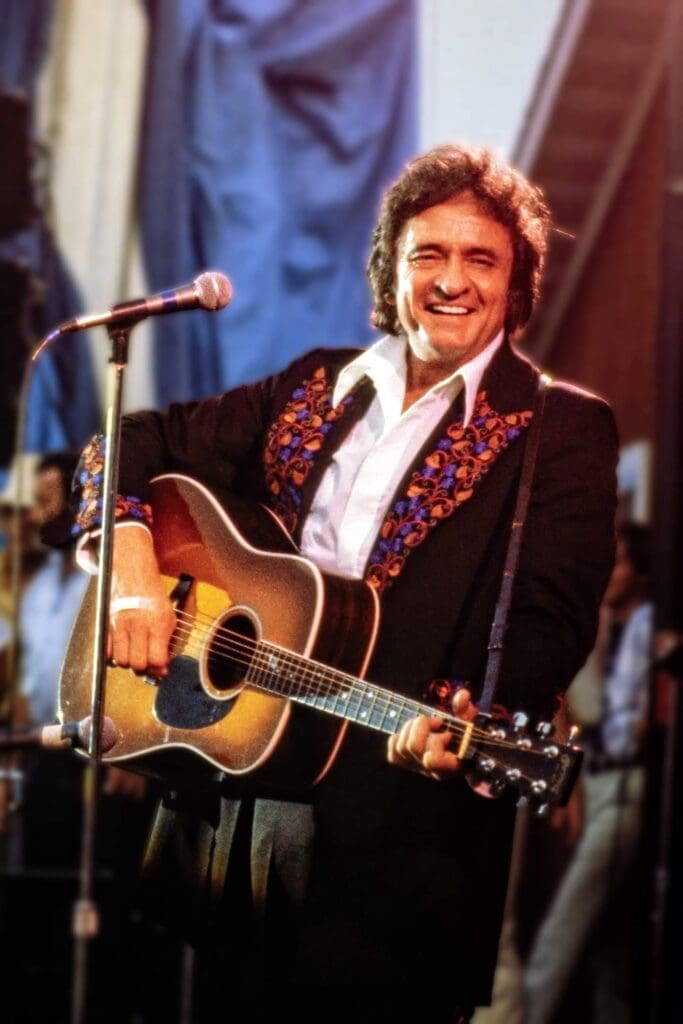
“It’s really an honor for me that the song sits next to the original Jamboree song,” he said. “I grew up on Mayf’s song and it’ll always be the Jamboree song, and to have a little place in the history of the whole thing is just an incredible honor. My song is a companion piece that I just wanted to write one day, and I’m so lucky Kelly Tucker eventually heard it, loved it, and ran with it.”
“Mayf Nutter” was born Mayfred Nutter Adamson in 1941 in Parkersburg, he’s member of the West Virginia Music Hall of Fame, and he wrote his version of “Jamboree in the Hills” in 1978. Once the newer version of “Jamboree in the Hills” was released and became the new anthem for what was known unofficially as the “Super Bowl of Country Music,” Zelekk fear Nutter’s reaction.
Until that is, he met the local legend in person.
“Meeting Mayf Nutter backstage one year will forever be one of my favorite moments from Jamboree in the Hills. I remember being so nervous,” Zelek said with a chuckle. “I’ve always loved his music and his Jamboree song, and I had so much respect for him.
“There was a little bit of controversy about it all, and I think that was created by people with motives, but I don’t think those people realized I was just some kid from Mount Pleasant writing something from his heart,” he said. “But I didn’t know how Mayf was going to react, but he couldn’t have been nicer. He was just the nicest, warmest, and supportive guy I could have ever met.
“I felt like I kind of had his blessing in some way and that he was okay with everything. And that meant a lot to me, and I really hold on to that.”
More Than a Couple of Songs
Loretta Lynn. Mel Tillis. Jerry Lee Lewis. Tammy Wynette, Charlie Daniels. Lorrie Morgan. Tim McGaw. Willie Nelson. Toby Keith. Hank Williams Jr. Garth Brooks. Neal McCoy.
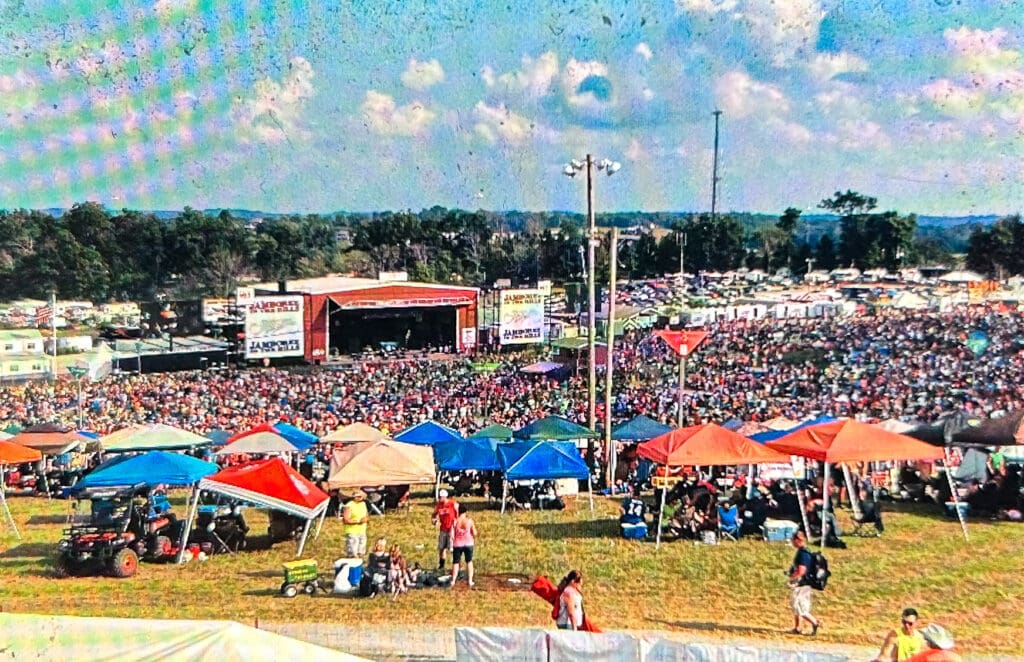
The biggest of the big. Those performers – and many, many more – were booked through the years to perform at JITH’s two locations along U.S. 40 in Belmont County. When Jamboree in the Hills was founded in 1977, only the Woodstock festival in 1969 could compare to what gathered at Brush Run Park to watch country music stars like Johnny Cash and Merle Haggard that July.
Over the next 40 years, the festival evolved into a four-day tradition for thousands, and fans discovered their favorite campgrounds, crowd sections, foods, and squirt bottles. But it was a local favorite named Travis Tritt who lit a fire for Zelek as a teenage musician.
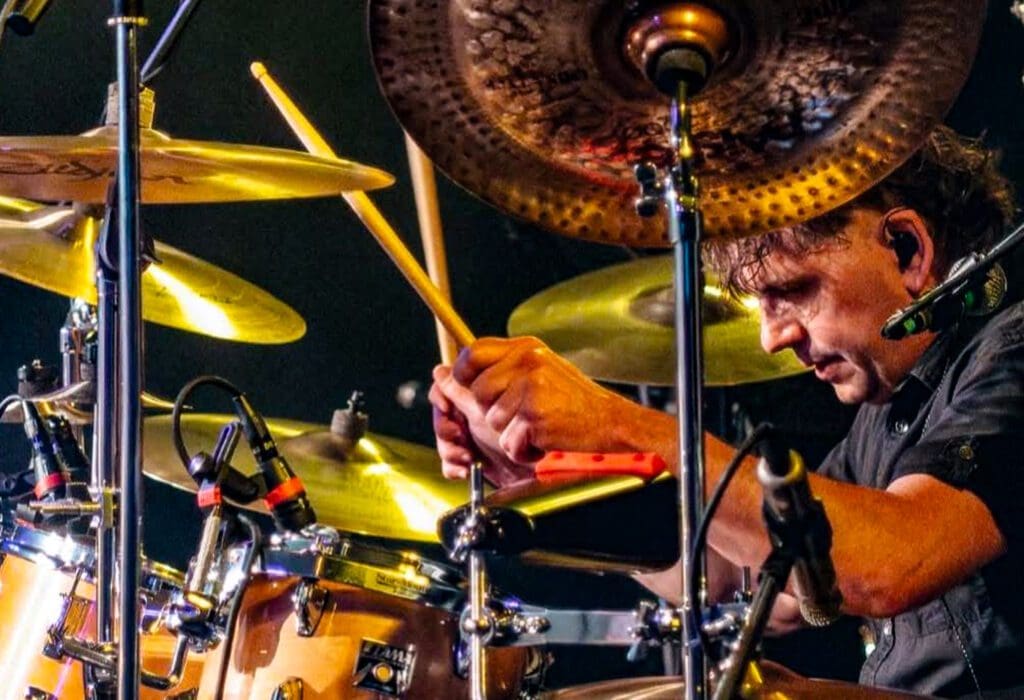
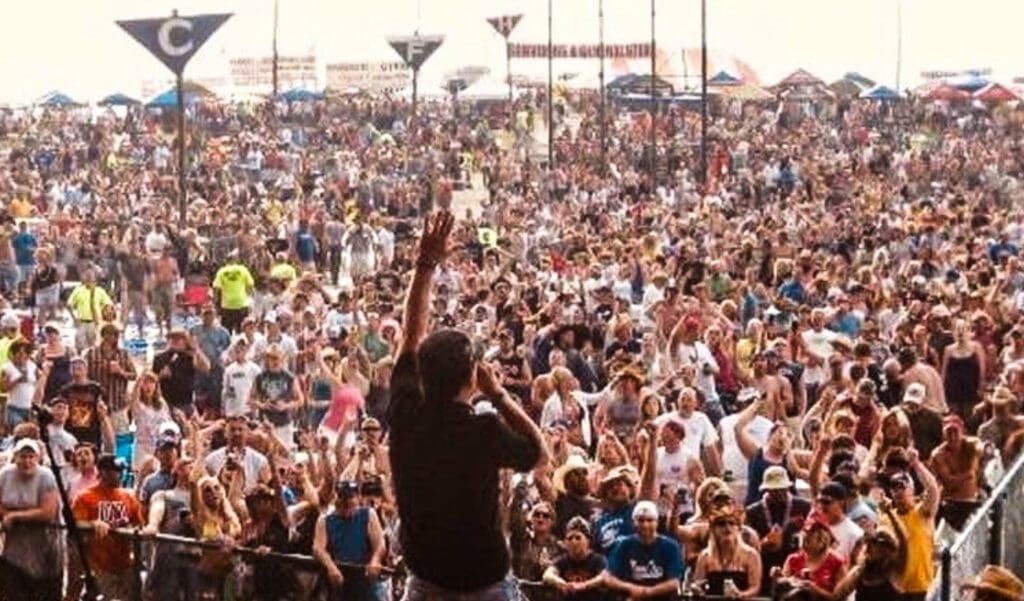
“These big corporate, modern festivals that you see everywhere now have become so commonplace. They’ll never have the character, that grassroots nature of that homecoming aspect that Jamboree in the Hills had. It truly forged a new ground in entertainment, and there will never be another like it,” insisted Zelek, who now the drummer in the “Tiny Wars” rock band based in Pittsburgh. “We were very fortunate to have been able to experience that.
“I think the first year I went was maybe in like my junior or senior year in high school, and I remember that it was Travis Tritt headlining that year. And, yeah, the whole experience just blew me away,” he said. “The power and camaraderie and family-like atmosphere … and the craziness in that audience. That Travis Tritt show really resonated with me at that point in my life because it was that mix of modern country with southern rock, and it just pushed all the right buttons for me.
“And just being able to drive a few hills over and have your life changed like that was just invaluable to me.”
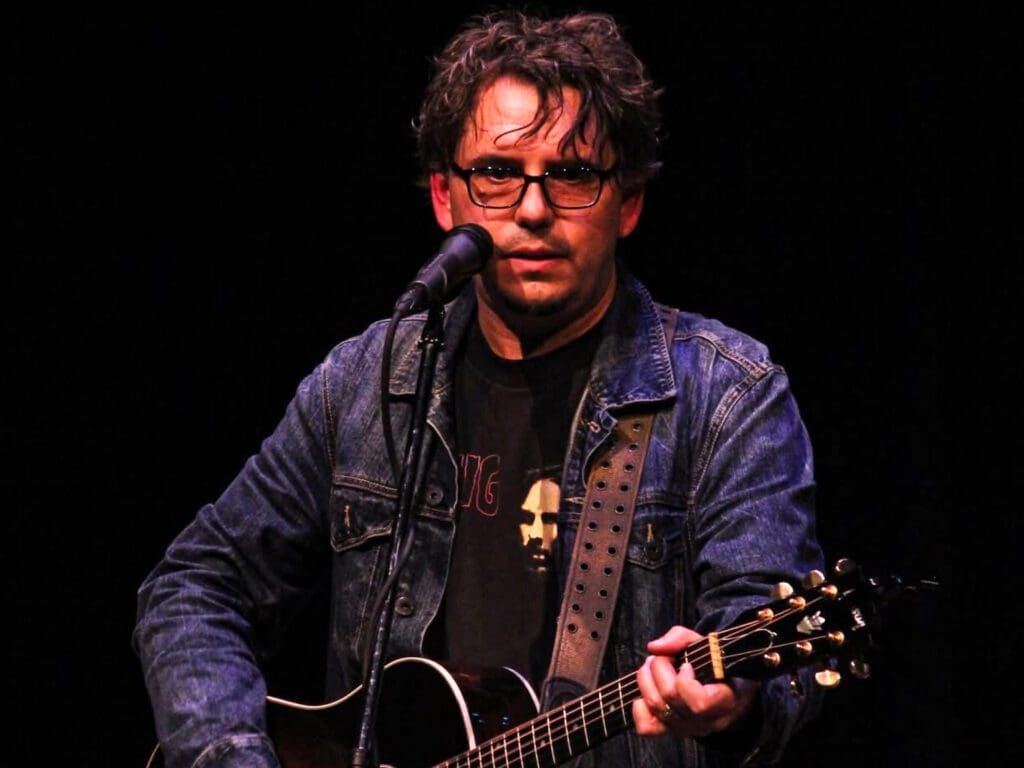
It remained especially special, too, for Zelek and for an entire community that – without fail – collected each year on that hillside in East Ohio.
“So grab a squirt bottle and never fear,
I’ve been building this custom cooler all year.
You won’t believe it ’til you see it with your own
eyes. From all 50 states we gather ’round,
to pledge our allegiance to that hillbilly sound.”
Sadly, though, Live Nation placed JITH into perpetual “hiatus” status following the 2018 weekend.
“That event was more than a concert or a festival. It was the centerpiece in people’s lives this time every year. It was their vacation, their homecoming. People grew up with it,” said Zelek, who recently has been re-releasing a number of his original songs. ‘“Homecoming’ is a great word for it. That’s exactly what it was for so many. It’s when they could touch base with that family. You had the chance to touch base with everyone, it seemed.
“They don’t make events like that anymore. It was so unique and groundbreaking in the very beginning back in the 1970s. It was the first of its kind,” he said. “I love what Chris Dutton has done with Ranch Night. I think that was a great pivot from what ‘Blame My Roots’ was, and I think what their doing at the Old Washington Fest this weekend is awesome. What a great lineup.”
But?
“But I don’t think they should be compared to Jamboree in the Hill because it’s a different era and it’s really difficult to do what they’re trying to do. So, I hope that everyone supports them and they can get it off the ground, but there will never be anything like Jamboree in the Hills.”