


The plan banned coolers, wiped out an entire day of county music, and renamed the “Redneck Run” to the “Morning Run,” and even though general manager Kelly Tucker hated every tiny bit of it, her life was threatened over and over once the world learned of “Jambo Country”.
It was Live Nation’s blueprint for making an annual country music festival in Morristown, Ohio, sustainable, but Tucker, who ran “Jamboree in the Hills” for 14 years, believed it was too harsh too fast. After all, the festival had become a 40-year tradition that featured the greatest country music stars and attracted fans from throughout the country and across the world.
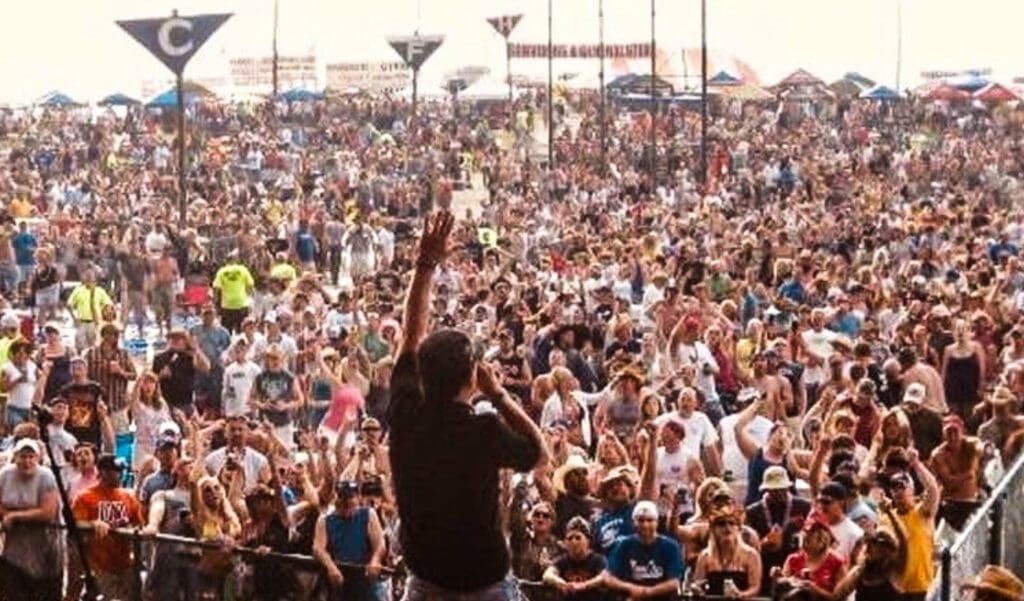
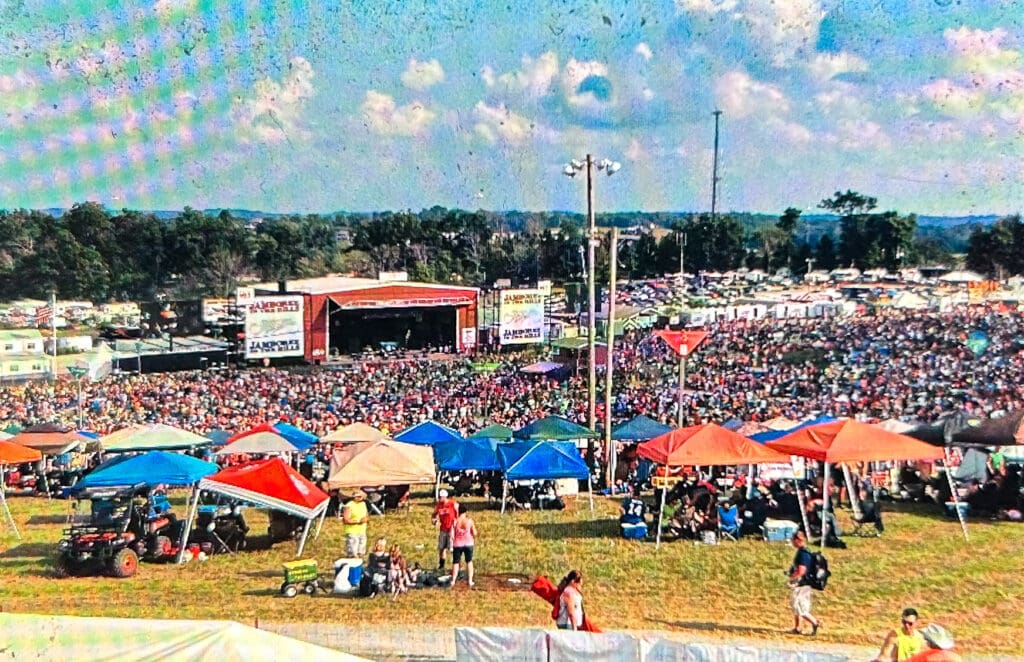
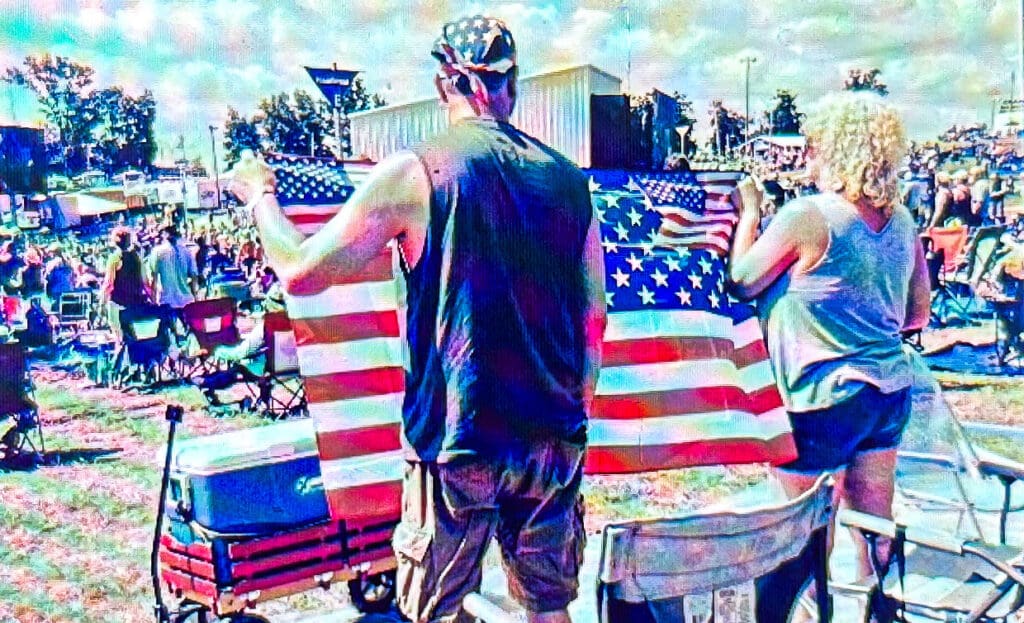
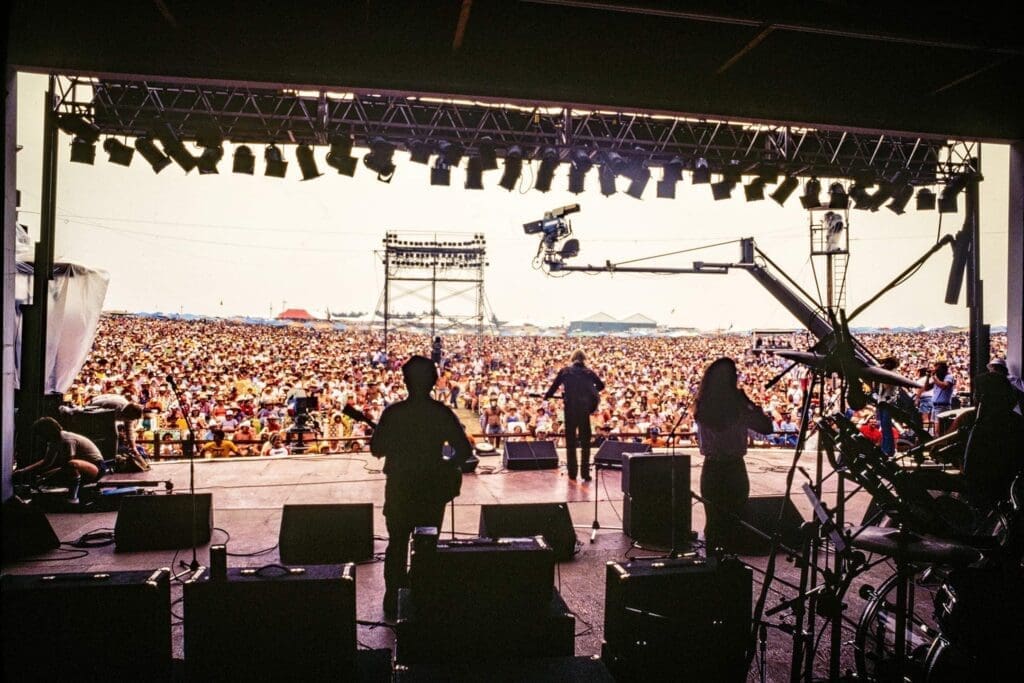
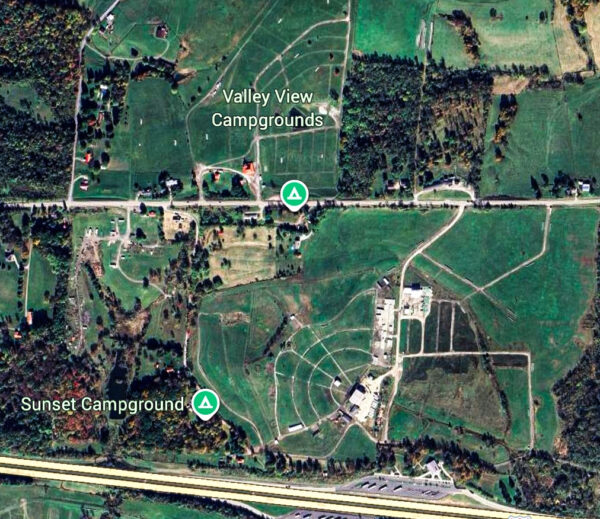
The event’s two sites just off of Interstate 70 were destination points every third week of every July every year between 1977 and 2016, and for the fans, it was an annual vacation, a family tradition, and a homecoming celebration that filled campgrounds and hotels in East Ohio and the Northern Panhandle. Buy a ticket, bring your own party, and the Porta Johns are over there.
Have at it, and good luck.
It was a rite of passage, and every fan had their own ideas about how to go about their Jamboree weekends, but then – out of nowhere – back in early December 2016, Live Nation introduced its disastrous idea.
“’Jambo Country’ was supposed to be a reinvented Jamboree in the Hills that could sustain itself, so, only three days and no coolers. That’s what they thought would keep Jamboree alive,” Tucker recalled. “And no, I didn’t think it was going to fly. I knew better.
“I wasn’t totally against making some of the changes because I knew it had become unsustainable, but they decided to rip everything away all at once and I didn’t believe that was correct approach,” she said. “I wanted to take a more tailored look with cooler sizes and in-and-out access all day long. I believed the Jamboree crowd would have adapted over time, and if that happened, maybe it could have survived a different way but still be ‘Jamboree in the Hills’.
“But that’s not how the people above me wanted to go about it.”
But “Jambo Country”? Who came up with “Jambo Country”?
“Not me, that’s for sure,” Tucker answered immediately. “They changed the name because they thought it wouldn’t be the same festival, and that would’ve been true in a lot of ways. But I didn’t like the new logo or the new name, and I knew the fans weren’t going to like it either. None of it was my choice, and I told them they were making mistakes. I was devastated by all of it.
“The festival meant so much to me personally that I felt, at times, I was the fan fighting,” she said. “They were literally blowing up the entire festival, but I knew what the outcome was going to be. Now, I didn’t know that people were going to threaten to kill me over it, but I knew it was going to be bad.”
Loud, Clear, and Hurtful
Live Nation promoted performers Jason Aldean, Thomas Rhett, and Lady A as the headliners for “Jambo Country”, and the press release stated that the venue would be a safer environment without the festival’s BYOB policy.
But everyone who had ever attended “Jamboree in the Hills” – including Tucker – knew outrage would be the reaction.
“And to say people were upset would be a very big understatement,” Tucker recalled. “On the day of the announcement, I went to WTOV for an interview, and I had practiced what I was going to say for days. So, I did the interview and then went straight to the airport and got on a plane for a conference in New Orleans. By the time I got to the hotel, I learned that the WTOV interview had more than 100,000 views.
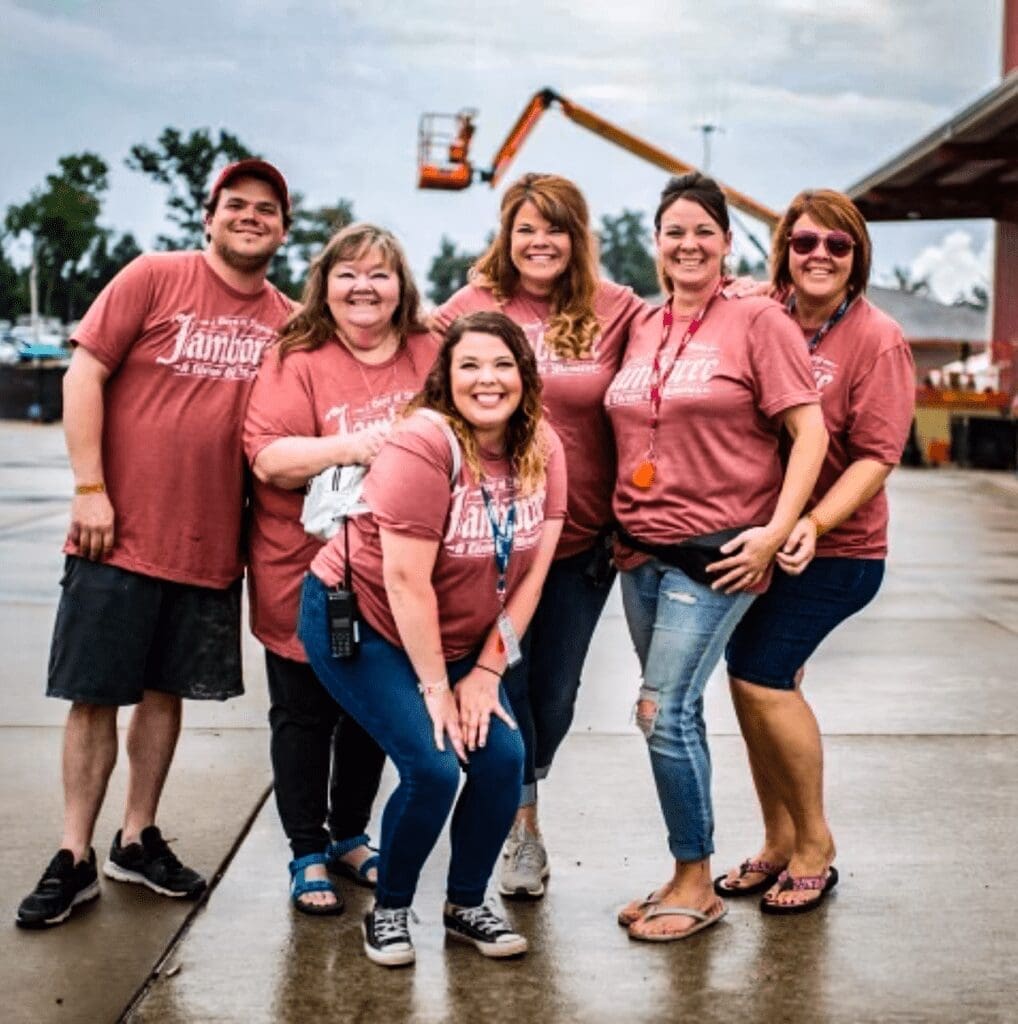
“I also had hundreds of Facebook messages and hundreds of people were commenting about how much they hated me,” she said. “And yeah, I got at least a dozen death threats, so that was the worst 72 hours of my professional career. I did not expect that my life would be threatened, but it meant that people didn’t realize how much the festival meant to me.”
That’s because most Jamboree fans were unaware of the internal battle Tucker was waging with Live Nation’s hierarchy before and after her superiors unexpectedly reversed course.
“I thought we could have compromised with the changes that would have let the fans know that we heard them,” Tucker explained. “The first year, keep it four days but limit the size of the coolers to the standard sizes, and then the second year, go down to three days, allow the standard coolers, but also start offering a great deal on a cooler of beer that had nothing to do with gouging our fans.
“But no, they said ‘Nope, we screwed up, give it back to them. That’s what they want’, and it didn’t matter that I disagreed,” she said. “So, I left the conference, landed in Pittsburgh and drove from the airport straight to WTOV to let everyone know the decision to scrap ‘Jambo Country’ and to revert back.
“Some thought it was a marketing stunt, but trust me, it was everything but a stunt.”
A Short-Lived Resurrection
So, wait.
One day, Live Nation officials shredded a region’s cherished tradition, and the next day, they handed it back as if nothing happened?
Exactly.
Once Tucker landed in Pittsburgh and drove directly to Steubenville, Tucker told WTOV, “Jambo fans are unique. I’ve always said that they are the best part of our event, and we heard them. They were loud; they were vocal; they didn’t want the change. They love the tradition of the event, and the powers that be within Live Nation said ‘We hear you and we want you to come to this festival. So, we’re going to give it all right back to you.’”
Just like that.
“Before all of that, my boss asked me to meet him at the conference, and he asked me what I thought about the whole ‘Jambo Country’ thing. I told him no one was going to come, and that I thought we should have gone about the whole thing differently,” Tucker recalled. “So, then we got on a conference call with a bunch of people; the majority said to revert it back.
“They kept saying that ‘Kelly knew what she was talking about’ and that ‘We should have listened to Kelly,’ and they said to revert it back, and I said, ‘My God, don’t.’ I didn’t want them to revert right back because I knew it couldn’t last,” she said. “I knew what the end result was going to be.
“But they didn’t listen to me again.”
So, with the name, the cooler policy, and the four days restored, “Jamboree in the Hills” took place from July 13-16, 2017, with Rhett, Aldean, and Lady A as the headliners. And then, from July 19-22, 2018, the 42nd annual “Super Bowl of Country Music” featured Travis Tritt, The Charlie Daniels Band, Toby Keith, and Neal McCoy.
There has never been a 43rd annual JITH.
On November 7th 2018, a “hiatus” was announced, and this time, Live Nation’s decision was irreversible.
“I knew the truth the moment they changed their minds about ‘Jambo Country’, and that was that ‘Jamboree in the Hills’ could not continue to survive in the form that it was in. The economics of the industry all changed so much during those 40 years,” Tucker said. “It still makes me sad, especially at this time of year, because I still believe there was a way to make it work so we would still have ‘Jamboree in the Hills’ today.
“I think back on those days pretty often, and I still believe we could have figured it out,” she added. “But now, I guess we’ll never know.”