

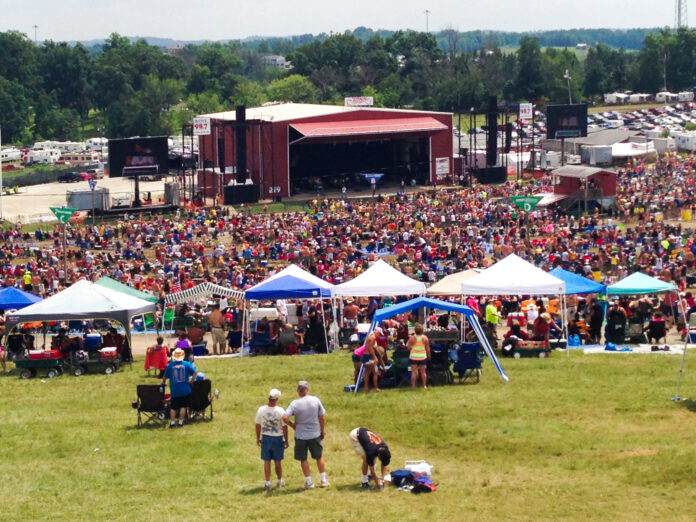

By now, Kitty Paboucek would have the process well underway, and that’s because there once was a need for at least 150 law enforcement officers to patrol the greatest tourism weekend in the history of the Upper Ohio Valley.
Paboucek, the former fiscal officer for the Belmont County Sheriff’s Office, would recruit men and women officers to join K-9 units and even horses when reporting to Belmont County each July. The majority of the LEOs traveled in from outside East Ohio after accepting the gig to help patrol what many considered to be the “Super Bowl” of country music.
For 42 years, Jamboree in the Hills annually attracted more than 100,000 fans to the Morristown area, and the likes of Johnny Cash, Brad Paisley, Dolly Parton, Trisha Yearwood, and hundreds of others performed from 1977 through the 42nd annual festival in 2018.
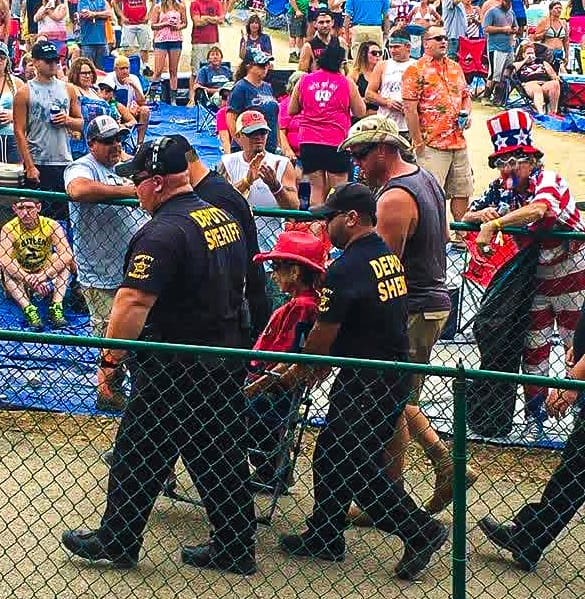
Some of those LEOs returned every year, while others left never to return.
“It wasn’t easy and there was always something,” said Belmont County Sheriff James Zusack. “It took a special member of law enforcement to be able to work those days and nights at Jamboree in the Hills.”
Sheriff Zusack was one of those deputies for more than a couple of decades, too, and his service at the event dates back to the festival’s original location near the Alderman Airport off of State Route 82.
“When I first started, they put me in charge of directing traffic into the venue,” he remembered. “And man, what a treat that was. I mean, it was something. It was really neat just because that’s where it started and the fans absolutely loved it.
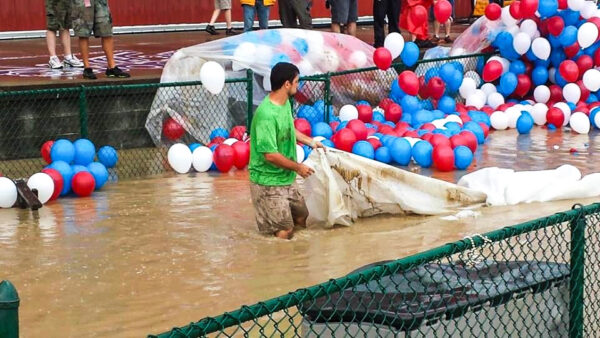
“I remember the first year they moved to the new location (along U.S. 40), too. I remember all of that mud,” Zusack said with a chuckle. “That was probably one of the rowdiest Jamborees I worked because of the fights, and I was in a couple of knockdown drag-outs because people reacted to that weather with a combination of intoxication and frustration.”
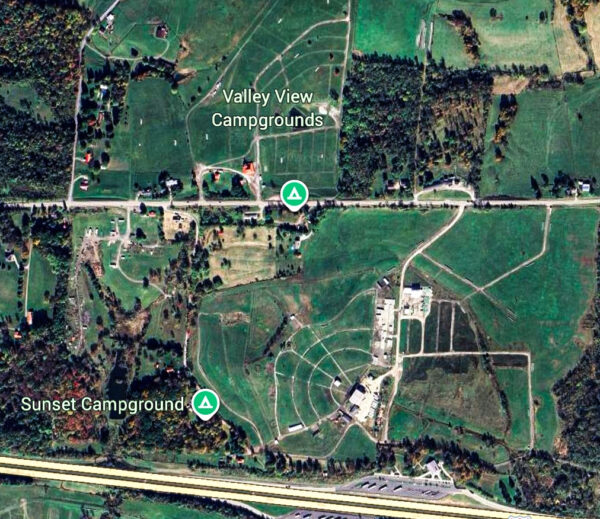
Most years, though, were comparatively peaceful and predictable despite the certain mayhem taking place inside and outside the actual venue. Thousands of campers covered the grounds surrounding the venue, and thousands more drove in and out of the four-day festival.
“When we worked Jamboree, we learned real fast to keep your eyes open, to stay with your group of deputies, and to listen to the radio … just in case,” Zusack said. “Usually, we walked in groups of seven or eight deputies, and there were probably four or five groups like that walking through the show at all times: day and night. And honestly, there were not enough of us, and that’s why we were always thankful that most folks were there to have fun and not cause any issues.
“Of course, you had our mounted units, but they were typically used when something went really bad, or when they shut it down, and people didn’t want to leave,” he said. “But when you had a mounted unit come up to a group that was just hanging out, they left then. Plus, we had deputies stationed in the crow’s nest when the production people were located in the middle of the show. That gave us a great vantage point.
“Those were very long days, and there were some very difficult situations, but nothing involving weapons. Just tempers, and a lot of underage drinking.”
The event, according to former general manager Kelly Tucker, was scheduled for the third week of July each year because historically it was the warmest and driest of the year, and most years those forecasts proved true.
“When it was really hot out there, we did have to handle a lot of fights, but there were only a few pretty serious situations. And there were domestic situations, too, but most of all, we just took care of people,” Zusack explained. “No matter what the weather was, though, we were making sure they got the help they needed from their family and friends, or at the medical tent. It was pretty easy for us to see when someone had had enough of the party.
“There were tough days out there – absolutely – because the heat and all of the dehydration that took place,” he said. “And it was tough. A lot of people in that heat didn’t hydrate and just kept drinking, and that always led to some interesting situations. Most of the time when you would walk past the medical tent, it’d be full with a bunch of people hooked up to something.”
Daylight to Night Life
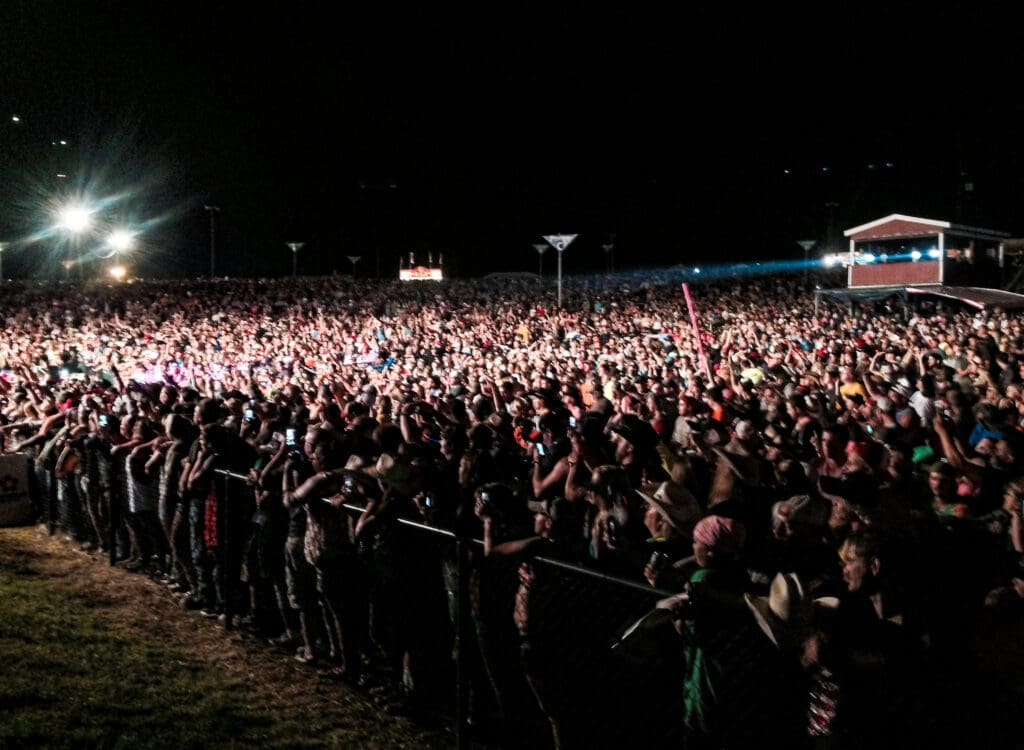
When Mother Nature flipped the switch and darkness fell over Belmont County, the crowd at Jamboree in the Hills grew larger – and more rambunctious – in anticipation of headlining superstars like the late Toby Keith and Jason Aldean.
“It sure seemed like the crowd doubled in a matter of minutes, and nighttime always gave us different challenges, that’s for sure,” Zusack said. “And over the years, Jamboree in the Hills changed once it got dark, and I think the music was connected to that because the folks with the show brought in some different music sometimes. One year, Kid Rock was there, and that was a little different. I’m a fan of Kid Rock’s music, but the mood definitely changed during that show.
“He fired up that crowd for sure,” he said. “So, as far as the behavior of the crowd, it depended on who was on stage and what time of day it was,” he recalled. “That’s just the way it was out there. You had bands that fired people up, and those Friday and Saturday nights were always interesting, that’s for sure. When it was daylight, we could see everything and everyone, but there’s a reason why much more criminal activity takes place during the night.”
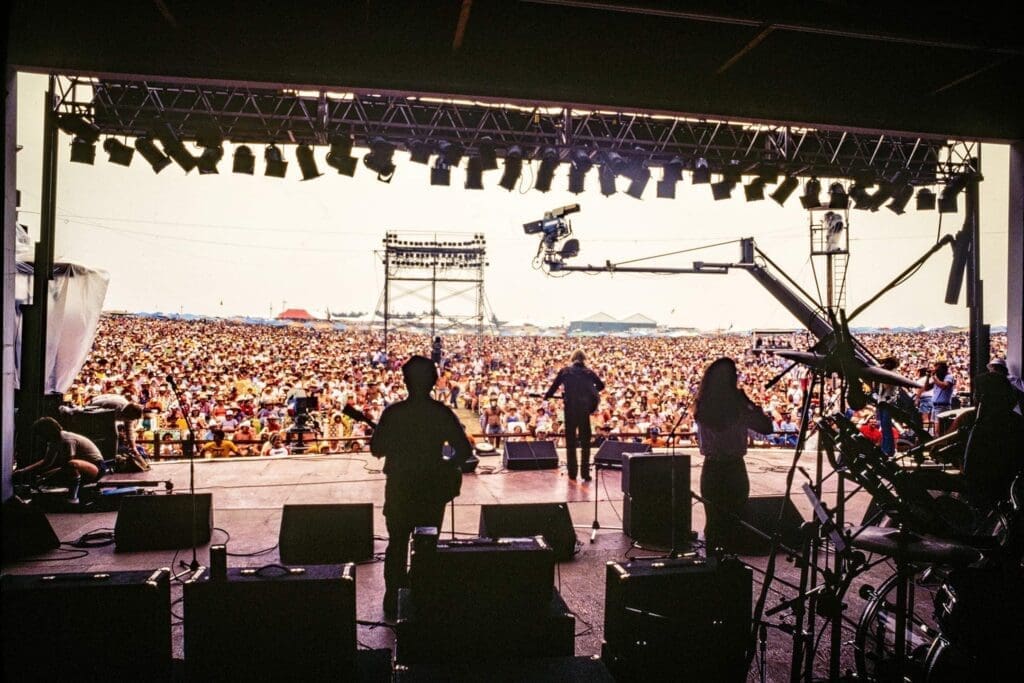
The LEOs surveilled the Jambo grounds from the time when the gates opened to when the last person was pushed out, and the plethora of patrols were always at least five people deep as they strolled from the A Row to the last row near the food vendors at the top. Most often, the sheriff recalled, the deputies assisted fans who were stranded or who seemed lost, intoxicated, and sometimes without one shoe.
“That’s why I’ve always believed the most peaceful time of the Jambo weekend was Sunday morning because people were just kind of out of gas. You could tell when you saw them going in for the Sunday shows; they were moving a little slower,” Zusack said. “But overall, it was a great time because the vast majority of fans were there to have a great time with their family members and their friends, and they did it every year. It was their vacation, and it was their reunion.
“That weekend was very special for a lot of people, and it was great to be a part of it.”
But does he miss it? Would he, as Belmont County’s Sheriff, want to be responsible for protecting and serving that 100,000-plus crowd every year?
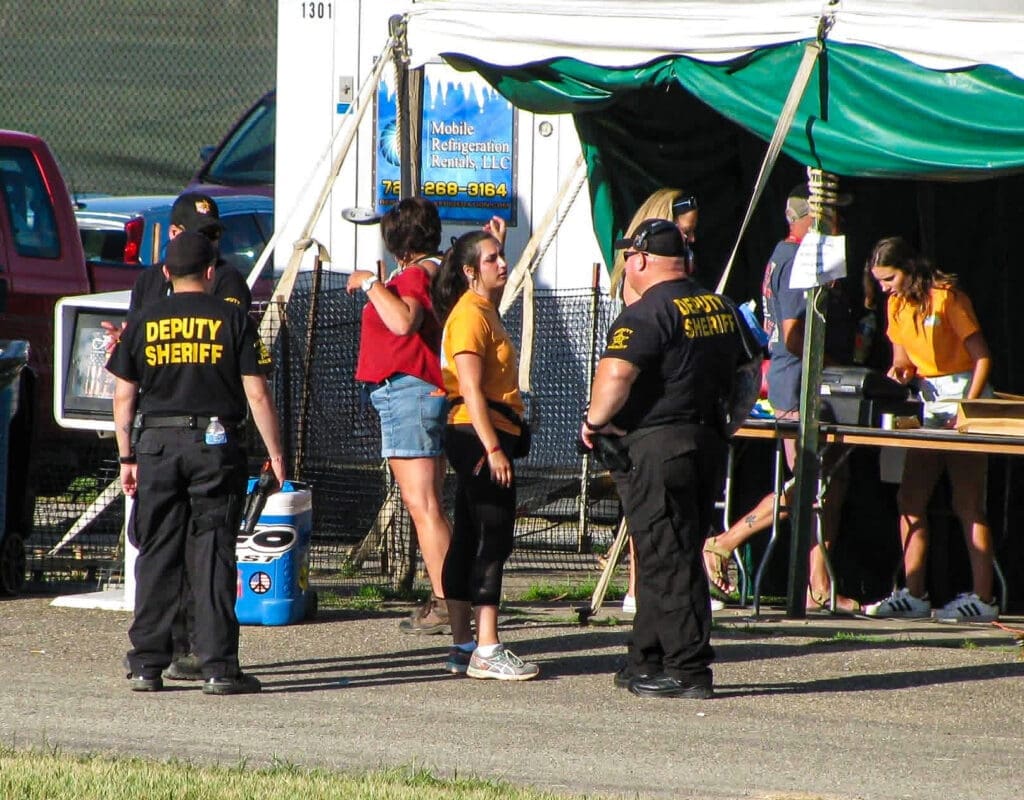
“I do miss it, but now that I am older, I know I’d be depending on our younger guys if Jamboree hadn’t gone away almost 10 years ago,” Zusack said. “When we tell stories about Jamboree, our younger deputies can’t believe we did that every year. They see the photos and wonder how it was possible.
“Now, I know Jamboree was a big economic boost for the county, so I’m sure there are a lot of businesses that miss that weekend very much. Plus, it brought a lot of people home, and it sure was huge for Belmont County,” he said. “Most of those folks were very nice to us; they offered us bottles of water and food because they wanted to try to take care of us because they knew we were taking care of them,” Zusack said. “And we’d see a lot of fans every single year because it was a tradition for them and their friends. I think I missed that part the most.”