

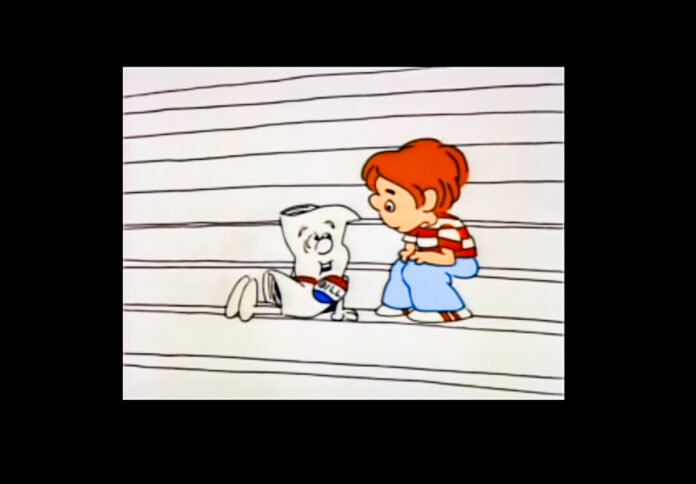

Civics lessons do not always begin in a classroom.
For many of us, they started sitting cross-legged on the tv room floor on early Saturday mornings, a bowl of cereal in hand, watching cartoons that somehow slipped in a little education along the way, which for a young Erikka, was the best way to get it.
I can still hear the tune from Schoolhouse Rock! and see that rolled-up piece of paper singing, “I’m just a bill, yes I’m only a bill, and I’m sitting here on Capitol Hill.” It was simple, catchy, and whether we realized it or not at the time, it was foundational. That little song introduced a generation to how laws are made and, more broadly, how our government works.
Back then, I did not know that those lessons would stick with me or that they would shape how I view public service today, but they did. Here in West Virginia, those same basic principles still guide how our state government operates through its three co-equal branches. These are the legislative, executive, and judicial.
The legislative branch is where laws are created. In West Virginia, that responsibility falls to the West Virginia Legislature, made up of the House of Delegates and the Senate. These are the men and women elected from our communities, tasked with introducing, debating, amending, and ultimately voting on the policies that affect our daily lives. It’s not always a smooth or speedy process, and it shouldn’t be. The system is designed to encourage deliberation, compromise, and input from different perspectives. That old cartoon bill didn’t become law overnight, and neither should the real ones.
Next comes the executive branch, led by the governor. In West Virginia today, that office is currently held by Patrick Morrisey. The governor’s role is to enforce the laws passed by the Legislature, oversee state agencies, and set priorities for the administration. This branch is where policy meets practice. It is where the ideas debated under the Capitol dome are put into action in our schools, our roads, our public safety systems, and beyond. The governor also has the power to veto legislation, serving as an important check on the legislative branch.
However, the legislature has the ability to override a governor’s veto.
Finally, there is the judicial branch, which interprets the law. At the top in our state is the Supreme Court of Appeals of West Virginia. When disputes arise over what a law means or whether it aligns with the state constitution, the courts step in. Their job is not to make laws or enforce them, but to ensure they are applied fairly and consistently. It’s a role that requires independence, impartiality, and a deep respect for the rule of law.
What ties these three branches together is a system of checks and balances. No single branch holds all the power. Each has its own responsibilities, but also the ability to limit the others when necessary. It’s a structure designed to prevent overreach and protect the freedoms we often take for granted.
Two of the three co-branches have candidates up for election this cycle, as well as other local races. Two of the Supreme Court justices are seeking to be elected to seats to which they were appointed by the governor to fill vacancies. One of these is the vacancy created by the untimely death of Justice Tim Armstead, and the other the vacancy created by the retirement of Justice Beth Walker.
Half of the Senate’s 34 seats are up, as well as a few unexpired terms, for which appointed candidates are looking for the nod of the people to keep their seats. All 100 members of the House are up for election. This is the weirdest election cycle in my memory. It will be interesting to see how the involvement of these PACs impacts the election. I want a simpler time, when West Virginians selected West Virginians who had their backs because they were one of them.
Looking back, it’s remarkable how something as simple as a Saturday morning cartoon could introduce such a complex and important idea. “I’m just a bill” didn’t dive into every nuance of governance, but it captured the essence. Laws are the result of a process, one that requires patience, participation, and accountability.
Today, as adults, and more specifically as engaged citizens, we have a responsibility to go beyond the cartoon version. Understanding how our state government works isn’t just an academic exercise; it’s essential to making informed decisions, holding leaders accountable, and ensuring that our voices are heard.
In a time when public trust in institutions can feel strained, there is something grounding about returning to those basics. The three branches of government aren’t just abstract concepts. These are the framework that keep our state functioning. While the process may sometimes be messy or frustrating, it is also what allows for representation, debate, and ultimately, progress.
So, the next time you hear someone humming that old tune, or maybe you find yourself doing it, remember that it wasn’t just a catchy song; it’s a reminder that government is meant to work step by step, branch by branch, with each part playing its role.
I promise you will not get it out of your head today. You are welcome.
From a cartoon bill on a hill to the real work happening under the gold dome in Charleston, the lesson still holds true. Our system works best when we understand it, respect it, and take part in it, but not when the unwelcome try to manipulate it.