

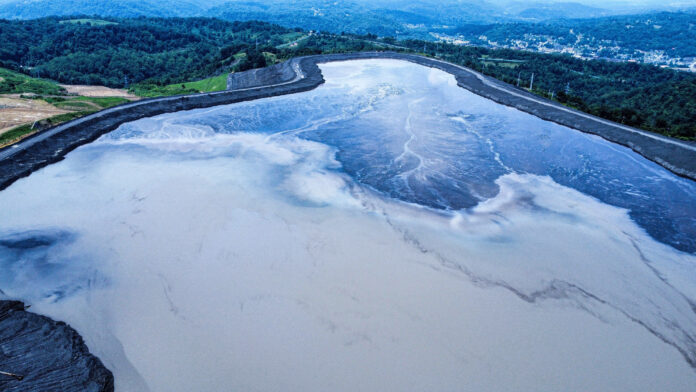

Jeff Stephens is doing what a good state lawmaker is supposed to do – hear his people and react to their concerns – so that’s why he’s been investigating the operation of the “Cunningham Hollow Slurry Impoundment” at the end of Allendale Road in Mount Olivet.
Stephens represents the residents in the 6th District of the House of Delegates, an area that includes riverfront cities Benwood, McMechen, Glen Dale, and Moundsville as well as the northern tip of Marshall County. He was defeated in the closed Republican Primary in May by a silent newcomer thanks to a smear campaign orchestrated by political action committees reportedly linked to W.Va. Gov. Patrick Morrisey.
The residents along Allendale and Pin Oak Drive created a Facebook page (Mt. Olivet Sludge Impoundment); they’ve contacted local media, and representatives have appeared on radio and TV. Stephens was contacted by a resident of nearby Foxfire Drive, and he’s been asking a lot of questions ever since.
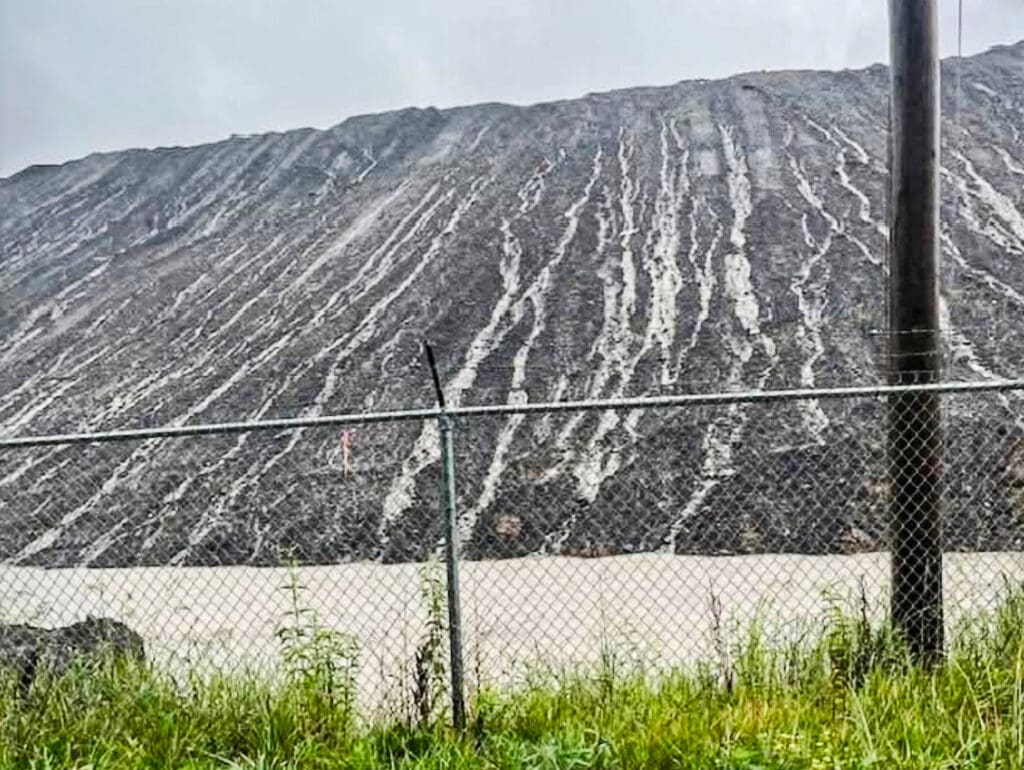
“I was seeing some things on Facebook, and then Andy Goldbaugh reached out to me and gave me a clear idea of what these residents were concerned about, so that’s when I started my research,” Stephens said. “I know the area very well, but I had not been back there for a while. It’s definitely changed over the last few years.
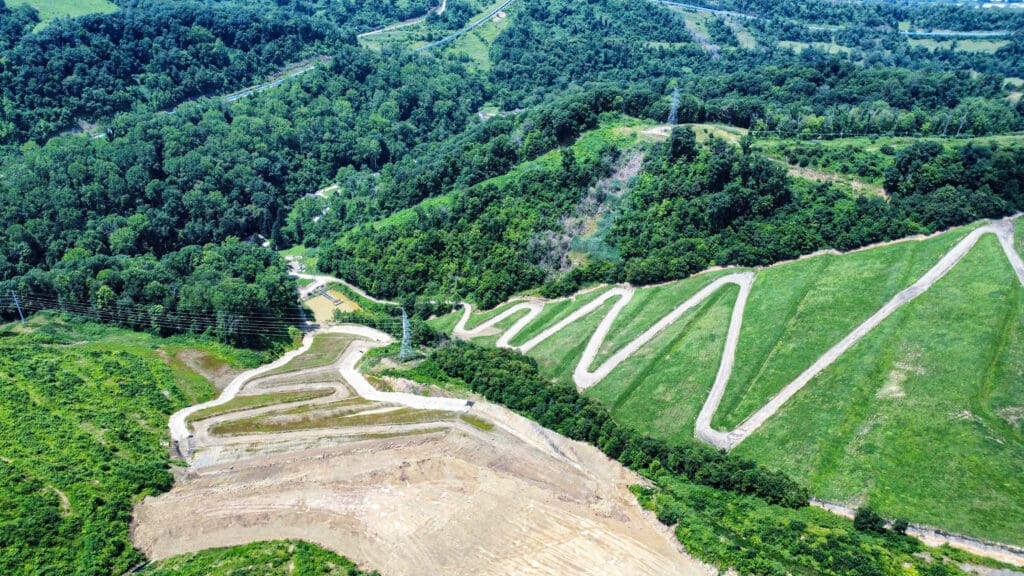
“I reached out to a good friend who works with the UMWA, and he explained that the changes are a result of a lot of mining that’s taking place right now,” he said. “That’s why it’s expanding, and why the activity has picked up, and he also said that it’s expected to continue for another five years.”
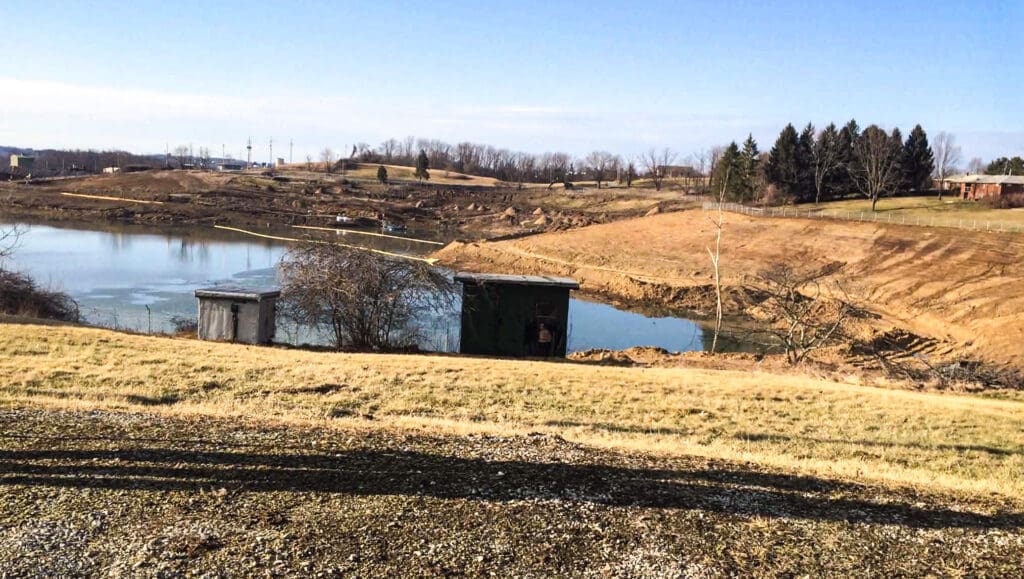
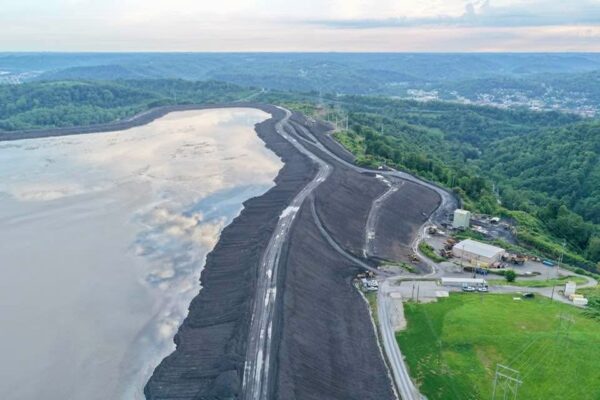
A coal impoundment is where a mining company stores liquid mine waste, crushed rock, and coal ash before it is capped and filtered over an extended period of time. For many years, the “Cunningham Hollow Slurry Impoundment” appeared as an off-limits lake, and traffic to the facility was light, according to Bidka Lane resident Tommy Joseph.
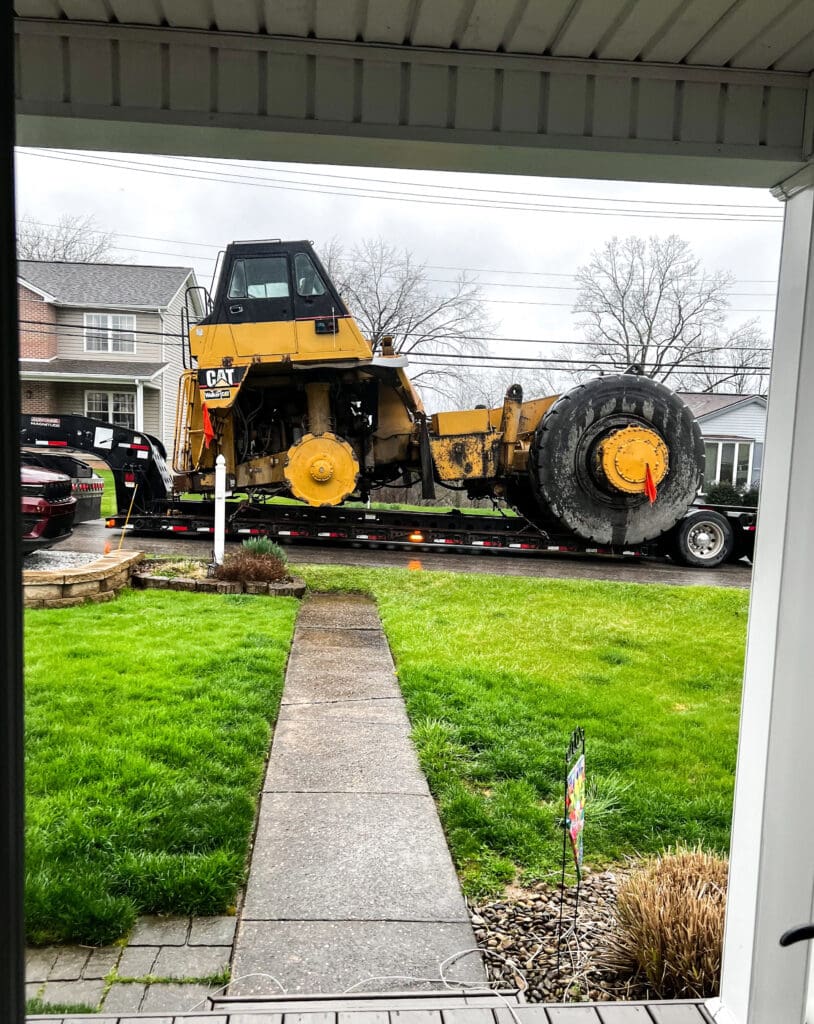
“And then, without warning, the black walls started growing around the water and the heavy equipment and truck traffic picked up significantly, and we didn’t know what to think. No one was talking, and that’s usually not a good sign.”
The silence, in fact, caused a level of fear that the residents started discussing the Buffalo Creek Disaster that occurred in late February 1972. That’s when a coal slurry impoundment dam owned by the Pittston Coal Company burst in Logan County, W.Va., causing a wall of 132 million gallons of black water and sludge to tear through 17 mining communities, destroying over 500 homes, killing 125 people, and leaving 4,000 homeless.
According to reports, the disaster took place after several days of heavy rain, a dam designated as “Dam 3” collapsed at the head of the Buffalo Creek hollow. When the dam gave way, it unleashed a 15-to-25-foot tidal wave that swept through the 15-mile valley, obliterating entire neighborhoods in seconds.
“I’ve seen a lot of posts that reference the Buffalo Creek disaster that happened back in the early 70’s, and I completely understand the reference when you don’t know what’s going on,” Stephens said. “I assure people that there are a lot more regulations and inspections of those facilities these days because of disasters like that.
“I also reached out to (W.Va.) Sen. Chris Rose because he represents the area of Marshall County where the impoundment is, and because he recently was hired by ACNR,” he explained. “We talked for a good bit, and I know he’s collecting information with his contacts.”
Breaking the Silence
The Mount Olivet residents have left messages with the state Department of Environmental Protection, the Mine Safety and Health Administration, and with American Consolidated Natural Resources, the owners of the impoundment.
So far, no call backs, but Stephens has spoken with Joseph this week.
“We had a half-hour talk,” the resident said. “Hopefully, he can contact some people.”
That’s the goal, according to the lawmaker.
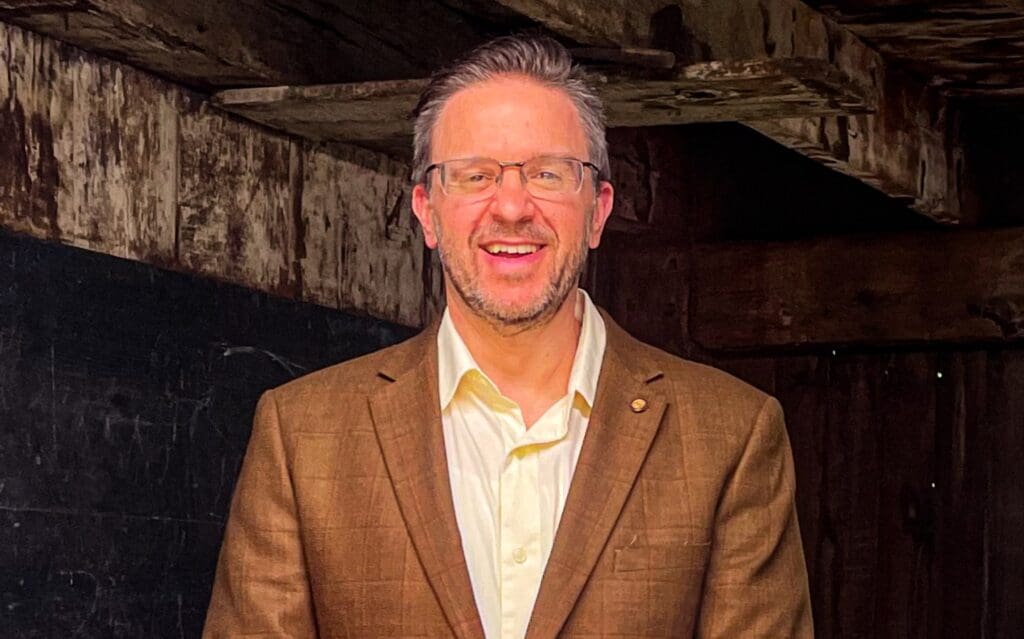
“I hope we can get everyone in the same room so the residents can ask their questions about the current operation of the impoundment, what they can expect in the future, and if some changes can take place as far as access and air quality,” Stephens said. “I think it would be a good idea for some independent engineers to be involved so they can perform an inspection, and I would like for the residents to have a chance to ask their questions.
“And MSHA could be a very good third party to reach out to so they can send representation,” he said. “And I think for ACNR to be a good neighbor, they should come in and say, ‘Hey, this is what’s going on; this is why; this is why it’s growing; and this is why you see all this happening.’ What would people in the community like to see ACNR do to put trust in the process?’
“I think it’s important that everyone involved understands that no one is fighting against the coal industry.”
Although Stephens won’t be on the ballot in November, he is determined to assist his constituents with getting an audience with answers in the near future so they can ask questions and make the following four requests:
- Provide residents with current operating and site-modification permits, along with an updated Emergency Action Plan that identifies the families affected on the upstream side of the impoundment.
- Identify and establish an alternate access route to and from the impoundment.
- Implement dust-control measures, including the use of water trucks during dry conditions.
- Restrict noise-generating activities to daytime hours.
“That’s why the next step for me is to make another round of calls to find out what my contacts have researched on their ends,” Stephens explained. “And during those phone calls, I’m going to try to come up with a time when everyone involved can sit down and talk. I am hoping I can be a good intermediary for all parties.
“It’s important that everyone understands each other, and that their voices are heard. My hope is that we can have a good conversation about concerns and solutions,” he said. “Let’s go through the list. This is what we can do here. This is what you want to know. Let’s get everyone on the same page instead of people having eight different conversations.
“I can’t make any promises, of course, but let’s see what we can do together. That’s when things work best; when you work together.”